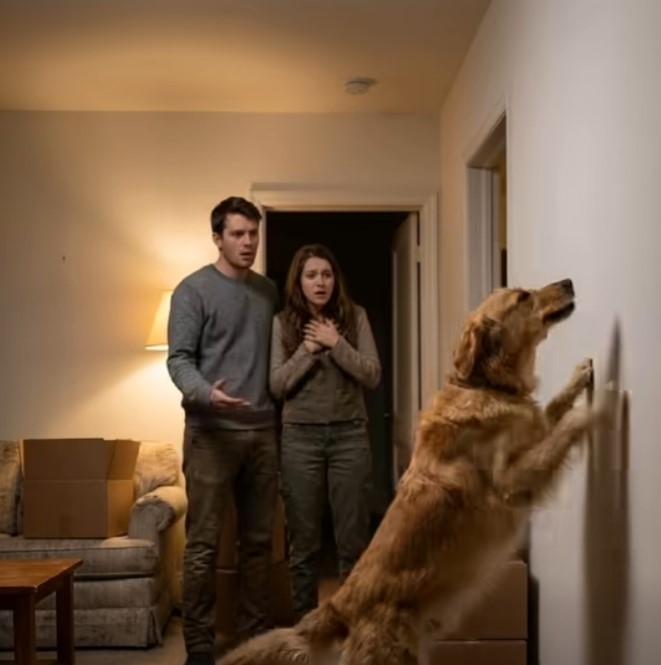
María and Juan had always dreamed of building a stable life together, even if it started in a modest place. After years of saving, working multiple jobs, and sacrificing comfort, they finally managed to purchase a small apartment in an aging residential building. The structure was not new or luxurious, but it offered something far more valuable to them at that moment: a sense of stability and ownership. The walls were slightly worn, the hallways carried signs of time, and the windows occasionally creaked during strong winds.
Yet the couple viewed it as the beginning of a new chapter rather than a limitation. Juan worked long hours as a mechanic, spending most of his days in a busy workshop filled with constant noise, tools, and demanding repairs. María, on the other hand, worked as a freelance designer, often staying awake late into the night to complete projects for clients. Despite their different routines, both shared the same goal of building a peaceful and secure future. Their schedules were exhausting, but their determination helped them push forward through financial challenges and daily pressures.
Living with them was Lucas, their three-year-old golden retriever. He was energetic, loyal, and deeply attached to both María and Juan. Lucas was not just a pet but an emotional anchor in their lives, offering comfort during stressful moments and companionship during long, quiet evenings. His presence brought warmth to the apartment, turning the small space into something that felt more like a home. For the couple, Lucas was part of their family in every meaningful way.
However, shortly after moving into the apartment, Lucas began to exhibit unusual behavior that gradually caught their attention. He started focusing intensely on a specific section of the hallway wall near their bedroom. At first, María and Juan assumed it was harmless curiosity. Dogs often react to sounds or smells that humans cannot perceive, especially in older buildings where pipes, ventilation systems, and structural gaps can create subtle noises.
As the days passed, Lucas’s behavior became more consistent and harder to ignore. He would sit in front of the same section of the wall, pressing his nose against it and occasionally producing a low, steady sound. It was not aggressive barking, but rather a focused and persistent reaction that seemed to suggest he was detecting something hidden. The repetition of his actions slowly created concern within the household.
Juan decided to investigate the situation more seriously. He checked the wall for visible damage, moisture, or signs of pests, but everything appeared normal on the surface. María suggested they consult a professional opinion, so they briefly spoke with a dog trainer and later a veterinarian. Both reassured them that Lucas was physically healthy and that such behavior could sometimes be triggered by environmental sensitivity or unfamiliar structural sounds within older buildings.
Despite these explanations, Lucas’s behavior did not stop. In fact, it intensified during the quiet hours of the night when the apartment was still. He would sit in front of the same spot for long periods, completely focused, as if waiting for something beneath the surface. The atmosphere inside the apartment slowly began to shift. What once felt like a peaceful home started to carry a subtle tension, driven by curiosity and uncertainty.
Eventually, Juan made the decision to investigate the wall directly. He believed there had to be a logical explanation behind Lucas’s persistent focus. Using basic tools, he carefully began removing a section of plaster from the area where the dog had been fixated. As the surface broke away, the sound of tools against the wall changed slightly, indicating a hollow space behind it.
When the opening became large enough, Juan noticed something unexpected inside the cavity. There was a small wooden box hidden within the structure of the wall. It was old, carefully preserved, and appeared to have been placed there intentionally rather than accidentally. The wood was darkened with age, and faint carvings decorated its surface, suggesting it may have held significance in the past.
Carefully, Juan removed the box and placed it on a nearby table. The metal lock securing it showed clear signs of aging, but it was still intact. After some effort, they managed to open it. Inside, they found several carefully preserved items, each wrapped and arranged with unusual precision. The discovery immediately changed the atmosphere in the room, replacing curiosity with seriousness.
Among the contents were aged documents, a uniquely shaped key, and a small decorative medallion. The papers were written in formal handwriting, clearly originating from a much earlier time period. The condition of the materials suggested they had been stored with care and intention. As Juan examined the documents more closely, he began to realize that they were not personal letters, but legal records.
One document stood out in particular. It appeared to be a will, dated several decades earlier. The text outlined ownership of assets and property distribution, written in structured legal language. As Juan read further, a shocking detail emerged: the document referenced ownership of the very building in which they were currently living. This revelation immediately changed their understanding of the apartment’s history.
The couple quickly realized that this discovery could have serious legal implications. If the document was authentic, it meant that the history of the property might not align with its current ownership records. The key found inside the box appeared to correspond to a hidden compartment elsewhere in the building, which led them to uncover additional documents and records supporting the original discovery.
Understanding the importance of what they had found, María and Juan sought legal advice. A professional carefully reviewed the documents, examining signatures, paper age, and structural consistency. While no immediate conclusions were drawn, the materials appeared credible enough to justify further investigation. The situation quickly moved from a personal discovery to a formal legal matter requiring official evaluation.
As the case developed, experts were brought in to analyze the historical context of the documents. Handwriting specialists, archival researchers, and legal analysts all contributed to assessing the validity of the materials. The process revealed that the documents were consistent with records from the time period indicated, although further verification was still necessary to determine legal standing.
The situation escalated into a formal legal review. Authorities and specialists worked together to trace the property’s ownership history and determine whether the will had ever been properly registered or executed. This process involved reviewing decades of property transfers, legal filings, and administrative records.
As time passed, the emotional weight of the discovery grew heavier for María and Juan. What began as a simple home slowly transformed into the center of a complex historical and legal investigation. The presence of Lucas, however, remained constant throughout the entire process. The dog, whose unusual behavior had initiated everything, continued to stay close to them, as if unaware of the magnitude of what had been uncovered.
In the end, the situation brought both uncertainty and transformation. The legal process continued to unfold, but regardless of the final outcome, María and Juan’s lives had already changed permanently. They had discovered that even the most ordinary places can hold hidden histories, waiting silently beneath the surface for the right moment to be revealed.
Lucas’s behavior, once seen as strange and unexplained, became a symbol of intuition and connection. His actions led to a discovery that reshaped their understanding of their home and its past. For María and Juan, the experience was no longer just about property or documents, but about trust, timing, and the unexpected ways in which life can reveal its secrets.
In the end, what began as a small and mysterious behavior from a loyal dog evolved into a story of discovery, uncertainty, and transformation—one that reminded them that sometimes, the most important truths are hidden just beneath the surface, waiting to be found.
