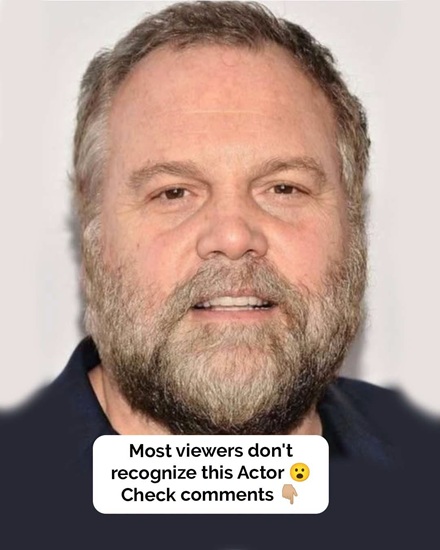
Vincent D’Onofrio has built one of the most varied careers in American film and television, but one of his earliest major performances remains among his most recognizable. Born in Brooklyn, New York, on June 30, 1959, D’Onofrio is now 67 years old as of August 2026, rather than 64 as stated in the older version of this story. He has worked as an actor, director, producer and screenwriter across a career spanning more than four decades.
His credits range from intense dramatic characters to detectives, villains and unusual supporting roles that often look completely different from one another. Yet Stanley Kubrick’s 1987 Vietnam War drama Full Metal Jacket was the project that transformed him from a working actor into an internationally recognized performer. D’Onofrio has repeatedly acknowledged that the opportunity had an enormous impact on everything that followed. Before Hollywood audiences knew his name, D’Onofrio spent years developing his acting skills on stage.
He studied acting and appeared in theater productions while supporting himself through jobs that had little connection with the glamorous image associated with a successful movie career. Accounts of his early years describe him working as a bouncer at New York’s Hard Rock Cafe, making deliveries and even doing security work. His background demonstrates just how uncertain the beginning of an acting career can be, particularly for performers without an established position in the entertainment industry. D’Onofrio nevertheless continued auditioning and performing while waiting for an opportunity that could change his circumstances. That opportunity eventually arrived through an actor he already knew: Matthew Modine.

Modine had already been connected with Stanley Kubrick’s upcoming Vietnam War movie when he encouraged D’Onofrio to pursue an audition. D’Onofrio recently recalled that he did not even have an agent handling the process at the time. He recorded audition material and sent it to Kubrick’s team in England, beginning an unusual process that eventually resulted in conversations with the legendary filmmaker. D’Onofrio has even joked about initially hanging up when Kubrick’s people contacted him because he thought the call might be a prank. The confusion did not ruin his opportunity, and Kubrick’s assistant Leon Vitali contacted him again. Soon afterward, D’Onofrio had secured the part that would permanently change his career.
The role was Private Leonard Lawrence, a Marine recruit who is given the humiliating nickname “Gomer Pyle” during basic training. In the movie, Leonard initially appears awkward, slow to adapt and physically unable to keep pace with the demands imposed by Gunnery Sergeant Hartman, played by R. Lee Ermey. As the training becomes increasingly harsh, the character’s psychological condition deteriorates dramatically. D’Onofrio’s performance required him to portray not simply a clumsy recruit but a young man gradually overwhelmed by humiliation, isolation and relentless military pressure. The resulting transformation is one of the most unsettling elements of the film’s first half. Full Metal Jacket became one of the defining films associated with both Kubrick and D’Onofrio.
A Physical Transformation That Changed How People Treated Him
D’Onofrio looked dramatically different before filming began. At roughly 6 feet 3 inches tall, he had a lean and athletic build when he auditioned. Kubrick, however, wanted Leonard to appear physically imposing while simultaneously struggling with the demands of training. D’Onofrio has explained that Kubrick initially asked him to gain weight and then decided even more would be necessary after seeing the first stage of the transformation. D’Onofrio ultimately went from around 200 pounds to approximately 280 pounds for the role. Sources differ slightly on whether the total gain should be described as roughly 70 or 80 pounds, so describing it as around 70–80 pounds is the most accurate formulation.

That change was not simply cosmetic. Once D’Onofrio had gained the weight, he still had to perform the demanding physical routines shown in the movie’s boot-camp sequences. Activities that had previously been relatively manageable became significantly more challenging at his new weight. During production, he injured his knee while working on an obstacle-course sequence, an injury that later required medical attention and reconstruction. His commitment became an early example of the extreme physical transformations that actors sometimes undertake for roles, although claims that his was definitively “the most weight any actor has ever gained for a film” are difficult to substantiate and should not be presented as established fact.
The transformation also changed the way strangers reacted to D’Onofrio away from the camera. In interviews after the film, he described how differently people treated him when he was heavier, bald and almost unrecognizable from his previous appearance. He recalled that women who might once have noticed him were no longer responding to him in the same way. More significantly, he said some people appeared to make assumptions about his intelligence because his physical appearance resembled the character they saw on screen. The experience gave him an unusual firsthand lesson in how quickly people can judge someone based on appearance. It also demonstrated just how completely his physical transformation had separated Leonard Lawrence from the actor playing him.
D’Onofrio eventually lost the weight after production and returned close to his previous size over the following months. His hair also grew back, meaning that audiences who encountered him in later projects sometimes failed to recognize him as the same actor from Full Metal Jacket. That ability to disappear physically into characters became one of the defining qualities of his career. Rather than remaining identified exclusively with Leonard, he gradually assembled a filmography containing characters who differed enormously in appearance and personality. Contrary to the claim that his “popularity took a dive” after Kubrick’s movie, his career continued expanding through major films and long-running television work. Kubrick’s film was therefore a beginning rather than a professional decline.

From Kubrick to a Remarkably Diverse Career
Only months after audiences saw him as Leonard, D’Onofrio appeared in Adventures in Babysitting, looking so different that some viewers did not immediately connect him with the Marine recruit. He subsequently appeared in Mystic Pizza, the film that became an important early showcase for Julia Roberts. Through the 1990s and 2000s, he continued taking roles that avoided locking him into a single character type. His work included The Player, The Whole Wide World, Men in Black, The Cell and numerous other productions. In Men in Black, for example, he played Edgar, a farmer whose body is taken over by an alien creature, producing a deliberately strange physical performance very different from his Kubrick role. That versatility helped establish D’Onofrio as an actor especially comfortable with unusual or psychologically complicated characters.
Television eventually brought him another defining role when he became Detective Robert Goren on Law & Order: Criminal Intent. The series premiered in 2001 as part of Dick Wolf’s expanding Law & Order franchise. Goren was written as an unusually observant investigator who relied heavily on psychology, details and unconventional interrogation methods. D’Onofrio remained strongly associated with the series through its run, which lasted ten seasons and 195 episodes overall. For audiences who had never encountered Full Metal Jacket, Robert Goren became the role most closely associated with the actor. It also proved that D’Onofrio could carry a major television production for years rather than simply make memorable appearances in films.
His work schedule on Criminal Intent was demanding. In 2004, D’Onofrio collapsed while working on the series and again shortly afterward, with reports at the time attributing the episodes to exhaustion connected with an exceptionally heavy workload. He eventually returned to work, but the episode illustrated how physically taxing television production could become. Despite those difficulties, his portrayal of Goren remained one of the central elements of the program. His performance was built less around conventional action-hero behavior and more around intense concentration, psychological pressure and subtle physical mannerisms. Once again, the role looked very different from Leonard Lawrence.

D’Onofrio later reached another generation of viewers through Marvel’s television universe. Beginning with Netflix’s Daredevil, he portrayed Wilson Fisk, better known as Kingpin, opposite Charlie Cox’s Matt Murdock. His version of Fisk combines enormous physical presence with emotional restraint, sudden violence and political ambition. Marvel subsequently brought D’Onofrio back for additional appearances, and he again plays Wilson Fisk in Daredevil: Born Again. The first season premiered on Disney+ in 2025, while the second season premiered in March 2026 with Fisk occupying an even more powerful position in the story.
That continuing Marvel role makes one thing particularly clear: D’Onofrio’s career did not disappear after Full Metal Jacket. Nearly four decades after Kubrick’s film, he remains involved in a major international franchise. In 2026, Marvel was still promoting him prominently alongside Charlie Cox as one of the central figures in Daredevil: Born Again. The actor who once transformed himself into an overwhelmed Marine recruit has therefore continued finding new audiences across several generations. His career has evolved repeatedly rather than following a simple rise-and-fall narrative.
His Personal Life and Three Children
Away from his career, D’Onofrio is the father of three children. During his relationship with actress Greta Scacchi in the early 1990s, the couple had a daughter, Leila George, who later became an actress herself. George has pursued her own film career rather than remaining known only through her famous parents. D’Onofrio later married Dutch model Carin van der Donk in 1997. They had two sons together, Elias and Luka. The couple experienced periods of separation and reconciliation during their long relationship.
In June 2023, reports confirmed that D’Onofrio had filed for divorce from van der Donk in Manhattan after roughly 26 years of marriage. Because publicly available reporting surrounding later legal developments is inconsistent, it is safer not to claim a specific final divorce date without reliable court documentation. The filing itself, however, was widely reported at the time. His personal life has generally attracted far less attention than his performances, and he has spent much of his career allowing the characters rather than his private relationships to dominate public discussion.
His daughter Leila George provides an interesting continuation of the family’s acting tradition. Born in 1992 to D’Onofrio and Scacchi, she trained in acting and film before establishing a professional career of her own. D’Onofrio’s two sons with van der Donk have generally maintained lower public profiles. The actor has therefore balanced decades of highly visible professional work with a family life that has often remained outside the spotlight.
Why Full Metal Jacket Still Matters
For D’Onofrio, Full Metal Jacket remains especially important because it gave him the opportunity to demonstrate an extraordinary level of commitment at the beginning of his screen career. He transformed his body, shaved his head and embraced a psychologically difficult character under one of cinema’s most demanding directors. Kubrick’s working methods were famously meticulous, and production required the actors to repeat complicated scenes while maintaining precise performances. D’Onofrio emerged from that experience with a role audiences continued discussing decades later. He has openly credited Kubrick with giving him the opportunity that launched the career that followed.
The performance is particularly memorable because Leonard does not remain the same person throughout the movie. At the beginning, he is inexperienced and repeatedly falls behind the other recruits. As the abuse and pressure intensify, his behavior changes in increasingly disturbing ways. D’Onofrio has to move from awkward comedy to psychological darkness without making the transition feel like an entirely different character. The physical transformation helped create that effect, but the performance depended just as much on his expressions, posture and gradual emotional withdrawal. That combination is one reason the role continues to be singled out when his career is discussed.
At the same time, defining D’Onofrio exclusively through Full Metal Jacket would overlook much of what makes his career unusual. Robert Goren, Wilson Fisk, Edgar from Men in Black and Leonard Lawrence share very little beyond the actor portraying them. Some are sympathetic, others threatening, and several require radically different voices or physical mannerisms. His career has repeatedly depended on disappearing inside a role rather than cultivating one consistent movie-star persona. That quality has helped him remain relevant even as the entertainment industry around him changed.
Today, D’Onofrio continues to be associated with Wilson Fisk while his earlier work remains widely recognized. Marvel’s Daredevil: Born Again has returned him to one of his most successful modern roles, demonstrating the longevity of a career that began with theater and small acting jobs decades earlier. From a young performer supporting himself with unrelated work in New York to a Kubrick actor, television detective and Marvel villain, his professional journey has taken several unexpected turns.
Perhaps the most striking part of the story is that the physical transformation that once caused strangers to treat D’Onofrio differently ultimately became one of the decisions that established his reputation. He gained roughly 70–80 pounds, shaved his head and pushed himself through demanding filming because Kubrick believed Leonard needed to look completely unlike the young actor who had auditioned. D’Onofrio later regained his previous appearance, but the career created by that performance did not disappear with the extra weight.
Nearly forty years after Full Metal Jacket, Vincent D’Onofrio remains an active and recognizable performer. His career is therefore better described as one of reinvention than decline. A role that temporarily changed the way people looked at him ultimately opened the door to decades of films and television, from Law & Order: Criminal Intent to Marvel’s Kingpin. For an actor whose greatest strength has often been making audiences forget the person underneath the character, Leonard Lawrence was not the end of his story. It was the beginning.
