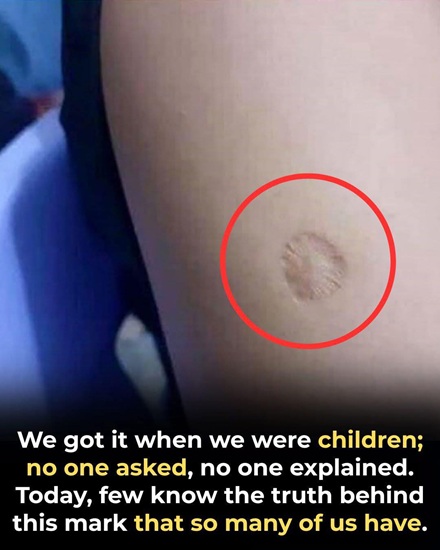
It was only much later, by complete coincidence, that the memory resurfaced in a way that felt strangely meaningful again. Years after that childhood moment, I was helping an elderly woman step off a train when I suddenly noticed the exact same type of scar on her upper arm. It was in the same location, with the same distinctive circular pattern. The sight immediately triggered a sense of recognition and curiosity I hadn’t felt in years.
I didn’t have a chance to ask her about it, but the image stayed with me long after the encounter. Later that day, I decided to call my mother and ask her about the scar I had noticed both on her and on the woman from the train. Her answer was simple, but it carried a long history behind it.
My mother explained that the mark was not unusual at all for her generation. It was the result of a smallpox vaccination, something routinely given decades ago before the disease was eradicated worldwide. That explanation suddenly connected all the scattered pieces of memory into something clear and historically grounded.

Smallpox itself was once one of the most dangerous infectious diseases in human history. It was caused by the variola virus and spread easily from person to person, often through respiratory droplets or direct contact. Outbreaks could spread rapidly in communities, especially before modern medical advances and widespread vaccination programs existed.
The illness typically began with high fever, fatigue, and body aches, followed by a distinctive rash that developed into fluid-filled pustules. These lesions often left permanent scars on survivors, and in severe cases, the disease could be fatal. Historical records estimate that smallpox caused enormous loss of life across centuries, affecting populations worldwide.
According to public health data, including reports from organizations such as the CDC, smallpox had a very high mortality rate in its most severe form, particularly in unvaccinated populations. The scale of suffering it caused made it one of the primary targets for global eradication efforts in the twentieth century.
One of the most significant achievements in medical history was the coordinated global vaccination campaign led by the World Health Organization. Through widespread immunization and surveillance, smallpox transmission was gradually interrupted in different regions of the world until it was finally declared eradicated in 1980.
After eradication was confirmed, routine vaccination programs were gradually discontinued in most countries. In the United States, for example, smallpox vaccinations had already stopped by the early 1970s for the general population, since the disease was no longer circulating naturally and the risk of exposure had become extremely low.
The smallpox vaccine itself was quite different from many modern vaccines in both method and appearance. It used a live vaccinia virus, a related but much less dangerous virus, to stimulate the immune system and create protection against smallpox infection. This approach was highly effective in building long-term immunity.
The administration process also contributed to the distinctive scar many people still carry today. Instead of a single injection, the vaccine was delivered using a special bifurcated needle that was dipped into the vaccine solution and then used to puncture the skin multiple times in a small area.
These repeated punctures allowed the vaccine to enter the superficial layers of the skin, triggering a localized immune response. In the days following vaccination, a small bump would form at the site, eventually developing into a blister filled with fluid as the immune system reacted to the virus.
Over time, that blister would rupture, dry out, and form a scab. As the skin healed, it often left behind a permanent mark in the shape of a circular or slightly indented scar. This scar became a recognizable sign that a person had been vaccinated against smallpox.
For many people of older generations, this scar serves as an unintentional historical marker. It quietly reflects a time when widespread vaccination campaigns were a critical part of public health defense against diseases that once shaped entire societies and caused widespread fear and loss.
Today, smallpox no longer exists in the natural environment, making it the first human disease to be completely eradicated through scientific and global cooperation. This achievement is widely regarded as one of the greatest successes in modern medicine and preventive healthcare.
The smallpox scar, therefore, is more than just a physical mark on the skin. It represents a period in history when collective medical effort overcame a deadly global threat. For those who carry it, it is a subtle but lasting reminder of that achievement.
Looking back now, that childhood curiosity about my mother’s scar feels different. What once seemed like a strange and unexplained mark is now a connection to a major chapter in human medical history. It is a reminder of how personal memories can sometimes intersect with global stories in unexpected ways.
