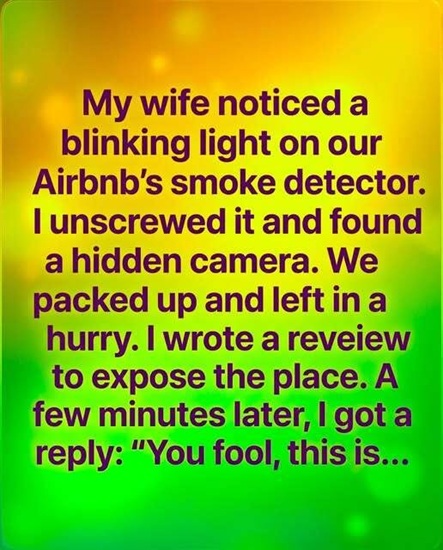
A weekend getaway is often associated with relaxation, privacy, and the comfort of staying in a peaceful environment away from daily routines. For many travelers, booking a short-term rental through online platforms has become a common way to enjoy a temporary escape. In this account, a couple chose a secluded cottage advertised as a quiet retreat surrounded by nature, offering a break from the city and everyday stress.
The listing presented the property as warm and inviting, featuring a cozy interior, a fireplace, and large windows overlooking a wooded landscape. Upon arrival, the environment appeared calm and consistent with the photos shown online. The atmosphere initially felt suitable for rest, and there was no immediate indication that anything was unusual or concerning.
However, according to the narrative, the experience began to shift during the second night of their stay, when an unusual observation reportedly caused concern and uncertainty.
Growing Concern During the Stay
During the night, the wife reportedly noticed a faint blinking light coming from a smoke detector installed above the bed. At first, this detail seemed minor and possibly harmless, as many modern devices contain indicator lights for operational purposes. However, the persistent and rhythmic nature of the light allegedly raised questions for the couple.
Curiosity led to closer inspection of the device. In this type of situation, it is common for individuals to check household safety equipment to ensure proper function. Upon closer examination, the situation reportedly felt unusual to them, leading to heightened concern about the nature of the device.
At this point in the story, the couple experienced increasing discomfort and uncertainty about their privacy and safety within the rental property.
Decision to Leave the Property
According to the account, the couple chose to leave the property during the night rather than continue their stay. In situations where guests feel unsafe or uncertain, it is not uncommon for individuals to prioritize immediate departure and seek a more secure environment.
They reportedly packed essential belongings quickly and left the location without further interaction with the host or property management. Their decision was driven by concern and a desire to reach a more public and secure place.
After leaving the cottage, they traveled to nearby towns and eventually stopped at a public, well-lit location to regroup and regain a sense of safety. In many real-world cases, individuals in stressful situations seek out public spaces as a way to reduce anxiety and regain composure.
Attempt to Report the Incident
Following the departure, the account describes the couple leaving a review and attempting to document their concerns through the rental platform. Online platforms often encourage guests to share feedback regarding their experiences, both positive and negative, as part of community-based trust systems.
According to the narrative, a response from the host followed shortly after. The message reportedly included accusations regarding damage to property and references to security systems. The wording, as described in the story, was interpreted by the couple as threatening, which increased their concern.
It is important to note that such exchanges, when they occur, can sometimes escalate misunderstandings or disputes between guests and property owners, especially in situations involving technical equipment or security devices.
Heightened Anxiety and Uncertainty
After leaving the property and receiving the response, the couple reportedly experienced heightened anxiety and uncertainty. In stressful situations like these, individuals often attempt to reassess their environment, review photos, or look for details they may have previously overlooked.
The narrative describes them revisiting images taken during their stay in an effort to understand what had occurred. This type of behavior is common in situations where people feel confused or unsettled, as they seek clarity and reassurance.
However, in this case, the interpretation of what they believed they observed contributed to further emotional distress and concern.
Seeking Safety in a Public Place
According to the account, the couple later checked into a hotel in a more populated area to ensure they were in a secure environment. Choosing a well-known accommodation with visible staff and security is a common response when individuals feel unsafe in unfamiliar situations.
They also took additional precautions with their personal devices and booking information, aiming to reduce any perceived risk. These actions reflect a general psychological response to stress, where individuals prioritize control and security after a disturbing experience.
The following day, the couple reportedly visited local authorities to share their concerns and provide details about the situation. In many similar real-world cases, police may document such reports even if immediate conclusions cannot be drawn.
Broader Reflections on Trust and Digital Rentals
This type of story highlights broader questions about trust, privacy, and safety in the era of short-term rental platforms. Millions of people worldwide use such services every day, relying on user reviews, photographs, and platform policies to guide their decisions.
While most experiences are reported to be positive, rare negative incidents can significantly impact how individuals perceive safety in shared or temporary accommodations. These situations often lead to discussions about regulation, transparency, and guest protection.
Experts generally emphasize that trust in digital platforms is built through verification systems, user accountability, and clear communication between hosts and guests.
Psychological Impact of Disturbing Experiences
Experiences that involve fear, uncertainty, or perceived threats can have lasting psychological effects. Even after leaving a situation, individuals may continue to feel heightened awareness or anxiety in similar environments.
In this account, the emotional impact appears to have extended beyond the immediate experience, influencing how the couple viewed future accommodations and travel situations. This is a common response in cases where individuals feel their sense of safety has been challenged.
Such reactions do not necessarily reflect ongoing danger, but rather the way the mind processes stressful or ambiguous events.
Trust, Safety, and Modern Travel
Ultimately, this story reflects the importance of trust and perception in modern travel experiences. Short-term rentals rely heavily on transparency, communication, and mutual understanding between hosts and guests.
While most stays are uneventful and positive, rare experiences that create fear or uncertainty can leave a strong emotional impression. These moments often lead individuals to reassess how they evaluate safety and privacy when traveling.
In conclusion, the narrative serves as a reminder of how important clear communication, reliable systems, and personal awareness are when staying in unfamiliar places. It also highlights how strongly perception and emotion can influence how an experience is remembered long after it has ended.
