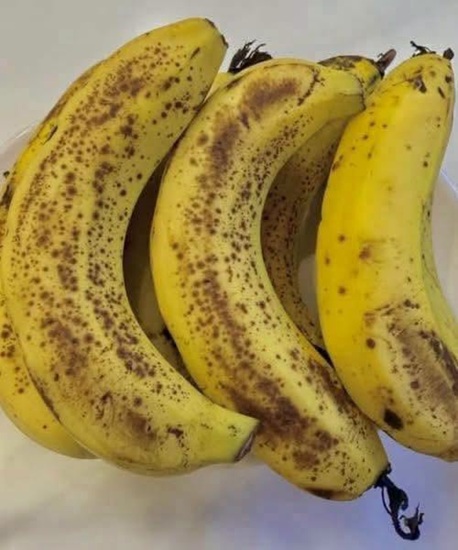
A banana sitting on the kitchen counter may look like an extremely simple snack, but something interesting is happening inside it as the fruit moves from green to yellow and eventually develops brown spots. Ripening changes its texture, flavor, aroma, and carbohydrate composition. One of the biggest changes involves starch: unripe bananas contain considerably more starch, including resistant starch, while much of that starch is converted into soluble sugars as the fruit ripens.
Researchers studying Cavendish bananas have reported that total starch can fall dramatically between the unripe and fully ripe stages. That biochemical change is the real science behind many online discussions comparing green and ripe bananas. Unfortunately, the subject is sometimes turned into frightening claims suggesting that choosing the “wrong” banana will secretly destroy blood-sugar control, cause weight gain, or damage health. The evidence does not support such sweeping conclusions.
Ripeness can influence how carbohydrates are digested, but an individual’s overall diet, portion size, health status, activity, and what is eaten alongside the banana also matter. A single ripe banana is not automatically an unhealthy food. To understand the difference, it helps to begin with a green banana. When bananas are unripe, a substantial portion of their carbohydrate exists as starch. Some of that is resistant starch, which resists digestion in the small intestine and behaves in several respects more like fermentable dietary fiber than rapidly digested starch. Studies examining bananas at different stages of ripeness consistently show resistant starch declining as ripening progresses.
Resistant starch is interesting because it does not produce exactly the same metabolic response as rapidly digested carbohydrate. Since it is not fully broken down and absorbed in the small intestine, less glucose becomes immediately available from that portion of carbohydrate. Some resistant starch reaches the large intestine, where it can be fermented by gut microorganisms. This is why unripe banana products have attracted research interest in areas such as glycemic response, satiety, and gastrointestinal health.
However, that does not mean everyone should start eating completely green bananas. Very unripe fruit can be firm, astringent, and less pleasant for many people. Some individuals also find foods rich in resistant starch harder to tolerate, particularly if they suddenly consume large amounts. Digestive responses vary considerably from person to person. A banana with some green remaining on the peel may therefore be a more practical compromise for someone who enjoys a firmer texture without wanting a completely unripe fruit.
As the banana ripens, natural enzymes begin breaking down its starch. That is one reason the fruit becomes progressively sweeter. Measurements across ripening stages show starch falling while free sugars rise, creating the familiar transition from firm and mildly sweet to soft and noticeably sweeter.
This conversion also changes the texture. The structure of the fruit softens, making ripe bananas easier to mash and blend. That is why very ripe bananas work so well in smoothies, pancakes, banana bread, oatmeal, and other recipes where sweetness and softness are desirable. The brown spots that appear on the peel are therefore not automatically signs that the fruit has become nutritionally worthless.
For blood glucose, ripeness can matter because carbohydrates that are already present as soluble sugars are generally more readily available for digestion than resistant starch. Greener bananas consequently tend to produce a different glycemic response from very ripe ones. Nutrition experts commonly note that slightly underripe bananas may have a lower glycemic impact than fully ripe bananas because they retain more resistant starch.
But this should not be transformed into the claim that ripe bananas cause dangerous blood-sugar spikes in everyone. Glycemic responses depend on more than the color of the peel. The amount eaten is important, as is whether the fruit is consumed alone or as part of a mixed meal. Individual metabolic responses can also differ, particularly among people with diabetes or impaired glucose regulation.
Pairing carbohydrate-rich foods with protein, fat, or other sources of fiber can influence how quickly a meal is digested. For example, someone might eat a banana with plain yogurt, nuts, nut butter, or another protein-containing food instead of treating the fruit as the only part of a meal. Registered dietitians discussing banana ripeness frequently recommend considering the complete snack rather than judging the banana in isolation.
Portion size matters as well. A small banana provides less carbohydrate than a very large one. That sounds obvious, but it is often overlooked in discussions that focus entirely on green versus yellow fruit. Two people could choose bananas at exactly the same stage of ripeness and still consume noticeably different amounts of carbohydrate because the fruit sizes differ.
The nutritional value of bananas also extends beyond starch and sugar. Bananas supply carbohydrate, dietary fiber, vitamin B6, potassium, and several other nutrients. USDA FoodData Central provides detailed compositional information for bananas and other foods, reinforcing that bananas are ordinary nutrient-containing fruits rather than foods that need to be divided into “safe” and “dangerous” categories based solely on peel color.
Potassium is perhaps the nutrient most famously associated with bananas. Potassium is an essential mineral involved in normal cellular function and contributes to processes including nerve signaling and muscle function. Bananas provide potassium, although the popular idea that they contain an exceptionally unmatched amount compared with all other foods is exaggerated. Many other fruits, vegetables, legumes, dairy products, and foods also contribute potassium to the diet.
Vitamin B6 is another notable nutrient. Bananas provide this water-soluble vitamin, which participates in many metabolic processes. They also contain smaller amounts of several additional vitamins and minerals. These nutrients do not suddenly disappear simply because the peel develops brown spots.
The major nutritional transformation during ripening is therefore better understood as a change in carbohydrate form rather than a transition from “healthy food” to “unhealthy food.” Green bananas contain more starch and resistant starch. Ripe bananas contain more readily available sugars. Both can fit into a balanced diet.
This becomes particularly relevant for people interested in satiety. Resistant starch has been investigated for its potential effects on fullness and appetite. A clinical trial involving resistant-starch-rich unripe banana flour found reductions in reported hunger and changes in some satiety measures among healthy participants, although research involving banana flour should not automatically be assumed to produce exactly the same effect as eating one ordinary green banana.
That distinction between research conditions and ordinary eating is important. Nutrition studies may use standardized quantities of resistant starch, powders, extracts, or specially prepared foods. A viral post may then take the result and claim that eating one green banana guarantees weight loss. That would go considerably beyond what the research establishes.
Weight management is influenced by overall energy intake, dietary pattern, physical activity, sleep, health status, medications, and many other factors. One banana cannot independently determine whether someone gains or loses weight. A slightly underripe banana might be more satisfying for some people because of its resistant starch content, but it is not a weight-loss treatment.
The opposite misconception also appears frequently: because a ripe banana is sweeter, it must automatically cause weight gain. That conclusion is equally misleading. Sweetness does not determine whether a single food causes fat gain. Total dietary intake over time is much more relevant.
Ripe bananas can be especially convenient when someone wants easily consumed carbohydrate. Athletes commonly eat bananas because they are portable and contain carbohydrate that can contribute energy before or after physical activity. A ripe banana’s softer texture and greater proportion of soluble sugars can make it an appealing option when rapidly available carbohydrate is desired.
Still, calling a spotted banana the “ultimate pre-workout food” would be an exaggeration. Exercise nutrition depends on the sport, training intensity, timing, meal size, and individual gastrointestinal tolerance. One runner may enjoy a ripe banana shortly before exercise, while another may prefer eating several hours beforehand or choosing a different carbohydrate source entirely.
People with sensitive digestion may also have different preferences. A ripe banana’s softer texture and lower resistant-starch content can make it easier for some people to tolerate. On the other hand, gastrointestinal conditions vary so widely that no universal recommendation can be made simply from peel color. Someone with persistent digestive problems should not rely on a banana-ripeness chart as a substitute for medical evaluation.
Another widely repeated claim is that heavily spotted bananas develop extraordinary antioxidant powers as they ripen. Bananas do contain bioactive compounds, including phenolic compounds, but the relationship between ripeness and antioxidant activity is more complicated than saying “more brown spots equal dramatically more antioxidants.” Research shows that cultivar, genotype, ripening conditions, tissue examined, and analytical method can all influence measured polyphenol and antioxidant values.
This means a spotted banana should not be described as a concentrated medical treatment for inflammation or cellular aging. Foods containing antioxidant compounds can certainly be part of a nutritious diet, but claims that one fruit will “fight systemic inflammation” or prevent disease need far stronger evidence than laboratory measurements of antioxidant activity.
The term “antioxidant” itself can become misleading when used in advertising. Measuring antioxidant activity in a food sample does not automatically prove that eating that food will produce a large clinical effect inside the human body. Digestion, absorption, metabolism, dosage, and the overall dietary pattern all influence what happens after food is consumed.
The gut-health discussion deserves similar nuance. Resistant starch can reach the large intestine and serve as a fermentable substrate for certain microorganisms. For that reason, foods containing resistant starch are frequently described as having prebiotic potential. Research on green banana biomass and unripe banana products supports continued interest in resistant starch as a functional food component.
But the human gut microbiome is extraordinarily complex. Eating a green banana cannot guarantee a particular microbiome composition, stronger immunity, or improved mood. Those are broader outcomes influenced by many biological and environmental factors. Saying resistant starch can support fermentation by beneficial gut microbes is reasonable; promising that a banana will transform someone’s immune system or mental health is not.
The same careful language should be used when discussing inflammation. Resistant starch fermentation can produce short-chain fatty acids, and dietary fiber has important relationships with gut health. However, converting those mechanisms into a claim that one slightly green banana will reduce inflammation throughout the body is too strong.
So what actually changes as a banana ripens?
The clearest answer is the carbohydrate profile.
An unripe banana contains much more starch.
During ripening, enzymes progressively convert that starch into sugars.
The fruit becomes sweeter and softer.
Resistant starch decreases substantially.
This means that someone specifically trying to maximize resistant starch may prefer a greener banana.
Someone who prefers sweeter flavor and softer texture may prefer a yellow or spotted banana.
Someone wanting carbohydrate that is more readily available before activity may find ripe fruit convenient.
None of those preferences makes the other choices wrong.
Individual blood-glucose management deserves particular care because it is a medical issue rather than simply a wellness trend. People with diabetes can often include fruit in their eating plans, but carbohydrate amount, medications, meal composition, and individual glucose responses matter. A person whose healthcare professional has given specific carbohydrate guidance should follow that guidance rather than replacing it with generalized advice from social media.
It is also misleading to assume that every person with diabetes should eat only green bananas. Although greener bananas contain more resistant starch, portion size and total carbohydrate intake still matter. Some individuals may also dislike or poorly tolerate very unripe bananas.
People without diabetes do not generally need to fear eating a ripe banana because it contains naturally occurring sugars. Whole fruit comes packaged with water, fiber, micronutrients, and a physical food matrix that differs considerably from drinking an equivalent quantity of added sugar in a sweetened beverage.
The way the banana is prepared can also matter. Blending a banana into a smoothie changes the physical structure of the food, and the final nutritional effect depends heavily on what else goes into the drink. A smoothie containing banana, unsweetened yogurt, berries, and nuts is nutritionally different from one containing several bananas, sweetened juice, syrups, and ice cream.
The same applies to banana bread. Very ripe bananas are popular in baking because they contribute sweetness and moisture. But the nutritional characteristics of the finished loaf depend on flour, added sugar, butter or oil, serving size, and other ingredients. The brown banana itself does not determine whether the recipe is nutritionally balanced.
Freezing bananas does not suddenly remove their nutrients either. Ripe bananas can be sliced and frozen for later use in smoothies or desserts, reducing food waste. If several bananas are becoming too ripe to eat immediately, freezing them can be a practical alternative to throwing them away.
Brown spots alone also do not necessarily mean a banana is spoiled. Ripening normally produces spotting and softening. Spoilage is a different issue and may involve extensive mold, leaking liquid, fermentation odors, or other clear signs that the fruit is deteriorating beyond normal ripeness.
People often throw away bananas simply because the peel has become unattractive. Yet a heavily spotted peel can surround perfectly usable fruit. When the flesh still appears and smells normal, very ripe bananas can be useful for baking, freezing, or blending.
The change from green to yellow is controlled partly by ethylene, a plant hormone involved in fruit ripening. Bananas are climacteric fruits, meaning their respiration and ethylene production increase during ripening. This is why storing bananas near other ethylene-producing fruit can affect how quickly they mature.
Temperature matters too. Refrigerating a banana after it has reached the preferred ripeness can slow further softening, although the peel may darken considerably in the refrigerator. A darkened refrigerated peel does not necessarily mean the flesh inside has suddenly spoiled.
Storage therefore gives consumers some control over the stage they prefer. Someone who likes slightly green bananas can purchase them in smaller quantities and keep them away from warmer areas. Someone who wants ripe bananas for baking may intentionally allow them to sit at room temperature until heavily spotted.
Ripeness preferences also differ culturally and culinary-wise. In some cuisines, green bananas and plantains are cooked as starchy foods. In others, sweet ripe bananas are used primarily as fruit or desserts. The assumption that a banana must always be bright yellow to be edible reflects only one way of using the fruit.
Variety matters as well. Much of the research and supermarket discussion concerns Cavendish bananas, but many banana and plantain cultivars exist around the world. Their starch, sugar, phenolic compounds, flavor, and ripening behavior can differ. Research has documented genotype-related differences in starch digestibility and polyphenol content.
That is another reason simple color charts promising an exact health effect should be treated cautiously. A chart showing green, yellow, spotted, and brown bananas may be useful as a general visual guide to ripeness, but biology is not precise enough for the peel color alone to predict exactly what will happen to one person’s blood glucose or digestion.
It is also inaccurate to call resistant starch ordinary dietary fiber without qualification. Resistant starch behaves similarly to fiber in important physiological respects because it escapes digestion in the small intestine, but it is technically starch categorized according to its resistance to digestion. Understanding that nuance prevents simplified nutrition explanations from becoming misleading.
For someone without a specific medical restriction, the most practical advice is remarkably ordinary: choose the banana ripeness you enjoy and that fits how you plan to use it.
A greenish banana is firmer and less sweet.
A yellow banana is softer and sweeter.
A heavily spotted banana is softer still and contains a greater proportion of its carbohydrate as sugars.
Each can have a place in normal eating.
If maintaining steadier glucose is a particular priority, someone might reasonably choose a slightly underripe banana and combine it with protein, fat, or additional fiber. But this should be considered one dietary strategy rather than a guarantee against glucose elevation.
If quick carbohydrate availability is useful, such as around some exercise sessions, a ripe banana may be convenient.
If the fruit is destined for baking, a heavily spotted banana may provide better flavor and texture without needing as much added sweetener in some recipes.
If digestive tolerance is the main consideration, personal experience matters.
A greener banana’s resistant starch may benefit some people yet cause discomfort in others.
A ripe banana may feel easier for certain people to eat.
There is no single peel color that can be prescribed to everyone.
The idea of selecting food according to individual needs is reasonable.
Calling the banana a “precision tool for optimal health,” however, exaggerates the science.
Food choices operate within complete dietary patterns.
One banana cannot compensate for chronically inadequate nutrition, nor can one ripe banana ruin an otherwise balanced diet.
That broader perspective is especially important on social media, where nutrition content often uses dramatic before-and-after claims.
“Never eat spotted bananas.”
“Green bananas melt fat.”
“Brown bananas fight cancer.”
“Yellow bananas destroy blood sugar.”
Statements like these may attract clicks, but they reduce complicated nutritional science to conclusions the evidence does not support.
A more accurate message is still interesting.
Ripening really does change banana chemistry.
Resistant starch genuinely decreases.
Soluble sugars genuinely increase.
Texture and sweetness change noticeably.
These changes can influence digestion and glycemic response.
That is already a fascinating biological process without adding fear.
The best ripeness stage therefore depends partly on purpose and preference rather than a universal ranking.
A person interested in resistant starch may choose slightly greener fruit.
Someone who wants softness and sweetness may choose spotted fruit.
A cook might use different ripeness stages for completely different recipes.
A healthcare professional may recommend yet another approach for a patient with specific medical needs.
The fruit does not suddenly switch from beneficial to harmful when one brown spot appears.
Nor does a green peel automatically transform it into a therapeutic food.
The transition is gradual.
Biochemistry rarely follows the dramatic categories used in viral graphics.
That is perhaps the most useful takeaway.
Bananas are ordinary whole foods whose carbohydrate composition evolves as they ripen.
Green bananas generally contain more resistant starch and less free sugar.
Ripe bananas contain less resistant starch and more naturally occurring sugars.
Both remain foods rather than medicines.
Both can fit into healthy dietary patterns.
And neither should be treated as a miracle solution or a hidden dietary danger.
The next time you stand in front of a bunch of bananas, you can make a choice based on something more useful than fear.
If you want a firmer, less-sweet fruit with more resistant starch, choose one with some green.
If you want a soft, sweet banana for immediate eating or cooking, choose yellow.
If you want something naturally sweeter for a smoothie or baking, those brown-speckled bananas may be ideal.
The science does not demand that everyone choose the same one.
It simply explains why they taste and behave differently.
And that is the real story behind banana color: not a secret trick capable of transforming your health overnight, but a fascinating example of how a living fruit continues changing after harvest.
The starch changes.
The sugars change.
The texture changes.
Your ideal choice may change depending on what you need that day.
But there is no “wrong” banana simply because its peel has reached a different stage of ripeness.
