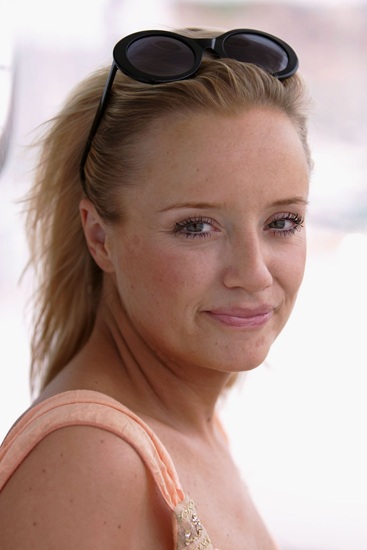
Lucy Davis, the British actress known to millions of viewers for playing Dawn Tinsley in the original UK version of The Office, has publicly revealed that she is living with Stage 4 breast cancer. Davis, 53, said she received the diagnosis around a year and a half ago and had kept the information largely private until deciding to share it publicly in August 2026. In her own statement, she explained that the cancer had spread to her bones, specifically her spine, right hip, and ribs. She also described the disease as incurable and said chemotherapy was no longer an option available to her.
The announcement was deeply personal, but Davis did not frame it only around fear or sadness. Instead, she explained that she is trying to make the most of the time available to her and continue doing the things that bring her meaning and enjoyment. She wrote that she wants to live whatever remains of her life “in as fun a way as I possibly can.” That attitude became one of the central themes of her message, alongside humor, acceptance, work, and concern for the family and friends affected by her diagnosis.
Davis also used her announcement to describe the first sign that led to her diagnosis. She said she did not initially feel what she imagined a conventional breast lump would feel like. Instead, she noticed a very small hard area that was easy to dismiss. According to Davis, the change seemed minor enough that she almost did not have it examined. She later encouraged other people not to ignore changes in their bodies and to have concerning or unfamiliar symptoms properly assessed.

That part of her message is important, but it should be interpreted carefully. One person’s experience does not provide a diagnostic rule for everyone else. Breast changes can have many causes, and a small hard area does not automatically mean cancer. At the same time, unexplained or persistent changes deserve medical evaluation rather than diagnosis through social media or comparison with another person’s story. Davis’s advice was based on her own experience and emphasized paying attention rather than attempting to diagnose oneself.
By the time Davis received her diagnosis, she said the cancer had already metastasized to several areas of bone. Stage 4 breast cancer means that malignant cells originating in the breast have spread beyond the breast and nearby lymph nodes to distant parts of the body. In Davis’s case, she specifically identified bone involvement affecting her spine, right hip, and ribs. These details came directly from the actress and have been consistently reported by multiple news organizations covering her announcement.
Davis has also spoken candidly about the physical consequences of the disease. She described pain that can at times be significant and said prolonged standing or walking can become difficult. Because of those limitations, she sometimes uses a wheelchair. Even while discussing that reality, she maintained the humor that has long been associated with her public personality, joking that people who see her in a wheelchair are welcome to give her a push.

Her comments about mobility are another area where careful wording matters. Needing a wheelchair some of the time does not mean Davis is unable to work or participate in everyday life. She made the opposite point herself, explaining that she still considers herself capable of acting and wants to continue working whenever possible. Mobility aids can allow people to preserve independence and participate in activities when walking or standing becomes difficult, and their use should not automatically be interpreted as a sign that someone has withdrawn from ordinary life.
Humor has become particularly important to Davis during this period. She wrote that humor had been “most vital” to her and encouraged people around her not to treat her exclusively as someone who is ill. Her message suggested that she wants friends, colleagues, and fans to continue interacting with her as the person they have always known rather than allowing cancer to become the only subject attached to her identity.
That preference is understandable. A serious diagnosis inevitably changes aspects of someone’s life, but people living with advanced illness still have interests, personalities, relationships, careers, and ordinary preferences that exist independently of the disease. Davis’s comments made clear that she does not want every interaction to be reduced to expressions of concern. For her, laughter and familiar social behavior remain an important part of maintaining a sense of normality.
She also spoke openly about how she views death and whatever may eventually come next. Davis said she is not frightened and described herself as being at peace. Her comments included a personal spiritual interpretation of death, which she characterized as leaving the physical body and “going home.” That statement reflects Davis’s own beliefs and should be understood as her personal perspective rather than a factual claim about what happens after death.

Davis also acknowledged that her diagnosis may be harder emotionally for the people who love her than it is for her personally. She expressed concern for her family and suggested that much of the grief surrounding her illness belongs to those close to her. That perspective reflects how serious illness can affect an entire network of relatives and friends, not only the person receiving treatment.
Despite the seriousness of her condition, Davis has not indicated that she intends to withdraw from the causes and work that matter to her. She said she plans to continue supporting animal rights, an issue she has long cared about. She also expressed a desire to keep acting, explaining that performing remains one of the greatest joys in her life and that she still considers herself capable of working.
That desire to continue acting adds important context to the announcement. Davis is not presenting her diagnosis as the end of her professional identity. Instead, she is trying to continue participating in the parts of life that still bring her satisfaction while adapting to the physical limitations created by her illness.
For many viewers, Davis will forever be associated with Dawn Tinsley from The Office. The BBC comedy, created by Ricky Gervais and Stephen Merchant, originally aired between 2001 and 2003 and became enormously influential. Davis played the receptionist at the fictional Wernham Hogg paper company, appearing opposite Martin Freeman’s Tim Canterbury. Dawn and Tim’s understated romantic storyline became one of the emotional centers of the series.
Her performance was especially memorable because Dawn was not written as an exaggerated sitcom character. She was an ordinary woman in an unfulfilling job, navigating an unsatisfying relationship while gradually recognizing her feelings for Tim. Davis’s quiet comic timing and emotional restraint helped make the character relatable and contributed significantly to the show’s enduring popularity.
The role brought Davis international recognition as The Office was adapted and rediscovered by audiences around the world. Although the American version later became much longer and more widely syndicated, the original British series remains highly regarded, and Dawn continues to be one of its best-remembered characters.
Davis’s career, however, began before The Office. One of her earlier recognizable roles was Maria Lucas in the BBC’s celebrated 1995 adaptation of Jane Austen’s Pride and Prejudice. The production, starring Colin Firth and Jennifer Ehle, became one of the most acclaimed television adaptations of Austen’s work and gave Davis an early opportunity to appear in a major British production.
After The Office, Davis continued working across film and television. In 2004, she appeared as Dianne in Edgar Wright’s horror comedy Shaun of the Dead. The movie became an international success and developed a lasting cult following, providing Davis with another character remembered by audiences long after its original release.
Her career later expanded into large-scale Hollywood productions as well. In 2017, Davis appeared in Wonder Woman as Etta Candy, the secretary and friend of Steve Trevor. The film became one of the most successful superhero releases of its period, introducing Davis to another large international audience.
Television viewers also know Davis as Hilda Spellman from Netflix’s Chilling Adventures of Sabrina. She portrayed Hilda from 2018 to 2020, presenting a warmer and more eccentric version of one of the Spellman sisters while the series explored a darker interpretation of the Sabrina story. The role became another significant part of her later career.
Davis has therefore maintained a diverse career rather than being defined by one early success. Her credits include British comedy, period drama, horror comedy, superhero films, fantasy television, and children’s programming. That range helps explain why news of her diagnosis has resonated with people who discovered her work at very different stages of their lives.
The announcement also generated messages of support from fellow performers and public figures. Reports noted responses from friends, colleagues, and fans who praised Davis for the openness and humor with which she shared her diagnosis. That reaction reflects the affection she has accumulated across decades of work.
Still, supportive reactions should not turn Davis into a symbol she did not ask to become. People respond to serious illness differently. Some want to discuss it openly, others prefer privacy, and many move between those approaches over time. Davis herself emphasized that people facing cancer should be able to navigate the experience in whatever way feels right for them.
She specifically offered support to people on similar journeys and acknowledged the physical and mental burden cancer can impose. Her message did not suggest that everyone needs to remain cheerful or approach advanced illness with the same spiritual beliefs she holds. Instead, she emphasized that each person gets to determine how they handle the experience.
That is an important distinction. Expressions such as “stay positive” can sometimes become burdensome when directed at people with serious illnesses, as though emotional optimism controls disease progression. Davis’s comments about humor and acceptance describe what helps her. They should not be transformed into requirements for other patients.
The same applies to her willingness to continue working. Some people with advanced cancer may be able to maintain substantial professional activity, while others may need to reduce or stop work entirely. Treatment, symptoms, progression, personal circumstances, and individual responses vary enormously.
Davis’s disclosure has also drawn attention to metastatic breast cancer more broadly. Metastatic disease can affect different organs and tissues, including bones, liver, lungs, or brain. Treatments depend on the biological characteristics of the cancer, previous therapies, overall health, and many other factors. No conclusions about another person’s treatment options should be drawn from Davis’s individual case.
Her statement that chemotherapy is no longer an option likewise refers specifically to her own medical circumstances. It does not mean chemotherapy is never used for Stage 4 breast cancer. Many people with metastatic breast cancer receive chemotherapy, hormonal treatments, targeted therapies, immunotherapy, radiation, bone-strengthening medications, or combinations of treatments depending on the characteristics of their disease.
Because health information carries real consequences, Davis’s story should therefore be reported without extending her individual experience into general medical instructions. Her encouragement to have changes checked is reasonable, but diagnosis and treatment decisions belong with qualified healthcare professionals who can evaluate an individual’s specific circumstances.
Davis’s disclosure also illustrates how much private information public figures may carry while continuing to work and appear publicly. For approximately a year and a half, she lived with an advanced cancer diagnosis without broadly announcing it. Fans watching her performances or social-media activity would not necessarily have known what was happening behind the scenes.
That gap between public appearance and private experience is worth remembering whenever assumptions are made about celebrities or strangers. A person’s outward appearance rarely reveals everything happening in their life.
When Davis finally decided to share the diagnosis, she did so in her own words and on her own timeline. The announcement therefore represents not simply medical information but a decision about privacy. She had kept the diagnosis largely within a smaller circle until she felt there were reasons to speak publicly.
Her choice also gave her control over how the story was framed. Rather than allowing anonymous sources or speculation to explain her condition, Davis described the diagnosis herself, explained the physical realities she faces, and stated clearly how she wants to approach the future.
That approach matters because celebrity health stories can quickly become sensationalized. Words such as “devastating,” “tragic,” or “terminal” may dominate headlines while the person involved is still living an active and meaningful life. Davis herself chose language centered more on acceptance and continuing to live than on being defined by prognosis.
It is accurate to describe Stage 4 breast cancer as serious and incurable in Davis’s case because that is how she described it. It is less accurate to write about her as though her life has already ended or as though every future possibility is known.
Prognosis in metastatic cancer varies from person to person, and even an individual patient’s doctors may speak in probabilities rather than exact timelines. Davis did not publicly provide a precise life-expectancy estimate, so responsible reporting should not invent one.
Her focus instead remains on the present. She wants to continue acting when possible, remain involved with animal-rights work, spend time with people she loves, and preserve humor in her everyday life. Those priorities provide a much fuller picture than the diagnosis alone.
The message about her first symptom has nevertheless become one of the most widely shared parts of the story. Davis’s description of a tiny hard area that she nearly ignored is memorable precisely because it did not match the obvious dramatic lump many people imagine when thinking about breast cancer.
However, readers should not assume that breast cancer always begins with a lump or hard spot. Breast changes can take different forms, and many abnormalities are benign. Any persistent or concerning change should be evaluated by a healthcare professional rather than interpreted according to a celebrity’s symptoms.
The most responsible takeaway is therefore straightforward: pay attention to unexplained changes, participate in appropriate screening according to medical guidance, and seek professional assessment when something seems unusual.
Davis herself did not present her experience as a guarantee that checking something earlier would necessarily have changed every outcome. Instead, she said she nearly ignored the initial change and now encourages others not to dismiss things that concern them. That is a personal reflection rather than a claim that every advanced cancer could have been prevented through earlier action.
Her statement has also shown that public conversations about cancer can include humor without minimizing seriousness. Davis moved between discussing pain, wheelchairs, family, death, animal rights, and jokes in the same message. That combination reflects the complexity of living with illness more accurately than presenting patients as either endlessly optimistic or permanently devastated.
People can feel frightened one day and peaceful another. They can laugh while experiencing pain. They can continue planning work while acknowledging uncertainty. Serious illness does not reduce human experience to one emotional state.
Davis appears determined to preserve that complexity. Her humor has been part of her professional life for decades, and she has made clear that she does not intend to surrender it simply because her medical circumstances have changed.
For fans of The Office, that attitude may feel especially recognizable. Dawn Tinsley was often the grounded emotional center of a workplace filled with uncomfortable comedy. Davis’s real-life statement likewise combines seriousness with a dry ability to find humor in difficult circumstances.
But the person behind the character is now asking audiences to see more than a famous role. She is sharing a private medical reality while still insisting that cancer should not become the only way people interact with her.
That may ultimately be one of the strongest messages in her announcement.
Lucy Davis has Stage 4 breast cancer. She has said it is incurable and has spread to her bones. She sometimes experiences significant pain and occasionally uses a wheelchair. Those facts are serious and should not be minimized.
At the same time, Davis is still an actress, animal-rights supporter, family member, friend, and person who values laughter. She wants to continue working and enjoying herself whenever circumstances allow. Those facts deserve equal attention.
Her announcement does not offer a simple inspirational ending, because her medical situation remains difficult and uncertain. Nor does it present hopelessness as the only possible response.
Instead, Davis has offered something more personal: an explanation of how she has chosen to live with information she cannot change.
She is paying attention to pain when it arrives, accepting assistance such as a wheelchair when necessary, maintaining her work where possible, continuing the causes that matter to her, and using humor as a source of strength.
She has also chosen not to spend the present fearing the future.
That approach belongs to Davis alone, and people facing similar diagnoses may choose very differently. Her own words acknowledge exactly that.
For those who have followed her from Pride and Prejudice through The Office, Shaun of the Dead, Wonder Woman, and Chilling Adventures of Sabrina, the announcement brings a new understanding of what she has been experiencing privately.
It also explains why she decided that now was the right time to speak openly.
The most accurate way to tell her story is therefore without exaggerating what is known or inventing details about what comes next.
Davis has disclosed an incurable Stage 4 breast cancer diagnosis that has spread to her spine, hip, and ribs. She says chemotherapy is no longer an option in her case. She experiences pain and sometimes needs mobility assistance. But she is still focused on acting, animal rights, family, humor, and making the most of the life available to her.
And her message to people reading was not primarily one of fear.
It was to pay attention to changes in the body, seek proper evaluation, allow people with cancer to navigate the experience in their own way, and remember that a diagnosis does not remove a person’s identity.
After keeping the illness largely private for a year and a half, Lucy Davis has decided to share that part of her life publicly.
She did so with honesty about the pain, gratitude for what remains, concern for those she loves, and the humor she says has helped her most.
For an actress whose career has brought laughter to audiences for decades, that determination to keep laughing now carries a particularly personal meaning.
