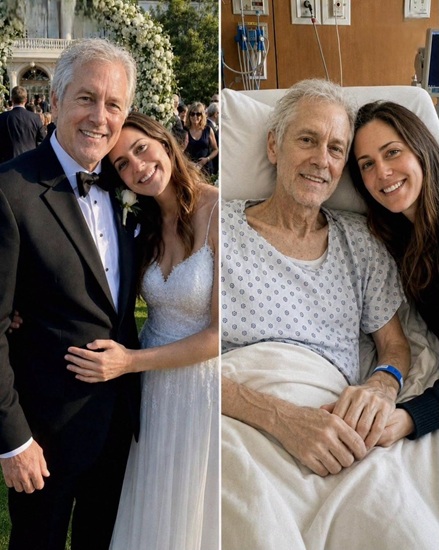
Before Russell entered my life, my apartment always seemed to carry the same combination of smells: inexpensive instant noodles, old carpet, and rainwater creeping through a window frame that my landlord never properly repaired. Every evening after work, I sat on the edge of my bed and divided my tips into small piles. One was for rent, another for electricity, and another for groceries. The grocery pile was almost always the smallest. At 32, I was working constantly and still measuring my life according to which bill needed to be paid first.
I worked wherever I could find dependable hours. Restaurant shifts paid most of my expenses, but catering jobs occasionally provided enough extra money to keep me from falling behind. Twelve-hour days were not unusual. By the time I returned home, my feet hurt, my clothes smelled like kitchens, and I usually lacked the energy to prepare a proper meal. I was not looking for someone wealthy to rescue me. Most days, I was simply trying to reach the end of the month without another unexpected expense.
Then I accepted a last-minute catering assignment at an elaborate charity gala. The ballroom looked completely removed from my everyday existence. Crystal chandeliers hung above carefully decorated tables, musicians played quietly near the entrance, and guests arrived in expensive evening clothes. I wore the standard catering uniform: black trousers, a white shirt, and uncomfortable shoes that became increasingly painful as the night continued. I had skipped lunch and barely eaten dinner, so by the middle of the event I was exhausted.
I was carrying a tray of champagne when a distinguished older man approached me. His hair was silver at the temples, and his tailored suit looked as though it probably cost more than my car. I expected him to take a glass without acknowledging me, which was common at large events. Instead, he paused and asked my name. I told him, and then he surprised me with another question: he wanted to know whether my feet hurt.
I laughed because the question was so unexpectedly ordinary. When I admitted they did, he quietly spoke to the catering captain and arranged for me to sit for several minutes behind a large marble column where guests would not notice. His name was Russell. He did not begin the conversation by discussing his money, business, or accomplishments. Instead, we talked about books, cooking, gardens, and the strange assortment of jobs I had worked over the years.
Russell told me about his late wife and the garden she had once maintained. He admitted that despite living in a house with an enormous kitchen, he had barely eaten a genuine home-cooked meal in several years. I told him about the battered paperback novel I carried in my bag to read during bus rides and breaks. The conversation lasted only a short time because I eventually had to return to work. Still, something about it remained with me after the gala ended.
The following morning, Russell called. I initially assumed he wanted information about the catering company, but instead he asked whether I would have coffee with him. I hesitated because our lives seemed completely incompatible. He lived in a world of business meetings, formal events, and financial security. I lived in an apartment where I placed a towel beneath the window whenever rain was forecast.
Curiosity eventually won. We met for coffee, and then we met again. Russell was older than me, and I understood immediately that people would make assumptions about us. Yet he was patient and surprisingly unpretentious in private. He remembered small details from our conversations. If I mentioned an exhausting shift, he called afterward to ask whether I had made it home safely. If I recommended a book, he actually read it.
Our relationship developed quickly. After approximately three months, Russell invited me to dinner at a quiet restaurant and placed a small ring on the table. He told me that he was not trying to purchase affection or manufacture a grand romance. He simply knew that he wanted me in his life and hoped I felt the same way.
I was frightened by how quickly everything had happened. Part of me wondered whether financial security was influencing my decision. I had spent so long worrying about rent and groceries that the idea of never facing those fears again was difficult to separate from everything else. I told Russell that honestly. Instead of becoming offended, he said he respected me more for admitting it.
Eventually, I accepted his proposal. At that stage, I cared deeply about him, although I was still uncertain whether what I felt qualified as the kind of love people wrote about. I told myself that relationships were built over time. Russell had shown me more kindness in three months than many people had shown me in years, and I wanted to see what our life together might become.
His adult children were far less enthusiastic. From our first meeting, it was obvious that they distrusted me. His daughter Marlene was particularly suspicious. She seemed convinced that a 32-year-old woman could have only one reason for marrying a wealthy older man. At our engagement gathering, she barely attempted to hide her contempt.
At one point, she referred to me as Russell’s latest “project.” I understood what she meant. In her mind, I was a struggling waitress who had discovered an opportunity and attached herself to a wealthy widower. I could have defended myself, but I knew nothing I said would change her opinion. Russell eventually noticed the tension and asked his children to treat me respectfully, regardless of whether they understood our relationship.
Our wedding was small and private. There were no magazine-style decorations, hundreds of guests, or elaborate celebrations. Russell wanted something peaceful, and so did I. Afterward, I moved into his home, an enormous property with polished floors, tall windows, and more rooms than I initially knew what to do with.
The difference between his home and my former apartment was overwhelming. For several weeks, I still woke expecting to hear rain dripping beside my bed. Instead, I opened my eyes to quiet rooms and curtains moving gently in the morning light. Russell never mocked me for needing time to adjust. He understood that financial security could feel unfamiliar to someone who had spent years calculating every purchase.
Marlene remained convinced that I wanted the house. One evening, she confronted me near the staircase and told me directly that I should not expect to inherit the property. She insisted that everything ultimately belonged to Russell’s children. Before I could respond, Russell appeared behind her.
He did not shout. He simply told Marlene that his affairs were his responsibility and that everyone would eventually receive exactly what he believed was appropriate. The statement ended the conversation, but it did not resolve the hostility. His children continued watching me carefully, as though they expected me to reveal some hidden plan.
What they did not see was what happened when nobody else was around. Russell made peppermint tea when I came home exhausted. He remembered that complete darkness made me uncomfortable and always left the bedroom curtains slightly open. He listened when I spoke about work even though my problems seemed small compared with the business decisions he handled every day.
Gradually, the practical calculations I had made at the beginning disappeared. I stopped thinking about what marriage to Russell had rescued me from and started thinking about how frightened I was of someday losing him. Somewhere between quiet breakfasts, long drives, and ordinary evenings at home, I realized I genuinely loved my husband.
Russell seemed to understand that transformation before I did. He never asked me to prove my feelings. He did not demand gratitude for providing financial security, and he never used money to control my decisions. If anything, he encouraged me to maintain independence. That made my affection for him stronger because I never felt that comfort had been purchased in exchange for obedience.
Then November arrived, and everything changed. Russell had been experiencing symptoms he initially dismissed as exhaustion. After medical appointments and testing, we received news neither of us was prepared to hear. His illness was advanced, and the outlook was poor. In this fictional story, his doctors believed his remaining time could be very limited.
The enormous house suddenly felt useless. All the things I once associated with security—money, property, expensive furniture, investments—could not purchase the one thing I desperately wanted. I wanted more time. I wanted another ordinary year of peppermint tea and unfinished conversations.
Russell’s condition deteriorated rapidly. Hospital corridors replaced our quiet mornings, and medical appointments replaced dinners at home. His children became increasingly involved as his health worsened. The tension between us also intensified because everyone was grieving while simultaneously worrying about what would happen next.
Marlene treated me as though my presence beside Russell was an intrusion. On one particularly difficult day, she tried to prevent me from entering his hospital room because she wanted time alone with her father. I understood that she was frightened, but I was frightened too. Russell was my husband, and I refused to disappear from his final weeks simply because his daughter did not accept our marriage.
When I eventually entered the room, Russell looked smaller than I remembered. His hand trembled when I held it. I told him about the arguments happening outside, but he asked me not to fight with his children. He told me simply to trust him.
I did not know exactly what he meant. I assumed he was asking me to preserve whatever peace remained. The following day, he asked me to bring his favorite blue blanket from home. It was an ordinary request, and perhaps that was why it hurt so much. I returned with the blanket and sat beside him for hours.
Not long afterward, Russell died. The fictional narrative does not need to turn his final moments into spectacle. What mattered to me was that the person who had transformed my understanding of love was suddenly gone. The enormous house felt emptier than my tiny apartment ever had.
At the funeral, Russell’s children stood together while I remained several steps away. People offered condolences, but many seemed unsure how to speak to me. Some had clearly heard the family’s suspicions about our marriage. Others probably had their own opinions about the age difference.
After most mourners had left, Russell’s attorney approached me. He asked me to come to his office the following morning because Russell had left detailed estate instructions. He emphasized that certain personal items and documents were supposed to be presented in a particular sequence.
I barely slept that night. Money was not what occupied my thoughts. I kept remembering Russell asking me to trust him. I wondered whether he had known how difficult the family situation would become after his death.
The following morning, I entered the attorney’s conference room and found Marlene and her brothers already waiting. Their grief had hardened into tension. Before the meeting officially began, Marlene asked when I intended to leave Russell’s house.
The attorney interrupted before I could answer. He reminded everyone that no assumptions should be made until Russell’s estate documents had been reviewed. He then placed a small wooden box on the table and pushed it toward me.
Inside was a photograph from the charity gala where Russell and I had first met. Someone had captured me laughing while carrying my serving tray. I had never known the photograph existed. Beneath it was a folded letter addressed in Russell’s handwriting.
I wanted to open it immediately, but the attorney explained that Russell had also prepared formal estate documents. In real life, inheritance rights, trusts, wills, business ownership, elective-share laws, probate procedures, and challenges vary significantly by jurisdiction. The events here remain fictional rather than a representation of how every estate would legally operate.
Within the story, Russell had reorganized his estate while he was still competent and had received independent legal advice. His documents provided substantial assets to me as his surviving spouse and established separate trusts for his adult children. He had also created succession arrangements for his business rather than simply transferring operational control without safeguards.
Marlene was furious. She accused me of manipulating her father. The attorney stopped the argument and explained that Russell had documented his decisions independently. His children were beneficiaries of trusts, but they did not receive the unrestricted control they had expected.
I felt no satisfaction watching them react. They had lost their father too. Whatever they thought about me, their grief was genuine. I wished Russell had been there to explain his choices himself.
Then I opened his letter. It did not begin with money. Russell wrote about the night we met and the photograph inside the box. He said he had noticed that I continued working even when I was exhausted and that I had initially refused offers of financial help because I wanted to support myself.
He wrote about the first months of our marriage and the moment he realized I had stopped treating the house like someone else’s property and started treating it like our home. He remembered small things I had forgotten: cooking dinner when he was sick, reading beside him when he could not sleep, and insisting on accompanying him to appointments.
Then came the part I had not expected. Russell wrote that before his condition deteriorated, he had begun to suspect I might be pregnant. He had noticed changes I had dismissed as exhaustion and had encouraged me to schedule a medical appointment.
I stared at the page. I had been feeling unusually tired and occasionally nauseated, but grief and hospital stress had overwhelmed everything else. I had not allowed myself to consider another explanation.
The attorney clarified that Russell’s estate planning did not depend on a dramatic courtroom revelation or automatically turn an unborn child into the sole “legal heir.” In reality, inheritance rights involving spouses, descendants, trusts, and children conceived before a parent’s death depend on applicable law and the estate documents involved. The fictional arrangement Russell created had already anticipated the possibility of another child.
That afternoon, I scheduled a medical appointment. The pregnancy was confirmed. The news produced emotions I could barely separate. I was grieving my husband while learning that part of the future we had imagined together would continue without him.
Marlene eventually learned about the pregnancy, but there was no dramatic moment in which she suddenly became powerless. Russell’s estate remained subject to the legal process he had established. His adult children retained the interests provided to them, while my rights and the provisions Russell created for our child remained protected under the fictional estate plan.
The weeks that followed were difficult. Attorneys handled paperwork while I handled grief. There were disagreements, but not every dispute became a lawsuit. Eventually, even Marlene seemed to understand that fighting indefinitely would not bring her father back.
I remained in the house because Russell had intended it to be my home. At first, every room reminded me of him. His coffee cup remained in a cabinet. His books still carried folded pieces of paper marking unfinished pages. The blue blanket from the hospital stayed carefully folded in our bedroom.
One rainy afternoon, I sat in the kitchen with Russell’s letter beside me and listened to water tapping against the windows. Years earlier, rain had meant placing towels beneath a broken frame and wondering whether I could afford another repair. Now I was sitting in a house where I knew my child would have a safe place to sleep.
The contrast was impossible to ignore, but money was no longer the part of Russell’s legacy that mattered most to me. Before meeting him, I had believed security meant having enough money to stop being afraid. Russell taught me that security could also mean being treated gently, listened to, and respected.
Our relationship had started in circumstances that made other people suspicious. I understood why. A struggling younger woman marrying a wealthy older man naturally invited assumptions. Even I had questioned my motivations at the beginning.
But relationships cannot always be understood from the outside. What began partly as a practical decision had developed into something neither of us had planned. I had fallen in love with the man who noticed an exhausted server’s aching feet before he knew anything else about her. Months later, as my pregnancy progressed, I began changing small parts of the house. I did not erase Russell’s presence. Instead, I tried to make room for what came next.
One bedroom became a nursery. The enormous kitchen that Russell once joked he never used began smelling like actual meals. I planted herbs outside because he had once told me how much he missed having a garden near the house. The relationship with his children remained complicated. Grief did not magically transform everyone into a harmonious family. But over time, conversations became less hostile. We were connected by someone we had all loved differently.
I eventually understood Russell’s final request more clearly. When he told me not to fight and simply to trust him, he had not been promising that money would solve everything. He knew he had already made the practical arrangements he wanted. What he wanted from me was something harder: not to allow resentment to become the final chapter of our marriage.
The inheritance gave me financial security, but the fictional story was never truly about winning an estate from hostile relatives. It was about the difference between being rescued financially and being loved with dignity. Before Russell, I had measured security in rent payments, grocery money, and whether the electricity bill could wait another week. After him, I understood that those things mattered enormously, but they were not the entire definition of a home.
A home could also be someone remembering that darkness frightened you and leaving the curtains slightly open. It could be peppermint tea after an exhausting day. It could be a photograph of an ordinary moment preserved because someone had recognized its importance before you did. Years earlier, I had accepted Russell’s proposal partly because I felt as though I were drowning and somebody had offered a lifeline. I once worried that this made our marriage less genuine.
By the end, I understood that love did not have to begin perfectly in order to become real. Sometimes people enter each other’s lives carrying complicated motivations, fears, histories, and needs. What matters is what they build after arriving. Russell gave me a home, financial stability, and a future for our child. But the most meaningful thing he left behind could not be listed in a will. He had shown me what it felt like to be treated as though my presence mattered. And on quiet rainy afternoons, sitting beside the window with his letter in my hands, that was the inheritance I valued most.
