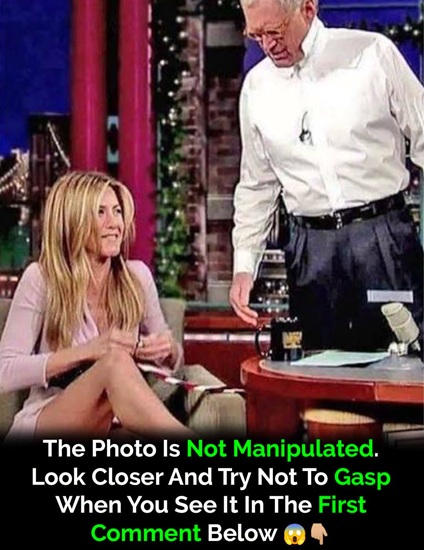
David Letterman became one of the defining figures of American late-night television, building a reputation around dry humor, unpredictable interviews and an unconventional approach to celebrity conversations. Many of his exchanges with famous guests were celebrated at the time as spontaneous television. Years later, however, some older clips have been viewed much more critically by modern audiences. Several of his interviews with Jennifer Aniston have attracted particular attention, especially after portions of those appearances resurfaced online and prompted renewed discussion about the boundaries between humor, celebrity promotion and personal discomfort.
One frequently discussed appearance took place in May 2006, when Aniston visited The Late Show with David Letterman while promoting The Break-Up. The film, directed by Peyton Reed, starred Aniston opposite Vince Vaughn and centered on a couple whose separation becomes increasingly complicated when neither wants to leave the condominium they share. Vaughn also helped develop the story and served as one of the movie’s producers. The film arrived during a period when considerable media attention was already focused on Aniston’s personal life following her highly publicized separation and divorce from Brad Pitt.
From the beginning of that 2006 conversation, Letterman repeatedly commented on Aniston’s appearance, particularly her legs. She was wearing a black outfit that included shorts, and the host complimented both the clothing and her physique. Rather than making a single passing remark, he returned to the subject several times throughout the interview. Aniston responded with laughter and attempted to move the conversation along, at one point explaining that the warm weather had influenced her decision to wear shorts. Footage from the appearance remains available and has subsequently been circulated in compilations examining Letterman’s older interviews.
The exchange has been interpreted differently over time. Some viewers regarded Letterman’s comments as part of the provocative and teasing interview style associated with late-night television during that era. Other viewers watching the footage years later have described the repeated focus on Aniston’s appearance as uncomfortable or excessive. It is useful to distinguish those later reactions from Aniston’s own documented statements: while video allows viewers to observe her responses, it would be inaccurate to state definitively what she was thinking unless she herself described those feelings. What can be established is that Letterman repeatedly returned to the subject during the conversation.
The discussion eventually moved toward The Break-Up and Aniston’s relationship with her co-star Vince Vaughn. The pair did date for a period after becoming close during production, something Aniston later discussed publicly. Their relationship attracted considerable entertainment-media attention because it followed the end of Aniston’s marriage to Pitt. Years afterward, Aniston described Vaughn affectionately and credited the relationship with helping her through a difficult period in her life. The romance eventually ended, but the two remained an important part of each other’s personal history during that transitional period.
During the Letterman interview, the host also questioned Aniston about material in the film and her relationship with Vaughn. At one stage, he asked about a scene involving nudity and whether Vaughn had been responsible for the idea. Aniston redirected the question toward her co-star, suggesting it would have been more appropriate to ask him. As the discussion continued, Letterman again returned to Aniston’s legs. That repetition is one of the main reasons the segment has drawn renewed scrutiny when clips from the interview have circulated years later.
The 2006 conversation was not the first Letterman-Aniston appearance to be reconsidered by modern audiences. A much earlier interview from 1998 attracted widespread attention after resurfacing online in 2021. Aniston had appeared on The Late Show while promoting The Object of My Affection. During their conversation, she told a story about encountering fans in a steam room. Letterman then moved his chair closer, approached her hair and placed a strand of it into his mouth before pulling away. Video of the moment shows Aniston questioning what he was doing before the interaction continued.
Afterward, Letterman handed Aniston a tissue so she could wipe her hair. The clip generated significant criticism when it resurfaced more than two decades later, with viewers describing the interaction as inappropriate and questioning why such conduct had once been presented as ordinary television comedy. Coverage in 2021 noted that the renewed reaction occurred during a broader reassessment of how female celebrities had been treated by entertainment media during the 1990s and 2000s.
The renewed criticism was part of a larger cultural conversation rather than an isolated reaction to Aniston’s interview. Around the same period, older celebrity interviews involving Britney Spears, Lindsay Lohan and other women were circulating again. Audiences were comparing past entertainment standards with contemporary expectations regarding privacy, consent and the treatment of guests. Letterman’s confrontational interview style had often been considered part of his comedic identity, but some segments looked different to viewers encountering them decades later and outside the original cultural context.
Aniston nevertheless returned to Letterman’s program on multiple occasions. One particularly memorable appearance came in December 2008 while she was promoting Marley & Me, the comedy-drama in which she starred with Owen Wilson. The movie, based on John Grogan’s memoir, followed a married couple and the life they built around their energetic Labrador retriever. Released on Christmas Day in 2008, the film became a significant box-office success and earned nearly $248 million worldwide.
That appearance had a noticeably more playful moment involving Aniston’s recent GQ magazine cover. For the January 2009 issue, she had posed wearing a red, white and blue necktie. During her visit to The Late Show, Aniston brought Letterman the actual Brooks Brothers tie used for the photograph and presented it as an early holiday gift. Contemporary entertainment coverage confirmed that the tie was the same piece she had worn during the GQ shoot.
Letterman removed the tie he was already wearing and put on Aniston’s gift with her assistance. The exchange became lighthearted as she helped him adjust it and joked about dressing the television host. Letterman responded with his own jokes when the tie appeared shorter on him than expected. Unlike some of their earlier interactions that have generated criticism in retrospect, the gift exchange was clearly presented as a playful segment connected to Aniston’s magazine appearance and her promotion of Marley & Me.
The GQ interview associated with that cover also showed how intensely Aniston’s personal relationships continued to dominate coverage of her career. She discussed subjects including her relationship with musician John Mayer, her earlier marriage to Brad Pitt and the constant attention from photographers and entertainment publications. At the same time, she was promoting several professional projects, including Marley & Me and He’s Just Not That Into You. The tension between questions about her work and intense curiosity about her personal life had followed Aniston for much of her career.
That context is important when revisiting her appearances on late-night television. By the mid-2000s, Aniston was one of the most recognizable actresses in the world because of Friends, and almost every public appearance generated questions about her relationships. Her 2005 separation from Pitt became one of the most heavily covered celebrity stories of the decade. While promoting films, she therefore often encountered interviews that shifted quickly from professional questions toward dating rumors, divorce and physical appearance.
Aniston herself has reflected differently on parts of that period as time has passed. In 2025, she described making The Break-Up shortly after her divorce as a surprisingly cathartic experience. Rather than avoiding a movie centered on the collapse of a relationship, she said the project provided an emotional outlet at a personally difficult moment. She also confirmed that she maintained friendly relationships with people from earlier stages of her life, illustrating how her own perspective on those years has evolved independently of the tabloid narratives that surrounded them.
The resurfacing of Letterman’s interviews does not require rewriting every aspect of late-night television from that era as malicious. Comedy programs frequently relied on deliberately awkward exchanges, provocative questions and unexpected interactions. Letterman, in particular, built much of his career around challenging conventional celebrity interviews. At the same time, audiences are free to reassess older material as social expectations change. Something that attracted relatively little criticism during an original broadcast can look substantially different when viewed years later.
That distinction is particularly important when describing Aniston’s reactions. Videos document what happened, and contemporary or later viewers can explain why they personally find particular moments uncomfortable. But claims about Aniston’s private feelings should remain limited to statements she has actually made. Describing her as unquestionably humiliated, frightened or angry during every disputed exchange would go beyond what the available evidence establishes. A factual account can describe the behavior shown on screen while clearly identifying later criticism as the reaction of viewers and commentators.
The 1998 hair incident remains the clearest example of how significantly perceptions have changed. The footage itself confirms that Letterman approached Aniston and put a strand of her hair in his mouth, and subsequent coverage documents the strong criticism the clip received when it resurfaced. What had once been broadcast as a strange comedic moment was interpreted by many later viewers as an invasion of personal boundaries. That renewed discussion became part of the broader examination of how celebrities—especially young women—were treated in interviews during earlier periods of entertainment television.
The 2006 interview occupies a somewhat different category. Letterman’s repeated comments about Aniston’s legs are documented, as are his questions about Vaughn and The Break-Up. Viewers can reach their own conclusions about whether the conversation was playful, inappropriate or simply representative of television conventions at the time. What matters factually is avoiding exaggerated claims and allowing the original footage and documented statements to provide the basis for any interpretation.
Aniston’s continued appearances on the program also complicate any simplistic interpretation of their relationship. Returning to The Late Show does not prove that she approved of every previous interaction, just as an awkward moment does not automatically establish hostility between host and guest. Her 2008 visit demonstrated that the two could participate in an intentionally comedic exchange, with Aniston arriving prepared with the GQ tie and enthusiastically helping Letterman put it on.
Looking back, these interviews offer a revealing snapshot of how celebrity television has changed. Late-night hosts continue to joke with guests and discuss personal topics, but expectations surrounding physical boundaries and intrusive questioning have evolved considerably. Social media also gives audiences the ability to isolate and redistribute old clips, allowing moments from decades earlier to be examined by viewers who did not experience the original broadcasts.
For Aniston, the interviews represent only a small part of a career that has lasted for decades. Her professional accomplishments extend far beyond the intense media attention that surrounded her appearance and relationships during the height of Friends and its aftermath. Likewise, Letterman’s enormous contribution to late-night television cannot be reduced to a handful of controversial exchanges. His career included thousands of interviews, comedy segments and broadcasts that helped reshape the format.
Yet revisiting these particular moments can still serve a useful purpose. They demonstrate how humor and entertainment standards change, how famous women were frequently questioned about their appearance and relationships, and how audiences increasingly distinguish between intentionally awkward comedy and behavior they consider to have crossed personal boundaries.
The most accurate way to remember the Aniston-Letterman interviews is therefore neither to dismiss the criticism nor to exaggerate what can be proven. The clips exist, the interactions are documented, and the later backlash is real. At the same time, interpretations of Aniston’s emotions should not be presented as established fact unless they are supported by her own statements.
More than two decades after some of these conversations originally aired, they continue to generate discussion precisely because television does not remain frozen in the standards of the era that produced it. Viewers bring modern expectations to older material, sometimes discovering that scenes once treated as harmless entertainment now feel strikingly different. Jennifer Aniston’s appearances with David Letterman are a clear example of that changing perspective—and of why factual context matters when old celebrity moments find a new audience online.
