Air travel often brings together people from very different backgrounds who may never meet again after reaching their destination. Most flights pass without incident, with passengers reading, sleeping, watching movies, or simply waiting to arrive. Occasionally, however, a situation develops that attracts concern from those nearby. In stories shared online and through news-style reports, observers sometimes describe noticing signs of fear, stress, or discomfort in fellow travelers that raise questions about their well-being.
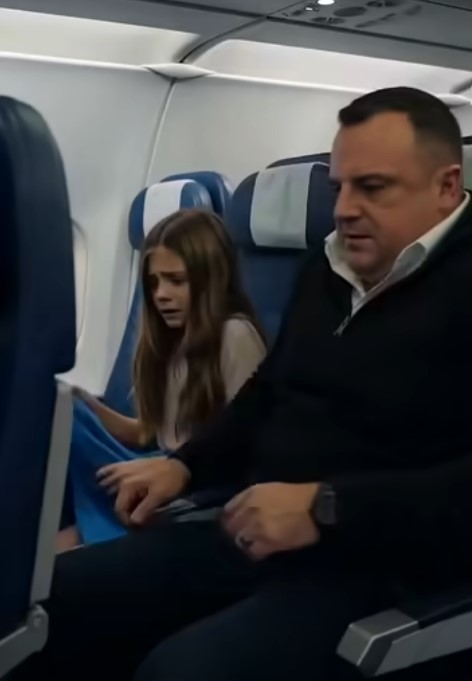
According to the account, an overnight flight became the setting for a situation that drew attention from several passengers. To those boarding the aircraft, a man identified as Raymond and a fourteen-year-old girl named Maya appeared to be traveling together as family members. Nothing about their appearance immediately stood out. They moved through the airport quietly and took their seats like countless other travelers preparing for a routine journey.
While many passengers paid little attention to the pair, one traveler reportedly became concerned after observing their interactions. The passenger, identified as Julian Ross, was described as someone who relied heavily on visual observation because of profound hearing loss. As a result, he often focused closely on body language, facial expressions, and nonverbal communication when interacting with people around him.
As the flight progressed, Julian reportedly noticed several behaviors that made him uneasy. He observed what he believed was unusual tension between the adult and the teenager. According to the story, Maya appeared withdrawn and anxious, avoiding eye contact and speaking very little. Observers sometimes note that fear, stress, exhaustion, grief, illness, or many other personal circumstances can affect how someone behaves during travel, making it difficult to draw conclusions from appearance alone.
The report states that a flight attendant briefly spoke with the pair early in the journey. Raymond allegedly explained that Maya was dealing with emotional difficulties following a challenging period in her life. Such explanations can often appear reasonable in the moment, especially when airline crews are balancing the needs of many passengers at once. Based on the account, the interaction ended without further concern from the crew at that stage.
Julian reportedly continued paying attention to the situation throughout the flight. According to the story, he became increasingly concerned after noticing what he interpreted as signs of fear and emotional distress. The account claims that Maya appeared uncomfortable and unusually nervous whenever Raymond spoke to her. While observations alone rarely provide a complete picture, they can sometimes encourage people to remain alert when something feels unusual.
The story further describes how another passenger, Sarah Jenkins, became aware of the situation. Sarah, identified as a healthcare professional, allegedly noticed signs of significant stress in the teenager. Medical professionals are often trained to recognize physical indicators of anxiety, fatigue, or emotional strain, although such observations do not necessarily reveal the cause of those symptoms. According to the account, Sarah and Julian independently developed concerns and decided to continue monitoring the situation.
As the flight continued, the report claims that Raymond provided Maya with medication from a prescription bottle. Situations involving medication can be difficult for observers to interpret because travelers often carry legitimate prescriptions for a wide range of medical conditions. Nevertheless, the story states that Maya appeared reluctant to take the medication and later seemed increasingly drowsy, which heightened concern among those watching.
According to the narrative, Julian eventually found a way to communicate directly with Maya through a handwritten note. The note reportedly conveyed reassurance and encouraged her to signal if she needed assistance. Communication can be especially important in situations where a person may feel isolated, frightened, or unable to speak openly about their circumstances.
The account claims that Maya later responded in a way that suggested she wanted help. This reportedly prompted increased attention from nearby passengers and airline personnel. As concerns grew, the situation allegedly drew the involvement of additional individuals on board, leading to closer examination of what was taking place.
According to the story, questions raised during the flight eventually resulted in intervention by authorities after landing. The narrative states that law enforcement officers and medical personnel met the aircraft upon arrival and began investigating the circumstances. As with any reported incident, official investigations are responsible for determining facts and evaluating evidence rather than relying solely on observations made by witnesses.
One of the central themes of the story is the importance of awareness. Experts in personal safety often encourage people to trust reasonable concerns while also avoiding assumptions. Observing unusual behavior does not automatically mean wrongdoing has occurred, but remaining attentive can sometimes help identify situations where someone may need assistance or support.
The account also highlights how cooperation between passengers and trained professionals can contribute to safety. Airline crew members, medical personnel, and law enforcement agencies each play important roles in responding to potential concerns during travel. Their training and procedures are designed to evaluate situations carefully while protecting the well-being of everyone involved.
Stories like this frequently resonate with readers because they emphasize compassion and responsibility. They remind people that small acts of concern can make a meaningful difference. Whether someone is traveling by plane, train, bus, or any other form of transportation, paying attention to the welfare of others can contribute to a safer environment for everyone.
Ultimately, the lesson many readers take from accounts like this is simple. Remaining observant, treating people with empathy, and reporting genuine concerns through appropriate channels can be valuable actions. While appearances alone rarely tell the full story, awareness combined with responsible judgment can sometimes help ensure that individuals who need assistance are not overlooked.
