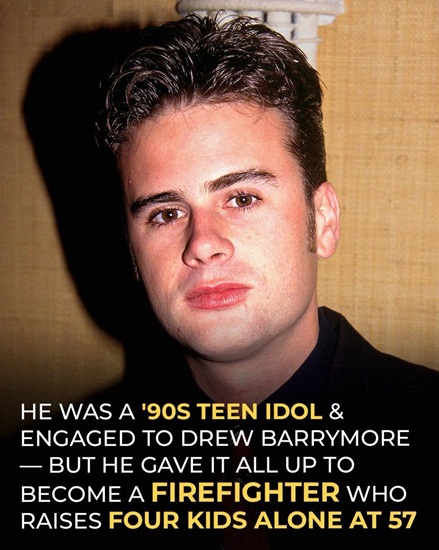
Jamie Walters became a familiar face to television audiences in the 1990s, best known for his role as Ray Pruit on the hit series Beverly Hills, 90210. At a time when teen dramas dominated pop culture, his character placed him directly in the center of one of the most widely watched shows of the decade. But long before television fame, Walters had already been building a life rooted in music and performance. Growing up in Massachusetts, Walters developed an early passion for music.
He began playing guitar as a child and was influenced by rock artists that shaped his creative direction. His interest in music led him to perform in local bands during his teenage years, long before he ever stepped in front of a television camera. After moving into entertainment more seriously, Walters pursued both acting and music.

Early in his career, he appeared in commercials and small film roles, eventually landing a breakthrough opportunity in the musical television series The Heights. Although the show had a short run, it produced a major hit song, “How Do You Talk to an Angel,” which reached the top of the Billboard Hot 100 and brought Walters into the national spotlight.
His early success in both acting and music positioned him as a rising talent in the entertainment industry. Record labels showed interest in his music career, and he released material that gained attention on music charts. However, he has often reflected that balancing acting and music created pressure, especially as his public visibility increased.

Walters’ most widely recognized acting role came when he joined Beverly Hills, 90210 as Ray Pruit, a young musician whose storyline became central to one of the show’s major plot arcs. His character’s relationship with Donna Martin, played by Tori Spelling, initially aligned with his real-life musical background, allowing him to perform songs within the series.
However, the storyline later took a dramatic turn, addressing serious issues that changed how audiences perceived the character. The shift led to strong viewer reactions, and Walters later explained that the intensity of the role sometimes blurred the line between fiction and public perception. Many viewers associated him personally with the character, which led to unwanted attention in real life.
Following his exit from the series, Walters experienced a shift in his public image. While he had gained popularity as both an actor and musician, he also became aware of the challenges that come with being strongly identified with a single television role. Over time, he gradually stepped back from mainstream entertainment.

During the height of his fame, Walters also experienced personal relationships that attracted media attention, including a high-profile engagement in the 1990s. He has since described that period as a formative time in his life, marked by youth, rapid career growth, and public scrutiny.
As the years went on, Walters made a major life decision to leave Hollywood behind. Seeking stability and a different kind of purpose, he pursued a completely new career path outside of entertainment. This transition eventually led him to the Los Angeles Fire Department.
The decision to become a firefighter was not immediate. Walters went through a lengthy and demanding application process that included physical testing, medical evaluations, psychological assessments, and training requirements. It took several years before he officially entered the fire academy.
In 2003, he completed training and began working in public service. Over time, he built a long-term career as a firefighter-paramedic, a role that marked a significant shift from his earlier life in entertainment. His work in emergency services has now spanned decades, reflecting a very different kind of public contribution.

Walters has spoken in interviews about the transition, explaining that he was drawn to the idea of stability, teamwork, and meaningful work that directly helps others. Unlike the entertainment industry, firefighting offered a structured environment focused on service rather than fame.
Today, Jamie Walters is known less for his years in Hollywood and more for his long-standing service in emergency response. His career path is often cited as an example of a public figure choosing a completely different direction after early fame, prioritizing personal fulfillment over celebrity status.
Looking back, his journey reflects two very different lives—one shaped by entertainment and public attention, and another built around discipline, service, and everyday responsibility. While his time on Beverly Hills, 90210 remains a recognizable part of pop culture history, his later work has defined a quieter but equally meaningful chapter of his life.
