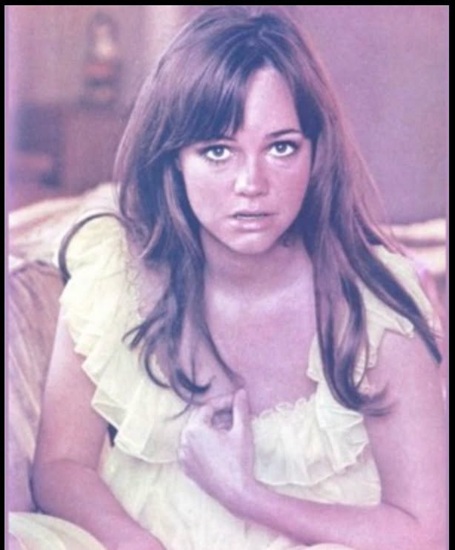
Sally Field has spent more than six decades building one of the most respected acting careers in American film and television. From the lighthearted television roles that introduced her to audiences in the 1960s to acclaimed dramatic performances that earned her two Academy Awards, Field repeatedly demonstrated an ability to move between comedy and drama. With such a long career also came numerous fictional romances and on-screen kisses.
During a television appearance in December 2022, however, Field was asked to identify the co-star behind what she considered her least enjoyable on-screen kiss. Field initially appeared reluctant to answer. During her appearance on Watch What Happens Live with Andy Cohen, a viewer asked her to name her worst on-screen kiss. She laughed and questioned whether she should really identify the person publicly. Cohen encouraged her to answer, and after a moment of hesitation, Field warned that her response might surprise people.
The person she eventually named was not an obscure actor from the beginning of her career but Burt Reynolds, her former co-star and real-life romantic partner. The answer was particularly notable because Field and Reynolds shared both professional and personal history. They met while working together on the 1977 hit Smokey and the Bandit, directed by Hal Needham. Reynolds played Bo “Bandit” Darville, while Field portrayed runaway bride Carrie, nicknamed “Frog.” The film became a major commercial success and helped establish the pair as one of the era’s recognizable screen couples. Their chemistry continued into other projects while their relationship also developed away from the cameras.
When Cohen pointed out that Field and Reynolds had been dating, Field explained that this did not improve her assessment of their on-screen kissing. Referring to their work together, she said kissing Reynolds was simply not something he did particularly well in her view. When Cohen asked what the problem had been, Field gave a memorable answer, saying there was considerable “drooling.” The exchange was humorous, and Field delivered the story with laughter rather than presenting it as a new serious allegation about Reynolds.

The moment nevertheless attracted attention because Reynolds and Field had one of Hollywood’s most discussed relationships of that period. After meeting on Smokey and the Bandit, they were romantically involved for several years and appeared together in additional films, including The End, Hooper and Smokey and the Bandit II. Their relationship eventually ended, but both actors discussed it publicly at different stages of their lives, sometimes offering notably different interpretations of what it had meant to them.
Reynolds spoke nostalgically about Field during his later years. In interviews and his memoir, But Enough About Me, he expressed regret about how their relationship ended. He described Field as an enormously important person in his life and suggested that he wished he had handled the relationship differently. Reynolds died in September 2018 at age 82. His reflections contributed to a public narrative portraying Field as one of the great lost loves of his life.
Field’s own description of the relationship was considerably more complicated. In a 2022 interview with Variety, she disputed the romanticized interpretation that had developed around Reynolds’ later comments. She said she had deliberately avoided speaking with him during the final decades of his life because she did not want renewed contact. Field explained that she did not believe the relationship had been healthy for her and rejected the idea that she needed to participate in Reynolds’ retrospective version of their history.

Her comments are important to present as Field’s personal account rather than as an objective description of everything that occurred between two people. Relationships can be remembered differently by the individuals involved, particularly many years after they end. Reynolds publicly expressed regret and affection, while Field described why she believed remaining separated was best for her. Both sets of comments became part of the public record, but Field was clear that she did not share the romantic interpretation frequently attached to their former relationship.
The conversation about Reynolds represents only a small part of Field’s extraordinary career. Born in Pasadena, California, in 1946, she became widely known after starring in the television series Gidget in the 1960s. She subsequently played Sister Bertrille in The Flying Nun. Those early roles made Field recognizable to television audiences, although she later had to work to escape the perception that she belonged exclusively in lightweight comedy.
Her transition into dramatic acting became one of the defining achievements of her career. Field won her first Academy Award for Best Actress for her performance as a textile worker turned labor organizer in the 1979 film Norma Rae. Five years later, she received another Best Actress Oscar for Places in the Heart. The victories confirmed that the actress once associated primarily with television comedy had become one of the most acclaimed performers of her generation.
Field continued building an unusually varied filmography. She starred in Steel Magnolias as M’Lynn Eatenton, delivering an emotional cemetery scene that remains among the movie’s most remembered moments. In Mrs. Doubtfire, she played Miranda Hillard opposite Robin Williams. She portrayed Forrest’s mother in Forrest Gump and later appeared as Aunt May in films featuring Andrew Garfield’s version of Spider-Man. Her career has included television, movies and stage performances rather than remaining tied to any single genre.
Her personal history has also contained experiences far more serious than the lighthearted story about an awkward screen kiss. In her 2018 memoir, In Pieces, Field wrote candidly about difficult experiences during her childhood and adolescence, including sexual abuse by her stepfather. She also disclosed that she had an abortion at age 17. Field described writing the memoir as an extended process of examining her family history, relationships and development as a person and performer.
Those disclosures deserve to be distinguished from celebrity anecdotes about her romantic life. Field’s memoir presented her own recollections of traumatic experiences and complicated family relationships, while her later television comments about Reynolds were made in a much lighter conversational setting. Combining every element of someone’s life into a single dramatic narrative can obscure the very different contexts in which those experiences were originally discussed.
Field also continued working well beyond the period covered by many retrospectives about her early career. She appeared in the 2020 television series Dispatches from Elsewhere and portrayed Jessie Buss in HBO’s Winning Time: The Rise of the Lakers Dynasty. In 2023, she appeared alongside Jane Fonda, Lily Tomlin and Rita Moreno in the comedy 80 for Brady. Her continuing work demonstrated the longevity of a career that began when television and Hollywood looked very different from the industries they are today.
That longevity is partly why the “worst kiss” question became such an entertaining piece of celebrity trivia. Field has worked with an enormous range of performers over many decades, so there were countless possible answers. Naming Reynolds connected the question to one of the most famous relationships of her younger years and immediately gave Cohen a reason to ask for more details.
Yet Field’s answer should not be transformed into something larger than what she actually said. She was responding to a playful viewer question about an on-screen kiss, and her criticism focused humorously on Reynolds’ kissing technique. The broader comments she has made about their relationship came from separate interviews and carry a more serious tone. Keeping those contexts distinct produces a more accurate picture than combining them into a single sensational claim.
Ultimately, the exchange offered another glimpse of the directness that has characterized many of Sally Field’s interviews. She hesitated before naming Reynolds, but once she decided to answer, she did not disguise her opinion. The revelation was amusing precisely because audiences familiar with their famous screen chemistry might have expected the opposite answer.
More than anything, however, the anecdote is a small footnote in a remarkable professional life. Sally Field went from television roles such as Gidget and The Flying Nun to two Academy Awards and memorable performances across generations of American entertainment. Her relationship with Burt Reynolds remains one chapter of that history, and their different recollections continue to interest audiences. But Field’s lasting legacy rests on something much larger: decades of performances that demonstrated an exceptional range extending far beyond any single co-star, romance or on-screen kiss.
