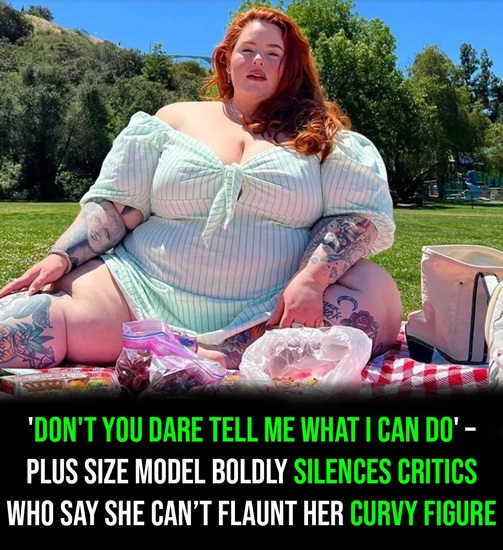
Social media has reshaped modern fame in ways that were almost unimaginable a decade ago. It has created a new category of public figures known as influencers—individuals who build audiences not through traditional entertainment industries, but through personal content shared online. These influencers can shape opinions, trends, and even daily habits, from skincare routines to fitness practices and lifestyle choices.
Yet beyond consumer influence, some use their platforms for something deeper: challenging long-standing societal norms, especially those related to appearance and body image. Among the most recognized voices in this space is Tess Holliday, a plus-size model and body acceptance advocate who has built a global platform centered on self-acceptance.
Over the years, she has become both a prominent figure in fashion and a vocal participant in conversations about body diversity. Her presence in media has often sparked discussion because she openly embraces a body type that mainstream fashion historically excluded. For Holliday, her visibility is not just about representation, but about reshaping how society defines beauty and worth.
Now in her mid-thirties, Holliday has experienced both the opportunities and the challenges that come with being a public figure. She is no stranger to criticism, and much of her career has unfolded under intense public scrutiny. Despite this, she continues to speak candidly about the emotional and social implications of being judged primarily on body size. What surprises her most, she has explained, is how frequently people feel entitled to comment on what she can or cannot do simply because of her appearance.

In interviews, Holliday has addressed the way language is used around body size, particularly the word “fat.” She has expressed that, in her view, the word itself is not inherently negative. Instead, the meaning depends heavily on context and intention. When used descriptively, she sees it as a neutral term. However, when used as a tool for humiliation or shame, it becomes harmful. This distinction is central to her message about body acceptance and respectful communication.
Holliday has stated that she is comfortable identifying as fat and plus-size, as those terms describe her body accurately. However, she draws a clear boundary when those same words are used in a derogatory or insulting way. For her, the issue is not the label itself, but the emotional weight and social judgment that can accompany it. She has repeatedly emphasized that body shaming has no constructive purpose and often causes more harm than change.
A significant part of her advocacy focuses on how society responds to people who do not fit conventional beauty standards. Holliday has often highlighted that individuals in larger bodies are frequently treated as symbols of debate rather than as human beings with their own experiences. She argues that this kind of treatment reduces people to their appearance, ignoring their individuality, talents, and contributions. Her goal is to encourage a shift in perspective, where people are seen beyond physical assumptions.
Language, according to Holliday, plays a crucial role in shaping these perceptions. She has spoken about how words used online and in everyday conversations can reinforce harmful stereotypes. In her view, repeated exposure to negative language about bodies can influence how people see themselves and others. This is why she encourages more thoughtful communication, especially in digital spaces where commentary can spread quickly and reach large audiences.

Throughout her career, Holliday has also faced criticism from those who disagree with her visibility in the fashion industry. She has appeared on magazine covers and participated in major campaigns, which has led some critics to accuse her of promoting unhealthy standards. These criticisms often center on the belief that only certain body types should be represented in mainstream media. Holliday has consistently rejected these claims, arguing that visibility is not equivalent to endorsement of any specific lifestyle.
Instead, she maintains that self-acceptance and health are not opposing ideas. In her view, it is possible to prioritize well-being while also embracing one’s body without shame. She has spoken openly about the harm caused by equating body size with health or moral value. According to her perspective, shaming individuals does not lead to positive behavioral change; rather, it often results in emotional distress and decreased self-esteem.
Her broader message is rooted in the idea that every person deserves respect, regardless of appearance. Holliday has often emphasized that social progress requires moving beyond surface-level judgments. She encourages people to reflect on how they speak about others and to consider the real impact of their words. This includes recognizing that body diversity is a natural part of human variation and should not be treated as something abnormal or controversial.
Over time, her advocacy has contributed to wider conversations about inclusivity in media and fashion. While opinions about her work remain divided, her presence has undeniably pushed discussions about body image into the mainstream. She continues to use her platform to challenge narrow definitions of beauty and to encourage greater acceptance of different body types.
Ultimately, Holliday’s message centers on dignity, language, and self-worth. She argues that meaningful change begins with how individuals perceive and treat one another in everyday life. By promoting body acceptance and questioning harmful stereotypes, she hopes to create a cultural shift where people are not defined or limited by their physical appearance.
