For years, I believed I understood my mother better than anyone else. After my father passed away, I promised myself that she would never have to face life alone. I called almost every day, stopped by every weekend, and convinced myself that noticing even the smallest change in her routine was simply part of being a devoted daughter. Looking back now, I realize that love can sometimes become mixed with fear. I wanted to protect her so badly that I forgot she still had the right to live parts of her life on her own terms.
My parents had spent more than four decades together in the same quiet neighborhood. Their home had always been filled with music, laughter, and the comforting smell of fresh coffee drifting from the kitchen each morning. My father loved old jazz records, and my mother never seemed far from the garden she cared for so patiently every spring. After he passed away, however, everything seemed to slow down. The music stopped, the flowers received less attention, and even family dinners became shorter than they had once been. Although my mother assured us she was coping, I could see the loneliness in the silence that surrounded her.
One person who remained a constant presence was Patrick, a longtime family friend who had practically grown up in our neighborhood. My parents had always treated him like one of the family, and after my father’s death he continued visiting regularly. Sometimes he mowed the lawn, repaired something around the house, or simply shared coffee with my mother on the porch. Whenever I thanked him for helping, he always smiled and reminded me that my parents had done countless kind things for him when he was younger. In his mind, he was simply returning that generosity.
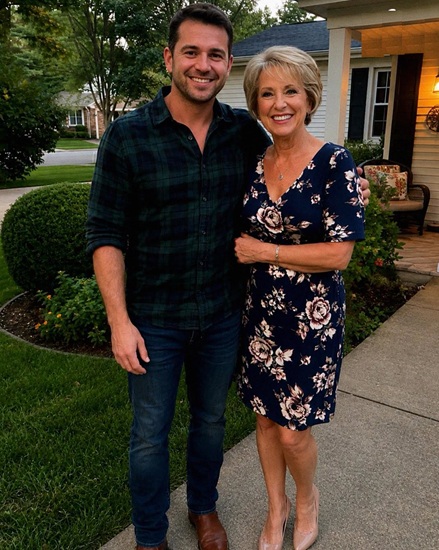
Everything changed one Thursday evening when I happened to drive past my mother’s house after work. As I slowed near the driveway, I noticed Patrick helping her out of his car. What caught my attention wasn’t the fact that they had been together. It was my mother’s smile. She looked happier than I had seen her since my father’s passing. She was laughing naturally, wearing one of the dresses she used to reserve for special family occasions. Seeing that expression filled me with relief at first, but almost immediately it was replaced by curiosity.
Over the next several weeks, I unintentionally noticed the same pattern. Every Thursday evening Patrick arrived at nearly the same time, and every Thursday my mother seemed brighter than she had been during the rest of the week. Eventually I asked her where they had been going. She smiled gently before explaining that Thursdays had become a special tradition she hoped to keep private for a little while longer. Her answer was kind, yet mysterious enough to leave me wondering why she felt unable to share something that appeared to bring her so much happiness.
That evening I spoke with my husband, Michael, about what I had seen. He listened carefully before suggesting that perhaps my mother simply wanted something in her life that belonged only to her. He reminded me that privacy does not always mean secrecy. His explanation sounded reasonable, but I still found myself thinking about the situation far more often than I expected. After spending years trying to protect my mother from loneliness, I struggled to understand why she would keep such an important part of her life hidden from the rest of the family.
The following week I decided to speak directly with Patrick. After dropping my mother off at home, he noticed me waiting near the driveway. I asked him honestly where they had been going each Thursday. Rather than becoming defensive, he simply apologized and explained that he had promised my mother he would not discuss it without her permission. His answer only deepened my curiosity. He never appeared nervous or uncomfortable, only determined to honor a promise he believed was important.
Unable to quiet my thoughts, I eventually followed them one Thursday from a respectful distance. They drove across town before stopping outside a small blue house I had never seen before. An elderly woman opened the front door and immediately embraced my mother. The hug lasted several moments, and both women were visibly emotional. Unsure what I was witnessing, I quietly approached the house. Patrick noticed me first, while my mother looked surprised but not angry. Before anyone could explain, the elderly woman warmly invited me inside.
Sitting together in the living room, my mother finally shared the story she had struggled to tell. While organizing family documents after my grandmother’s passing, she had discovered letters revealing that she had been adopted shortly after birth. The woman sitting across from us was Margaret, her biological mother, whom she had only recently located after decades apart. Patrick had helped arrange their first meeting and had quietly driven her to visit each Thursday while the two women slowly became acquainted. My mother explained that she wanted time to understand these emotions herself before sharing them with the rest of the family.
As I listened, every assumption I had made disappeared. My mother’s laughter had not represented forgetting my father. Instead, it reflected the healing that can occur when long unanswered questions finally receive compassionate answers. Patrick had not been hiding anything inappropriate; he had simply respected a deeply personal journey that belonged to my mother. In that moment, I realized how easily fear can create stories that have little connection to reality.
I apologized to both of them for allowing my imagination to outrun my trust. They accepted my apology with understanding, reminding me that families sometimes need time before sharing life-changing discoveries. During the weeks that followed, I joined several of their Thursday visits. We looked through old photographs, shared family stories, and slowly built new memories together. Watching my mother laugh beside Margaret taught me something I will never forget: healing does not erase the people we have loved or the memories we treasure. Instead, it allows our hearts to make room for hope while continuing to honor the past. Sometimes the greatest act of love is simply giving someone the space to find their own path back to happiness.
