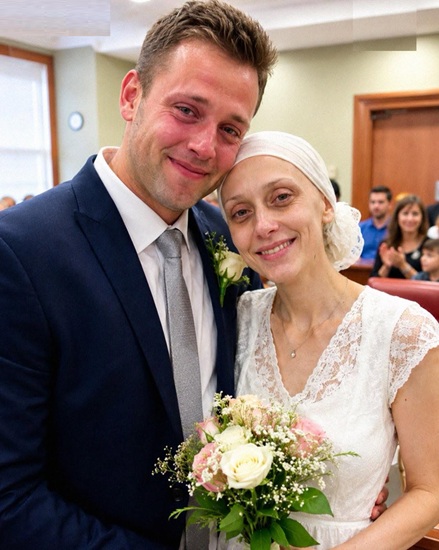
Daniel met Cara during his first week of college after she casually took the seat he had been saving in a crowded sociology lecture. Instead of apologizing, she looked at his notebook and jokingly told him he could sit beside her if his notes were good enough to share. Daniel laughed and accepted the challenge. Before the lecture was over, they were already talking as though they had known each other much longer. What began as an unexpected encounter quickly developed into a relationship that shaped nearly every part of their college years.
For three years, they were almost inseparable. They studied together, cooked inexpensive dinners in tiny apartments and spent Sunday mornings competing over crossword puzzles. Cara dreamed about eventually owning an old house with green shutters, while Daniel imagined graduate school, research and traveling abroad. Their plans were different, but neither of them considered those differences impossible to reconcile. They simply assumed there would always be enough time to figure everything out.
Then one ordinary evening, a conversation about their future changed everything. Daniel had recently been accepted into graduate school and enthusiastically described the opportunities he hoped would follow. Cara listened before quietly asking when he imagined them having children. Daniel, unaware that the question carried far more emotional weight than he understood, replied that he did not want children for several years. He wanted to study, travel and establish his career first.
Cara became unusually quiet.
Daniel interpreted her reaction as frustration about waiting. He accused her of turning a conversation about their future into a deadline, while Cara told him that he was not really listening to what she was trying to say. Their disagreement ended without either person apologizing. Daniel went to sleep believing they would resolve everything the following morning. Instead, when he woke, Cara’s clothes were gone.
Her phone was soon disconnected, and her social-media accounts disappeared. Daniel contacted friends, professors and members of Cara’s family, but he received no explanation that made sense. Eventually he had to accept that she had deliberately removed herself from his life. He continued with graduate school and later built a career, but the unanswered questions followed him. New relationships came and went because part of him remained emotionally attached to the person who had disappeared without explaining why.
Ten years passed.
Then, on a rainy Thursday evening, someone rang his doorbell.
Daniel opened the door and immediately recognized Cara. She looked considerably different from the college student preserved in his memories. She appeared exhausted and physically weak, but her eyes were unmistakable. After an uncomfortable silence, she asked whether she could come inside. Daniel had imagined this reunion countless times and expected that anger would be the first emotion he felt. Instead, he simply stepped aside.
Once seated in his living room, Cara revealed why she had returned. She was seriously ill, she explained, and doctors had told her that her condition was terminal. Then she made a request Daniel could barely understand: she wanted him to marry her.
He initially laughed from disbelief.
After ten years without a call or explanation, Cara had suddenly appeared asking him to become her husband. Daniel demanded to know why she had chosen him. Cara did not provide the complete answer he wanted. She simply told him that she was sorry and that there were things she had been too frightened to explain.
Against every logical instinct, Daniel agreed.
Two days later, they were married in a small courthouse ceremony with employees serving as witnesses. Cara wore a simple blue dress and leaned against Daniel for support during the vows. Their marriage lasted only five days. They spent that brief period watching old movies, sharing quiet breakfasts and remembering pieces of the life they once had together. Daniel repeatedly asked why she had disappeared, but Cara continued promising that she would explain later.
There was not enough time.
Cara died quietly in her sleep beside him.
After the funeral, a woman Daniel did not recognize approached him and introduced herself as Mara, Cara’s longtime roommate. She handed him an envelope containing a small brass key and told him that Cara had left behind 127 letters addressed to him. None had ever been mailed.
Mara took Daniel to the apartment she had shared with Cara. Inside a wooden trunk were bundles of envelopes arranged by date. Daniel opened the oldest first. It had been written only days after Cara disappeared.
Its first sentence changed his understanding of their final argument.
Cara had been pregnant.
According to the letter, she discovered the pregnancy shortly before asking Daniel about children. When he enthusiastically described graduate school, traveling and postponing parenthood, she panicked. Instead of telling him the truth, she convinced herself that revealing the pregnancy would force him to abandon the future he wanted. She left intending to stay with her mother temporarily while deciding what to do.
Then the pregnancy ended unexpectedly.
Cara described experiencing the loss while emotionally overwhelmed and increasingly isolated. She wrote that she wanted to contact Daniel but could not overcome her fear, shame and grief. Days became weeks, and weeks became months. With every passing month, returning seemed more difficult.
The remaining letters documented years of indecision.
Again and again, Cara wrote that she planned to call him. She found his telephone number, followed changes in his career and occasionally received information about him through mutual acquaintances. Twice, according to the letters, she traveled to his city intending to speak with him. Both times she turned around before reaching him.
Daniel was furious.
The letters proved that Cara had loved him, but they also proved that she repeatedly chose silence while knowing where he was. Her fear explained her behavior without erasing the consequences. Daniel had spent years wondering whether he had caused her disappearance, while Cara possessed answers she repeatedly decided not to provide.
Mara did not attempt to defend everything Cara had done. She told Daniel something he eventually came to understand: love and harm could exist in the same story. Cara’s feelings might have been genuine, but genuine love did not automatically make her choices fair.
Among Cara’s belongings was an old ultrasound photograph and one final letter.
In it, Cara explained that receiving her terminal diagnosis had forced her to confront how often fear had controlled her decisions. She knew returning could not repair ten missing years, and she did not expect forgiveness. She simply refused to allow fear to determine her final decision as well.
The five days of marriage were not intended to replace the decade she had taken from them. They were, she wrote, the only completely honest days she had left to give.
Daniel spent weeks reading every letter.
Some made him miss Cara intensely. Others made him angry. Eventually he stopped trying to decide whether she deserved complete forgiveness because the answer changed depending on the day. He could acknowledge that Cara had loved him while also recognizing that her silence had deeply hurt him.
Over time, Daniel decided to turn that experience into something constructive. In this fictional story, he helped establish a small emergency fund at their former college for students facing pregnancy, serious illness or difficult medical circumstances without adequate support. He intentionally avoided naming it after Cara because he did not want her private experiences turned into a public memorial.
He called it the Open Door Fund.
One of the students who later sought assistance was frightened, pregnant and uncertain whom she could safely tell about her situation. Reading her application reminded Daniel of the conversation he and Cara had shared years earlier—the conversation in which neither understood what the other person truly needed.
When he met the student to provide information about the assistance available to her, Daniel did not tell Cara’s story. He did not offer instructions about what decision she should make. Her circumstances belonged to her, and her choices were her own.
Instead, he offered the reassurance he wished fear had allowed Cara to hear years earlier:
“You don’t have to decide everything by yourself.”
For Daniel, that became the meaning he eventually carried forward. Cara’s return had not provided the simple closure he imagined wanting for ten years. It gave him something considerably more complicated: the understanding that someone can genuinely love another person and still hurt them through fear, avoidance and silence.
He could not rewrite the years they had lost. He could only decide what to do with what remained.
And eventually, that was enough to begin moving forward.
