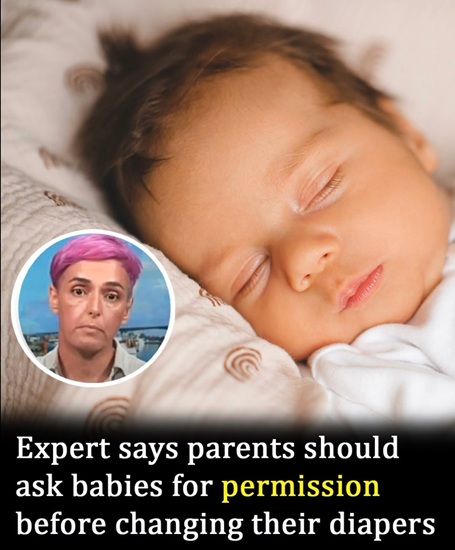
In recent years, discussions around parenting practices have increasingly moved into public debate, especially as ideas about communication, emotional development, and child psychology continue to evolve. One particular topic that sparked widespread attention online involves the concept of introducing “consent-based parenting” from birth. The discussion gained momentum after an Australian sexuality educator suggested that parents should verbally ask babies for permission before changing their diapers.
The idea quickly went viral and triggered a global conversation about the meaning of consent, communication, and early childhood development. Supporters of the concept argue that it is not about expecting a verbal response from an infant, but rather about building a foundation of respect, awareness, and communication between parent and child from the earliest stages of life. Critics, however, questioned the practicality and logic of applying consent language to newborn care.
The educator behind the statement, Deanne Carson, describes herself as a sexuality educator, speaker, and author. In her explanation, she emphasized that babies obviously cannot give verbal consent. Instead, she suggested that parents could narrate their actions during caregiving, such as saying they are about to change a diaper and then pausing to observe the child’s reactions. According to her view, this approach helps children grow up in an environment where their bodily autonomy is acknowledged.

Carson has stated in interviews that the goal is not to wait for a literal “yes” or “no” from an infant, but to normalize respectful communication patterns within families. She argues that by consistently speaking to babies and acknowledging their responses through eye contact, facial expressions, or body language, parents are helping to establish early foundations for understanding personal boundaries. In her interpretation, this is part of building what she calls a “culture of consent.”
The idea, however, quickly became a subject of humor, criticism, and intense debate on social media platforms. Many users questioned whether the concept was practical in real-life parenting situations, especially considering the basic needs of infants. Some commenters mocked the suggestion by comparing it to asking permission from pets before performing routine care tasks, highlighting what they saw as the impractical nature of the argument.
Critics in media commentary also weighed in on the discussion. Some opinion writers described the idea as unrealistic, arguing that infants are not developmentally capable of understanding consent in any meaningful way. They claimed that while respectful communication is important, applying the language of consent in this context risks creating confusion about basic caregiving responsibilities.
Other commentators suggested that the controversy stemmed from the way the idea was communicated rather than its underlying intention. In their view, encouraging parents to speak to their children, explain actions, and remain attentive to non-verbal cues is already widely accepted in early childhood development practices. However, framing this behavior as “asking permission” may have led to misunderstandings among the public.

On social media, reactions ranged from strong disagreement to cautious support. Some users argued that a crying baby already communicates discomfort, making formal “permission” unnecessary. Others expressed frustration at what they saw as unnecessary overcomplication of basic parenting tasks. At the same time, a smaller group of commenters defended the broader message, suggesting that respectful communication with children is always beneficial, even if the terminology is debated.
Supporters of Carson’s perspective emphasized that early childhood experts often encourage parents to be verbally engaged with infants during daily routines. Talking to babies, explaining actions, and responding to their cues are widely recognized as positive developmental practices. From this perspective, the controversy may reflect differences in interpretation rather than a fundamental disagreement about child welfare.
Child development specialists generally agree that infants learn through tone, repetition, and emotional interaction long before they understand language. Actions such as maintaining eye contact, speaking calmly, and responding to distress are considered important for bonding and cognitive development. However, most professional guidelines do not frame these interactions as “consent” in the formal sense used in adult contexts.
The debate highlights a broader cultural discussion about how concepts like autonomy, respect, and communication should be introduced in early life. As parenting philosophies evolve, new terms and approaches often generate public debate, especially when they challenge traditional assumptions about caregiving roles and responsibilities.
Ultimately, the discussion around asking babies for consent during diaper changes reflects a wider conversation about modern parenting styles and language. While some view the idea as unnecessary or impractical, others see it as an attempt—however symbolic—to encourage more mindful and respectful interactions between parents and children.
In the end, most experts and commentators agree on one point: infants depend entirely on caregivers for their needs, and those needs must be met promptly and responsibly. Beyond that, families may choose different communication styles based on personal beliefs, cultural values, and parenting philosophies. Whether framed as consent, communication, or simple caregiving awareness, the focus remains on supporting healthy development and strong parent-child relationships.
