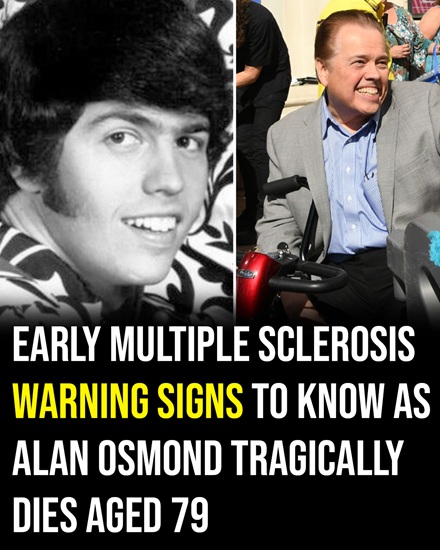
The information circulating about Alan Osmond’s death is not confirmed by reliable, official sources. As of the latest verified public records.
Alan Osmond of The Osmonds is still reported as living, and discussions about his health relate primarily to his long-term battle with multiple sclerosis rather than a recent passing.
Alan Osmond, born in Ogden, Utah, is widely recognized as a founding member of the influential American family music group The Osmonds, which achieved major popularity across several decades. His life and career are closely tied to the group’s evolution.
During the rise of The Osmonds in the late 1960s and 1970s, Alan played a central organizing role, helping guide the group’s musical direction, stage coordination, and creative decisions alongside his brothers.

He was often described as the “leader” of the group’s early structure, helping shape their disciplined performance style, harmonies, and ability to adapt from barbershop-inspired roots into mainstream pop and rock success.
Alan Osmond contributed as a songwriter and arranger, working behind the scenes on several of the group’s well-known recordings, which helped establish their commercial success during their peak international popularity.
One of the major turning points in his life came in the late 1980s when he was diagnosed with multiple sclerosis, a chronic neurological condition that affects the central nervous system and can progressively impact movement and coordination.
Multiple sclerosis (MS) is an autoimmune disease in which the immune system mistakenly attacks the protective covering of nerve fibers, disrupting communication between the brain and the rest of the body.
Early symptoms can vary significantly, but often include vision problems, muscle weakness, numbness or tingling sensations, and issues with balance or coordination, depending on which nerves are affected.

Alan Osmond has publicly spoken in past interviews about his early experiences with MS, including moments on stage when he noticed unusual weakness, particularly difficulty raising one arm during performances.
He has described his response to those symptoms as deeply reflective, relying on personal faith and family support while gradually coming to terms with the long-term nature of the condition.
Despite his diagnosis, he continued performing with The Osmonds for many years, maintaining involvement in touring and musical projects even as his physical condition changed over time.
His resilience became part of his public identity, as he often emphasized adapting to limitations while continuing to contribute creatively and emotionally to music and family projects.
Over time, he gradually reduced his touring schedule, eventually stepping back from active performance, with reports indicating a formal retirement from regular touring activities in the 2000s.
Alan has often been described by family and colleagues as someone who remained optimistic, rarely focusing on illness in public discussions and instead emphasizing gratitude and purpose in daily life.

His wife, Suzanne Osmond, and their children have been central figures in his life, providing long-term support through the challenges associated with managing a chronic neurological condition.
Medical experts explain that multiple sclerosis progresses differently in each individual, with some experiencing relapsing symptoms while others develop more gradual physical limitations over time.
Common early warning signs include persistent numbness or tingling in limbs, sudden vision disturbances, prolonged fatigue, and episodes of dizziness that last longer than typical short-term discomforts.
Doctors emphasize that while these symptoms can be caused by many conditions, neurological changes lasting more than 24 hours should always be evaluated for possible underlying disorders such as MS.
Alan Osmond has previously highlighted the importance of early awareness and understanding of the condition, encouraging openness about symptoms and the emotional impact of long-term illness.
Throughout his life, he has also been associated with faith-based resilience, often crediting personal beliefs as a source of strength during difficult phases of his health journey.

The legacy of The Osmonds remains significant in American pop culture, with the family group remembered for harmonies, television appearances, and crossover success in music entertainment.
Alan’s contributions are particularly noted for behind-the-scenes leadership, helping shape arrangements and performance structure that supported the group’s long-term success across changing music eras.
Even after stepping away from public touring, he has remained a respected figure in entertainment history, frequently referenced in discussions about the evolution of family musical groups in the United States.
His story is often cited in broader conversations about chronic illness awareness, particularly how individuals adapt professionally and personally while living with conditions like multiple sclerosis.

Importantly, any claims of his death currently circulating online should be treated with caution unless confirmed by trusted news organizations or direct family statements, which remain the standard for verification.
Overall, Alan Osmond’s life is best understood through his decades-long contribution to music, his leadership role in a globally recognized family group, and his long personal journey living with MS.
