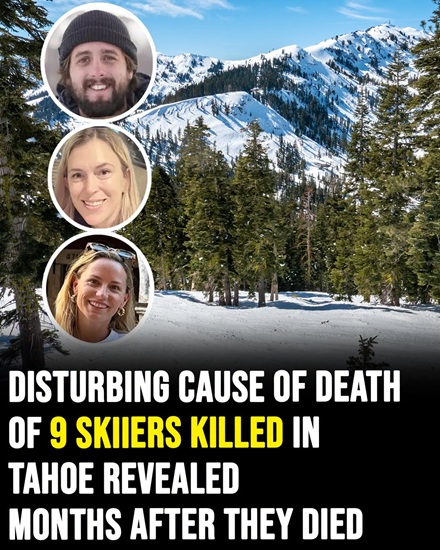
Nearly six months after a catastrophic avalanche swept through a guided backcountry skiing group near Lake Tahoe, authorities have confirmed how all nine people who lost their lives died. The February 17, 2026 disaster occurred near Castle Peak in California’s Sierra Nevada during a major winter storm and became the deadliest avalanche in modern California history. Coroner records released in August determined that every victim died from asphyxia caused by snow burial, meaning they were unable to breathe after being trapped beneath the avalanche debris.
The tragedy involved a 15-person group participating in a professionally guided backcountry trip operated by Truckee-based Blackbird Mountain Guides. The party consisted of 11 clients and four professional guides and had been returning from a multi-day visit to the Frog Lake backcountry huts when the avalanche struck. Of the 15 people caught in the disaster, six ultimately survived while nine died. Three of those killed were Blackbird guides, and the remaining six were clients.
The three guides who died were Andrew Alissandratos, 34, of Verdi, Nevada; Nicole Choo, 42, of South Lake Tahoe, California; and Michael Henry, 30, of Soda Springs, California. Nevada County authorities identified the six clients as Carrie Atkin, 46, of Soda Springs; Lizabeth Clabaugh, 52, of Boise, Idaho; Danielle Keatley, 44, of Soda Springs and Larkspur; Kate Morse, 45, of Soda Springs and Tiburon; Caroline Sekar, 45, of Soda Springs and San Francisco; and Katherine Vitt, 43, of Greenbrae.
The six women who died were described by their families as experienced backcountry skiers with a shared love of the outdoors. Clabaugh and Sekar were sisters, while the wider group of friends had developed close connections through skiing, family life and outdoor activities. In a joint statement reported after the avalanche, their families said the women had trusted the professional guides leading the trip and had gone into the mountains equipped with avalanche-safety gear. The families also said they were left with significant questions about what occurred during the professionally guided trip.

Blackbird Mountain Guides said the four guides on the trip were trained or certified by the American Mountain Guides Association and were instructors with the American Institute for Avalanche Research and Education. The company has repeatedly expressed grief over the deaths and has asked that speculation be avoided while investigations examine the circumstances surrounding the avalanche. In August, Blackbird also released an independent preliminary investigation into the event.
The group had been participating in a three-day backcountry hut trip and was returning toward the trailhead on February 17 when conditions deteriorated. A powerful winter storm was affecting the Sierra Nevada, and avalanche forecasters had warned of dangerous snow conditions across the region. Heavy new snowfall had accumulated over an unstable snowpack, increasing the possibility that large avalanches could occur.
The avalanche occurred on terrain near Perry Peak and Castle Peak at approximately 11:30 a.m. Reports describe a slab of snow roughly 100 feet wide that traveled about 400 feet downhill. The slide swept into the group with little time for those below to react. Later analyses estimated that the avalanche began several hundred feet above the skiers before reaching the area through which the group was traveling.
The avalanche struck with enough force to bury multiple people beneath deep snow. Subsequent analysis indicated that 12 members of the group were buried, while others remained above the surface or were only partially caught. Survivors immediately began attempting to locate and free companions using avalanche-rescue equipment and the training available to them. Their actions unfolded in an environment where continuing snowfall and unstable slopes created an ongoing threat of additional avalanches.
Six people eventually survived the incident: five clients and one Blackbird guide. Earlier accounts sometimes reported five survivors because information was still developing during the initial response, but official and later reporting established that six members of the 15-person party survived. The other nine members of the group were either located deceased or presumed dead during the first days of the operation.
Emergency responders were notified at approximately 11:30 a.m., setting in motion a difficult search-and-rescue mission in severe weather. Search teams faced deep snow, rugged terrain, ongoing avalanche danger and deteriorating visibility. Helicopters and ground personnel were used when conditions permitted, but the risks to rescuers meant operations could not proceed continuously.
The Nevada County Sheriff’s Office coordinated a large response involving numerous local, state and regional agencies. Participating organizations included Nevada County Sheriff’s Search and Rescue, Placer County Sheriff’s Office, Tahoe Nordic Search and Rescue, Washoe County teams, California Highway Patrol Air Operations, the California Governor’s Office of Emergency Services, Sierra Avalanche Center and other partners.
During the initial search, eight of the nine people who died were located in the avalanche debris. One additional person remained missing and was presumed dead. Dangerous weather and continued avalanche instability prevented authorities from immediately bringing the victims off the mountain. Officials repeatedly warned members of the public to stay away from the Castle Peak area so rescue personnel could operate without additional people being exposed to the hazards.
By February 20, officials were assessing whether controlled avalanche mitigation could be conducted before recovery teams re-entered the area. Such mitigation involves intentionally releasing unstable snow in a controlled manner to reduce the possibility of an unexpected avalanche striking rescuers. Nevada County officials said adverse weather and continuing avalanche danger had made recovery exceptionally challenging.
The recovery mission ultimately lasted five days. Nevada County announced on February 21 that all nine victims had been safely recovered from the mountain. Five were brought down on the evening of February 20, while the remaining four were recovered the following morning. The sheriff’s office publicly identified the victims after that operation had been completed.
Sheriff Shannan Moon described the loss as catastrophic and acknowledged the effect it had on the victims’ families, friends and the broader mountain community. The official statement also thanked the many rescuers and agencies involved in what became an extraordinarily difficult multi-day mission.
Questions soon emerged about the decisions made during the trip. The Sierra Avalanche Center conducted an analysis of the accident and examined the terrain, snow conditions and travel choices involved. That analysis raised concerns about the group traveling closely together beneath avalanche-prone terrain rather than minimizing the number of people exposed at one time. Avalanche experts generally recommend limiting exposure so that as few people as possible are in a hazardous runout zone simultaneously.
It would nevertheless be inaccurate to reduce the Sierra Avalanche Center’s findings to a simple declaration that specific individuals had definitively “broken avalanche rules.” Avalanche safety involves judgment under changing conditions, and investigations have continued to examine precisely what occurred. Outside experts quoted in reporting about the accident have cautioned against assigning responsibility before all available evidence is reviewed.
The independent report commissioned by Blackbird Mountain Guides and released in August offered additional information about the group’s route. According to reporting on that investigation, the party had planned to travel through comparatively flat, forested terrain during what guides believed might be a temporary break in the storm. Obstacles including open water and steep creek banks reportedly affected the route, eventually placing the group in terrain exposed to the avalanche path.
That preliminary investigation did not determine whether the avalanche released naturally or whether it was triggered by someone in the group. It also did not make a final finding assigning legal responsibility. Blackbird said the independent investigation was intended to establish as complete an account as possible and was shared with families and relevant authorities.
Avalanche airbags were another subject examined after the accident. Some participants reportedly carried backpacks designed to inflate during an avalanche and potentially help a person remain closer to the surface of moving snow. Investigators found that none of the airbags carried by members of the group successfully deployed during the event. An airbag can improve survival prospects in certain circumstances, but it does not eliminate the danger posed by a large avalanche or guarantee survival.
The medical findings released months later provided a definitive answer about how the nine victims died. According to the Nevada County Coroner’s Office, the cause of death for all nine was asphyxia due to snow burial. In an avalanche, compacted snow can restrict a buried person’s access to breathable air. Survival therefore depends heavily on factors including burial depth, whether an air pocket exists and how quickly companions or rescuers can locate and uncover the victim.
The finding does not mean every victim experienced exactly the same circumstances beneath the snow. Coroner reports released publicly were partially redacted, and authorities have not disclosed every detail out of respect for the investigation and the individuals involved. What they did establish is that snow burial and resulting lack of oxygen caused each of the nine deaths.
The scale of the disaster made it historically significant. Reporting has described it as the deadliest avalanche in modern California history and the deadliest avalanche in the United States since 1981. Those descriptions reflect the extraordinary number of fatalities in a single event rather than implying that backcountry skiing routinely results in tragedies of this magnitude.
Separate investigations followed almost immediately after the avalanche. The Nevada County Sheriff’s Office opened an inquiry into whether any circumstances surrounding the guided trip could amount to criminal negligence. California’s Division of Occupational Safety and Health also began examining possible workplace-safety issues because professional guides were working during the trip.
When the sheriff’s criminal inquiry began, officials stressed that opening an investigation did not mean criminal wrongdoing had already been established. The sheriff’s office said at the time that it was too early to know whether charges would be appropriate and emphasized that the district attorney would ultimately decide whether any prosecution should occur.
That investigation has now reached an important new stage. Current reporting says the Nevada County Sheriff’s Office completed its criminal-negligence investigation in early August and forwarded its findings to the Nevada County District Attorney’s Office for review. Prosecutors will evaluate the evidence and determine whether it supports filing any criminal charges.
As of August 11, 2026, no criminal charges have been publicly announced in connection with the avalanche. The transfer of an investigative file to prosecutors should therefore not be interpreted as proof that a crime occurred or that anyone will be charged. The district attorney must independently review the evidence and decide whether the facts and applicable law justify further action.
Cal/OSHA’s separate workplace-safety review also remained pending in the most recent reporting. That process concerns occupational regulations and is different from the criminal inquiry conducted by the sheriff’s office. A workplace investigation can evaluate whether applicable safety requirements were followed without necessarily reaching the same questions or legal standards involved in a potential criminal prosecution.
Blackbird Mountain Guides has continued to mourn both its employees and clients. The company’s public statements describe the avalanche as a devastating loss for the families involved, its staff and the wider mountain community. Blackbird has also highlighted the training and qualifications of its guides while cooperating with ongoing investigative efforts.
The disaster has generated broader discussion within the backcountry skiing and avalanche-safety community about group size, route selection and exposure management during high-danger conditions. Those discussions can help improve future practices, but they should not be confused with final legal conclusions about the February incident. Avalanche terrain is complex, and investigators continue to distinguish between risk-management questions and the much higher legal threshold required to establish criminal negligence.
For the victims’ families, the release of the causes of death provides one answer while leaving other questions unresolved. Their relatives entered the mountains as experienced skiers participating in a professionally guided trip and did not return home. The families have publicly emphasized the women’s love for skiing and the outdoors while also seeking greater understanding of the decisions and circumstances that preceded the avalanche.
The three guides who died were also deeply involved in the mountain community. Reporting following the tragedy described them as experienced professionals with extensive avalanche and backcountry training. Their deaths, alongside those of the six clients, affected colleagues, rescue organizations and communities throughout the Lake Tahoe and Sierra Nevada region.
Nothing in the available findings changes the fundamental medical conclusion announced in August: Andrew Alissandratos, Carrie Atkin, Nicole Choo, Lizabeth Clabaugh, Michael Henry, Danielle Keatley, Kate Morse, Caroline Sekar and Katherine Vitt all died from asphyxia caused by avalanche snow burial.
The February 17 Castle Peak avalanche remains a tragedy with both human and investigative dimensions. Nine people died, six others survived, rescuers spent days operating in exceptionally dangerous conditions, and several reviews have since examined what happened before and during the slide. The sheriff’s criminal investigation has now been submitted to prosecutors, but no criminal responsibility should be assumed unless authorities ultimately announce charges and those allegations are tested through the legal process.
For now, the most responsible way to describe the disaster is to separate established facts from unresolved questions. The avalanche struck a 15-person guided party on February 17, nine people died from asphyxia after being buried by snow, and investigations have raised important questions about decisions made during dangerous avalanche conditions. What those decisions may mean legally remains for prosecutors—and potentially the courts—to determine.
