Michael Landon remains one of the most recognizable figures from classic American television. The actor, writer, director and producer became widely known as Little Joe Cartwright on Bonanza, later played Charles Ingalls on Little House on the Prairie, and eventually starred as Jonathan Smith on Highway to Heaven. His television career lasted for decades, but his life ended far earlier than many expected. Landon died from pancreatic cancer on July 1, 1991, at the age of 54, leaving behind nine children and a television legacy that continues to attract new audiences.
Although audiences knew Landon primarily through television, family occupied an important and complicated place in his private life. He was married three times and became the father of nine children through biological and adoptive relationships. His children included Mark, Josh, Cheryl, Leslie, Michael Jr., Shawna, Christopher, Jennifer and Sean. Several eventually pursued careers connected to entertainment, while others chose different professional paths. In later interviews, members of the family have spoken about both their memories of their father and the enormous adjustment required after losing him relatively young.
Landon’s illness became public in 1991 after doctors diagnosed him with pancreatic cancer. The diagnosis was particularly serious because the disease had already spread beyond his pancreas. Rather than keeping the situation completely private, Landon publicly acknowledged his condition and discussed his determination to fight it. His illness progressed rapidly, however. Only a matter of months separated the announcement of his diagnosis from his death, and he died at his home in Malibu, California, with members of his family nearby.

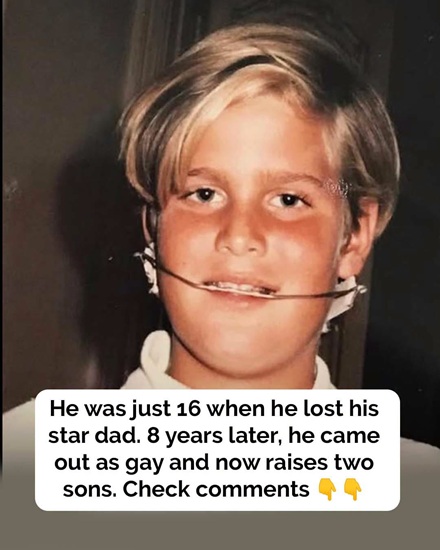
The speed of the illness was especially difficult for his children. One of those children was Christopher Landon, who was only 16 when his father died. Christopher would eventually establish his own successful career as a screenwriter and filmmaker, becoming associated with movies including Disturbia, Paranormal Activity: The Marked Ones, Happy Death Day and Freaky. Long before those professional achievements, however, he was a teenager trying to understand the reality that his father was seriously ill.
A Diagnosis That Changed the Family
Christopher has spoken over the years about how quickly his family’s circumstances changed. Michael Landon had been an energetic and highly productive television personality for most of Christopher’s childhood. His diagnosis suddenly introduced an entirely different reality. Pancreatic cancer can progress aggressively, and Landon’s condition deteriorated within months rather than years. For a teenager, the transition from having an active father to confronting the possibility of losing him was understandably profound.
Landon nevertheless continued trying to fight the disease. Contemporary accounts described him pursuing conventional medical treatment while also exploring dietary changes and alternative approaches. Reports from the period noted that he received chemotherapy. As his illness advanced, however, treatment was unable to stop the cancer. Landon increasingly spent his remaining time surrounded by his family while his physical condition weakened.

The family eventually understood that recovery was becoming increasingly unlikely. Cindy Landon, Michael’s third wife, was with him during the final period of his life. His children were also given opportunities to spend time with their father as his condition worsened. Those final conversations became deeply personal memories for the people closest to him. Accounts of Landon’s last days have consequently focused less on his television fame and more on a family preparing for an approaching loss.
Michael died on July 1, 1991. His death came only months after his diagnosis had become public. For viewers who had watched him for decades, the news meant losing an actor associated with some of television’s most familiar family-oriented programs. For his children, however, it meant losing their father. That distinction would become particularly important to Christopher as he grew older and began discussing what it was like to belong to the family of someone whose public image was known around the world.
Christopher Landon Was Only 16
Christopher’s experience was shaped significantly by his age. At 16, he was still navigating adolescence when his father’s illness transformed everyday family life. He later discussed how difficult it was to process the speed with which everything happened. There was little time to gradually prepare for the loss because Michael’s condition deteriorated so quickly. Christopher has continued to describe his father’s death as an important event in his life, including in more recent discussions about his family and career.
Losing Michael also meant that Christopher entered adulthood without being able to have many of the conversations he might otherwise have shared with his father. Over time, grief became something he could discuss more openly. Rather than simply remembering Michael as the famous star of Little House on the Prairie, Christopher has spoken about him as a real parent whose private personality could differ from the wholesome television characters audiences associated with him.
That distinction became particularly meaningful as Christopher began understanding his own identity. He eventually came out as gay publicly in 1999, several years after his father’s death. At the time, openly discussing one’s sexuality could still carry considerable professional and personal consequences, particularly for someone connected to an extremely famous family. Christopher nevertheless decided that living openly was more important than trying to preserve an image created by public expectations.

He also worried about how people might connect his sexuality with his father’s famously family-oriented television image. Michael had spent years playing characters associated with traditional family storytelling, especially Charles Ingalls. Christopher therefore understood that his coming out might attract sensational headlines. Ultimately, however, he decided that his father’s public reputation should not determine how he lived his own life.
What Christopher Later Learned About His Father
One of the most meaningful discoveries came through Cindy Landon. Christopher later said his stepmother told him that Michael had apparently already suspected his son was gay. According to Christopher’s recollection, Michael believed Christopher would understand and address that part of himself in his own time rather than needing to be confronted about it. Christopher found the information reassuring because his father had died before they could have that conversation directly.
Christopher has also described his father as considerably more open-minded in private than some people might assume from his television persona. In a later interview, he explained that Michael’s public image was not necessarily an accurate representation of every aspect of his personality. Christopher said he did not believe his sexuality would have changed his father’s feelings toward him, noting that Michael held relatively liberal views on many social issues.
That knowledge helped Christopher reconcile two difficult realities: he had never personally been able to tell his father, but there was reason to believe Michael already understood. Instead of imagining the conversation he never had, Christopher could take some comfort from what Cindy told him. The story also illustrates an important difference between a celebrity’s public persona and the relationships that exist privately within a family.
Christopher’s path toward openness was not completely easy within the wider family. He has discussed concerns about how relatives might respond and the challenges of confronting expectations surrounding identity. Over time, however, he built a life and career on his own terms. He became a filmmaker rather than attempting to reproduce his father’s career as a television actor, developing a distinctive body of work that has frequently blended horror with comedy.
Building a Life Beyond His Father’s Fame
Being Michael Landon’s son inevitably meant growing up around public attention. Christopher has explained that this contributed to his preference for working behind the camera. Unlike his father, whose face became recognizable in millions of households, Christopher found greater creative freedom through writing and directing. His filmmaking career eventually allowed him to establish an identity that was connected to Hollywood but distinct from Michael’s television legacy.
Christopher also became a parent himself. He and his partner, Cody Morris, have two children. That development added another dimension to his relationship with his father’s memory. Michael never had the opportunity to see the adult Christopher would become or to meet the family he would eventually build. Yet Christopher has continued speaking about his father decades after his death, demonstrating how formative that relationship remained despite ending when he was only 16.
Michael Landon’s legacy meanwhile continues through television. Bonanza established him as a major star, while Little House on the Prairie allowed him to expand his influence as an actor, writer, director and producer. On the latter series, colleagues have remembered him as an unusually hands-on creative force who was heavily involved in production. Former cast members continue to discuss his humor, demanding work ethic and influence on the atmosphere surrounding the show.
Those memories also demonstrate that Landon was a more complicated person than any single television character could represent. The affectionate father audiences saw on Little House on the Prairie was a fictional role, while Michael himself experienced complicated relationships, marriages and family changes. His children have remembered him from different perspectives, and those experiences do not always fit neatly into the idealized image audiences developed from watching his programs.
For Christopher, honoring his father has therefore not required pretending that Michael was identical to the characters he portrayed. Instead, his recollections have allowed room for a more personal understanding of the man behind the celebrity image. Michael was a hugely successful television figure, but he was also a father whose death created a lasting absence in the lives of his children.
More than three decades after Michael Landon’s death, his work continues to be watched while his family has continued building lives of its own. Christopher’s journey—from losing his father as a teenager to becoming an established filmmaker, openly embracing his identity and raising children of his own—has become one of the many stories connected to the Landon family. It is ultimately a story not simply about celebrity, but about grief, acceptance, growing up and finding an independent path after losing a parent far too early.
