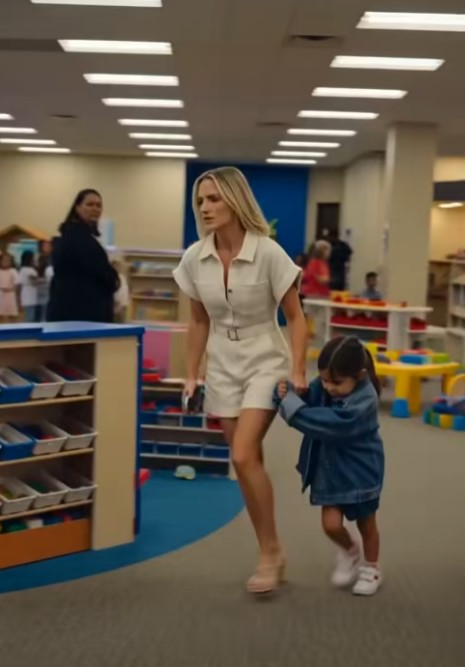
What appeared to be an ordinary day at a busy children’s museum reportedly developed into a situation that drew the attention of museum staff, security personnel, and local authorities. Families filled the facility as children explored interactive exhibits, participated in educational activities, and enjoyed a weekend dedicated to learning and creativity. The atmosphere was lively and energetic, with parents and children moving from one exhibit to another.
Amid the excitement, however, one young visitor reportedly stood out for reasons that would later become the focus of serious concern. According to the account, Marcus Vance, a security guard with previous experience in law enforcement, was carrying out his routine duties when he noticed a young girl named Maya. While many children appeared excited and engaged with the museum’s activities, Maya reportedly seemed unusually quiet and withdrawn.
Observers said she avoided interacting with other children and appeared hesitant to participate in group activities. Her reserved behavior caught Marcus’s attention because it differed noticeably from the behavior of most children visiting the museum that day.
Another detail that reportedly stood out was Maya’s clothing. Despite the warm summer temperatures outside, she was wearing a heavy denim jacket. While such a choice of clothing may not necessarily indicate a problem, Marcus reportedly found it unusual given the weather conditions. As someone who had spent years working in public safety, he was accustomed to paying attention to details that others might overlook. He continued monitoring the situation while allowing the family to enjoy their visit.
According to the story, concern increased when Maya briefly stumbled while walking through one of the museum exhibits. As she regained her balance, part of her jacket sleeve shifted, allegedly revealing bruising on her wrist. Marcus reportedly observed what appeared to be marks that raised questions about their origin. Because he did not want to jump to conclusions, he approached carefully and attempted to ensure that the child was all right. Before the conversation could develop, however, an adult woman identified as Veronica reportedly intervened.
The woman allegedly explained that Maya was fine and suggested there was no reason for concern. She reportedly described the child as someone who occasionally sought attention and stated that the jacket was simply her favorite item of clothing. While the explanation may have sounded reasonable on the surface, Marcus reportedly remained uneasy. His professional background had taught him that unusual behavior and unexplained injuries sometimes deserved additional attention, particularly when children were involved.
Later in the day, Marcus reportedly noticed Maya sitting alone in a play area that contained large alphabet blocks. Instead of joining the other children, she appeared focused on arranging specific letters. According to the account, she carefully selected blocks and positioned them in a deliberate pattern. Curious about what she was doing, Marcus observed from a distance. When the arrangement was complete, the blocks reportedly formed a simple but striking message asking for help.
Before anyone could speak with Maya about the message, the arrangement was accidentally disrupted by children playing nearby. The blocks scattered across the floor, and the message disappeared almost instantly. What reportedly happened next, however, further increased concern. Rather than abandoning the activity, Maya quietly gathered additional blocks and moved to a less visible area beneath a nearby shelf. There, she allegedly continued arranging letters away from the attention of other visitors.
According to the story, the second message appeared even more concerning than the first. The words allegedly suggested that someone in her household was hurting her. A third message reportedly followed, implying that another adult was not being truthful about the situation. Marcus reportedly interpreted the messages as a possible attempt by the child to communicate distress in a way that felt safe to her. At that point, he believed the situation warranted immediate attention.
The account further states that Maya eventually arranged a sequence of letters and numbers that appeared to resemble an address. Before Marcus could gather additional information, Veronica reportedly approached and announced that it was time for the family to leave. Maya was then escorted from the museum. Concerned that the child might be returning to a harmful environment, Marcus reportedly contacted local authorities and shared everything he had observed throughout the afternoon.
What followed, according to the narrative, became the subject of an investigation. Authorities reportedly reviewed the information provided by Marcus and began examining the circumstances surrounding Maya’s situation. The story claims that additional evidence later emerged, including photographs taken within the museum that documented the messages Maya allegedly created with the alphabet blocks. These images reportedly became an important part of understanding the sequence of events.
One of the most significant elements of the account involves photographs reportedly taken by a museum supervisor after noticing the unusual arrangements. According to the story, the images contained timestamps showing when the messages were created. Because the photographs were allegedly taken before any law enforcement action occurred, they were later described as important records of Maya’s attempt to communicate her concerns. Their existence reportedly helped investigators establish a timeline.
The narrative also describes legal proceedings that followed the investigation. Attorneys representing different parties reportedly disagreed about the meaning of the messages and the interpretation of other evidence. Some arguments focused on whether the child’s actions represented genuine attempts to seek help or whether they could be explained in another way. Such disagreements are common in legal cases involving allegations that require careful examination of facts and testimony.
During the reported court proceedings, Marcus allegedly described why the situation had concerned him from the beginning. Drawing upon his years of experience in public safety, he explained the importance of paying attention to behavioral changes, unusual injuries, and attempts at communication that may otherwise be overlooked. His testimony reportedly emphasized that adults should take concerns involving children seriously while allowing trained professionals to conduct thorough investigations.
According to the account, the court reviewed multiple forms of evidence, including witness statements, photographs, medical evaluations, and testimony from individuals involved in the case. As with many cases concerning child welfare, the proceedings reportedly focused on ensuring the child’s safety while allowing the legal process to determine the facts. Temporary protective measures were said to have been implemented while the broader investigation continued.
The story concludes by describing significant changes that allegedly occurred in the months following the museum incident. Maya reportedly began living in a more stable environment while receiving support and care. Observers allegedly noted improvements in her confidence and emotional well-being. Although recovery from difficult experiences can take time, the account suggests that she gradually became more comfortable and willing to interact with others.
One symbolic moment described in the story involved Maya returning to the museum at a later date. During the visit, she reportedly presented Marcus with a small alphabet block bearing the letter “M.” The gesture was portrayed as a sign of appreciation and as a reminder of the role that communication can play in difficult situations. Whether through words, drawings, or other forms of expression, children sometimes seek ways to share concerns when they feel unable to speak openly.
The broader message associated with this account centers on awareness and observation. Child welfare experts often encourage adults to pay attention to significant behavioral changes, unexplained injuries, and expressions of fear or distress. At the same time, they stress the importance of allowing qualified authorities and trained professionals to evaluate concerns carefully and objectively. Every situation is unique and deserves a thorough, evidence-based assessment.
While the specific details of this story should be independently verified before being presented as factual reporting, the themes it highlights remain important. Recognizing potential warning signs, listening carefully to children, and responding responsibly when concerns arise can play a meaningful role in protecting vulnerable individuals. Stories like this often resonate because they emphasize the importance of vigilance, compassion, and appropriate action when a child’s well-being may be at risk.
