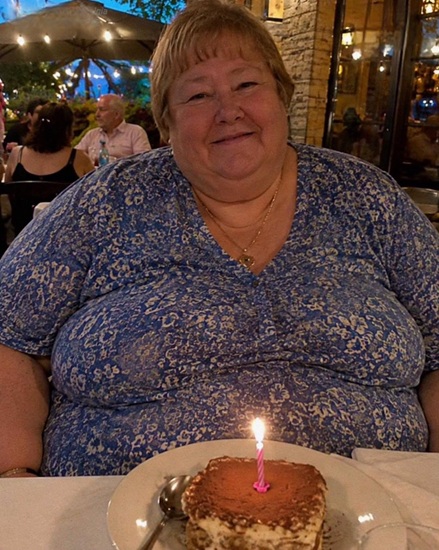
For years, my mother Molly had quietly avoided something she once genuinely loved: eating at restaurants. When I was growing up, taking her somewhere new had been an event in itself. She would examine the menu as though it were an exciting novel, ask the server what they personally recommended and inevitably convince everyone at the table to taste whatever she ordered. By dessert, she usually knew the server’s name and had discovered something about their family.
Restaurants were places where Molly relaxed, laughed and allowed herself to enjoy an evening without worrying about everything waiting for her at home. Somewhere along the way, that changed. As my mother grew older and gained weight, strangers occasionally decided that her appearance gave them permission to comment on her body. Most incidents were subtle. Someone might stare at her plate for too long or whisper something to a companion while looking in her direction. Other encounters were much more direct.
Once, while Molly was ordering dessert, someone nearby made an unsolicited remark about calories. Another time, a stranger looked at what she was eating and suggested that she should choose something “healthier.” Each comment lasted only seconds. The effect lasted much longer.
Molly initially pretended those moments didn’t bother her. She would laugh them off, change the subject and insist that some people simply had bad manners. But I began noticing changes. Invitations to dinner were increasingly met with excuses. She was tired. Her stomach wasn’t feeling right. The weather was bad. Parking would be difficult.
Eventually, takeout became the answer to almost everything.
I understood what she was doing.
Home was safe.
At home, nobody stared at her plate. Nobody assessed her body while she ate. Nobody pretended that humiliating a stranger was an act of concern.
By the time Molly’s 65th birthday approached, I had become tired of watching someone else’s cruelty determine the boundaries of her life.
I wanted to take her somewhere meaningful.
There was a small Italian restaurant she had loved years earlier, long before she began avoiding dinners out. It wasn’t trendy or particularly expensive. The dining room had wooden tables, faded photographs covering the walls and the comforting smell of bread, garlic, herbs and tomatoes drifting from the kitchen.
When I suggested it, Molly immediately hesitated.
“We could order something here,” she said.
“It’s your sixty-fifth birthday.”
“Exactly. I’m old enough to eat pasta on my couch.”
I refused to give up.
Eventually, she agreed on one condition.
“No birthday singing.”
“Fine.”
“And no telling the waiter it’s my birthday.”
“I said fine.”
“And absolutely no giant hat.”
“I don’t even know where I would get a giant hat.”
She narrowed her eyes.
“You’d find one.”
On the evening of her birthday, Molly came downstairs wearing dark trousers and a soft blue blouse. Around her neck was the silver necklace my father had given her many years earlier, along with the matching earrings she usually saved for special occasions.
“You look beautiful,” I told her.
She immediately waved the compliment away.
“I look sixty-five.”
“You can be both.”
She rolled her eyes, but she smiled.
When we reached the restaurant, however, I felt her hand tighten around her purse.
She stopped just outside the entrance.
For several seconds, she watched people through the window.
“You okay?”
Molly inhaled slowly.
Then she lifted her chin.
“I’m sixty-five years old,” she said. “I’m too old to be frightened of pasta.”
We went inside.
For the first hour, the evening was exactly what I had hoped for.
Molly relaxed almost immediately. She laughed with our server, complained affectionately about my terrible ability to pronounce Italian dishes and stole a piece of bread from my plate even though an entire basket was sitting directly between us.
Then she did something that made me unexpectedly emotional.
She ordered dessert before our main course arrived.
“Tiramisu first,” she announced.
“Before dinner?”
“I’m sixty-five. There are fewer rules now.”
When the dessert arrived, she took the first bite and closed her eyes dramatically.
“That,” she said, “was an excellent decision.”
I hadn’t seen her enjoy a restaurant that freely in years.
A few minutes later, she leaned back in her chair.
“Maybe I’ve been ridiculous.”
“About what?”
“Staying home all the time.”
I didn’t respond immediately because I didn’t want to make the moment feel bigger than she intended.
She looked around the room.
“Maybe I should start going out more.”
Then I noticed the woman at the next table.
She was staring at my mother.
At first, I assumed I was imagining it. But her gaze repeatedly moved between Molly and the tiramisu.
I tried to ignore her.
Then she spoke.
“Maybe you should skip dessert.”
The words were loud enough that several nearby tables heard them.
The atmosphere around us changed instantly.
Molly froze.
Her spoon remained suspended above the plate.
The smile that had been on her face only seconds earlier disappeared.
I stared at the stranger.
“Excuse me?”
She shrugged.
“I was just saying.”
“Nobody asked you.”
Molly quietly placed her spoon down.
“Let’s go,” she whispered.
That hurt more than the stranger’s comment.
An hour earlier, my mother had walked through the door telling herself she was too old to fear pasta.
Now one sentence had convinced her she needed to disappear again.
She reached for her purse.
The woman laughed lightly.
“She’ll thank me eventually.”
I stood.
“Do you normally comment on strangers’ bodies while they’re eating?”
The woman rolled her eyes.
“Someone has to tell the truth.”
Before I could answer, the kitchen doors opened.
A man wearing a chef’s coat stepped into the dining room.
He appeared to be somewhere around Molly’s age. His expression was serious, but the moment he saw my mother, something changed.
He stopped walking.
His face went pale.
“Molly?”
My mother looked up.
For a second, she seemed confused.
Then her eyes widened.
“Alaric?”
The chef stared at her as though he had seen someone walk out of a photograph.
The stranger attempted to interrupt.
“I’d like to finish my dinner without—”
Alaric turned toward her.
“Your dinner is finished.”
She blinked.
“What?”
“You need to leave.”
The woman looked around, apparently expecting support.
Nobody offered any.
“You can’t throw me out because I gave someone advice.”
“I can ask you to leave because you publicly humiliated another guest.”
She pushed back her chair.
“This is ridiculous.”
Alaric remained calm.
“Please leave.”
The woman continued protesting, but my attention was already on my mother.
She hadn’t taken her eyes off the chef.
“You own this place?” Molly finally asked.
Alaric smiled.
“For thirty-one years.”
Molly looked genuinely stunned.
They had known each other more than four decades earlier.
When Molly was in her early twenties, she had worked at a diner where Alaric had recently been hired. He was young, inexperienced and determined to become a professional cook despite having very little formal training.
According to him, Molly became his unofficial food critic.
“I was honest,” she said.
“You were brutal.”
“You put cinnamon in tomato sauce.”
“It was experimental.”
“It was criminal.”
For the first time since the stranger’s comment, Molly laughed.
Alaric explained that he used to prepare experimental dishes after his shifts and ask Molly to taste them. She would sit in the kitchen after closing and tell him exactly what worked and what didn’t.
More importantly, she encouraged him.
The diner’s owner initially refused to let Alaric work regularly in the kitchen.
Molly kept insisting that he deserved an opportunity.
Eventually, the owner gave him one.
The arrangement did not last.
Alaric admitted that he had a terrible temper when he was young.
One evening, he argued with the owner about seafood that Alaric believed should not be served. The disagreement escalated, and Alaric threw a pan.
“It wasn’t at him,” he quickly added.
Molly raised an eyebrow.
“It landed surprisingly close.”
“I had bad aim.”
“You had excellent aim.”
He laughed.
Alaric was fired.
He believed his cooking career was over before it had properly begun.
Molly disagreed.
She contacted someone she knew at another restaurant and convinced them to give him an interview.
He got the job.
That kitchen led to another.
Then another.
Eventually, he saved enough money to open his own restaurant.
“This restaurant,” he said.
Molly shook her head.
“You did that yourself.”
“No.”
“I made one phone call.”
“You made the phone call when nobody else believed I deserved another chance.”
Molly looked uncomfortable with the praise.
“That doesn’t mean I built your career.”
“It means you helped me keep one.”
The woman at the other table stood impatiently.
“Can I leave now?”
Alaric nodded toward the entrance.
Before leaving, she looked at Molly.
“People shouldn’t get offended when someone tells them the truth.”
This time, my mother didn’t reach for her purse.
She stood.
Her hands were trembling.
But she stood.
“You don’t know anything about my health,” Molly said.
The woman opened her mouth.
Molly continued.
“You don’t know my medical history. You don’t know what medications I take. You don’t know what my doctor tells me. You don’t know what I’ve lost, survived or worked through.”
The room remained quiet.
“And even if you knew every one of those things,” Molly added, “humiliating me in a restaurant wouldn’t become kindness.”
The woman said nothing.
“You saw my body,” Molly said. “You didn’t see my life.”
The stranger muttered something and walked away.
When the door closed behind her, Molly slowly sat down.
Her hands were still shaking.
“I thought I was going to faint,” she whispered.
“You were incredible.”
“I was terrified.”
“You can be terrified and courageous at the same time.”
She looked at me.
Then she smiled.
Alaric pulled a chair toward our table.
“I need to show you something.”
He pointed toward the wall behind us.
Among dozens of framed photographs was an old picture I hadn’t noticed when we entered.
Alaric was standing in a cramped diner kitchen, probably in his early twenties.
Beside him was a young woman.
My mother.
She had her hair tied back and was laughing at something outside the frame.
Beneath the photograph was a small brass plaque.
Molly stood and walked toward it.
She read the inscription twice.
Then she covered her mouth.
The plaque thanked Molly for telling a young cook that he belonged in a kitchen before he had learned to believe it himself.
“You kept this?”
Alaric nodded.
“For years.”
“Why?”
“Because I didn’t want to forget.”
Molly touched the edge of the frame.
“I disappeared.”
“Life happened.”
“Yes.”
“Life happened to me too.”
There was no dramatic explanation for why they had lost contact.
Jobs changed.
People moved.
Families grew.
Years accumulated.
Sometimes relationships disappear not because anyone chooses to end them, but because ordinary life quietly stretches the distance until decades have passed.
Alaric returned to the kitchen.
Twenty minutes later, he emerged carrying a plate himself.
Fresh pasta.
Roasted vegetables.
Warm bread.
And another piece of tiramisu.
Molly stared at it.
“I already ate dessert.”
Alaric placed the plate in front of her.
“Then perhaps tonight is not the night to skip it.”
Several people nearby laughed.
Molly did too.
Not the polite laugh she used when she wanted to end an uncomfortable conversation.
A genuine one.
She laughed until tears appeared in her eyes.
Then she picked up her fork.
She took another bite.
Nothing dramatic happened afterward.
Nobody applauded.
There was no grand speech.
We simply finished dinner.
And somehow that ordinary ending felt important.
On the drive home, Molly was quiet for several minutes.
Then she looked through the passenger window.
“Remember what I said before everything happened?”
“About being sixty-five?”
“No.”
She smiled.
“About going out more.”
I tried not to sound too excited.
“I remember.”
“I think I meant it.”
This time, I allowed her to see exactly how happy that made me.
“You should.”
She nodded.
“So next month, we’ll try somewhere else.”
“Absolutely.”
“But no birthday singing.”
“It won’t be your birthday.”
“You’ll find a reason.”
I laughed.
For years, Molly had gradually allowed strangers’ comments to make her world smaller.
One dinner could not erase all of that.
Neither could one confrontation.
But that evening gave her something she had been missing: evidence that a stranger’s cruelty did not deserve more authority over her life than her own choices.
The most important moment wasn’t Alaric asking the woman to leave.
It wasn’t even discovering the photograph.
It was watching my mother remain seated afterward.
She could have gone home.
Instead, she stayed.
She ate.
She laughed.
And when another piece of tiramisu arrived, she enjoyed it without asking anyone else’s permission.
A month later, Molly called me.
“Are you busy Friday?”
“Why?”
“I found a restaurant.”
I smiled before she finished the sentence.
“What kind?”
“Greek.”
“Are you asking me to dinner?”
“No,” she said. “I’m informing you.”
Then she paused.
“And apparently they have excellent dessert.”
That was when I knew something had genuinely changed.
Not because Molly suddenly stopped caring what anyone thought.
Not because one birthday dinner magically erased years of uncomfortable experiences.
But because fear was no longer making every decision for her.
And sometimes, that is what reclaiming part of your life looks like.
Not a dramatic transformation.
Just opening a restaurant door again.
