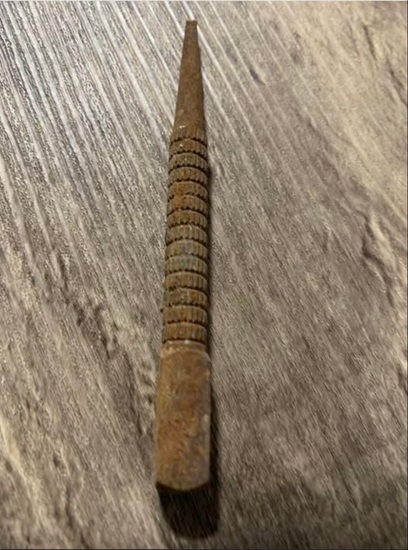
Sometimes the most unassuming objects carry the longest and most practical histories, quietly shaping the way people build, repair, and refine the world around them. The nail punch, also known as a nail set, is one of those tools that often goes unnoticed until someone encounters it for the first time and wonders about its purpose. At first glance, it may seem simple or even mysterious, but its role in woodworking and construction has been essential for centuries.
The origins of tools like the nail punch can be traced back to early human craftsmanship, when the need for smoother, more refined finishes in wood and stone led artisans to develop basic striking and shaping instruments. While the modern nail punch is far more specialized, its concept is rooted in those early techniques where builders sought to drive fasteners below the surface to create cleaner, more durable work. Over time, as woodworking evolved from purely functional construction to detailed craftsmanship, tools that improved precision became increasingly important.
A nail punch is a small, handheld tool designed specifically to recess the head of a nail beneath the surface of a material, most commonly wood. It typically features a narrow, pointed or slightly concave tip that rests directly on the nail head, and a solid metal body that is struck with a hammer. This controlled impact allows the nail to be driven just below the surface without damaging the surrounding material. The result is a smoother finish that can later be filled or sanded for a seamless appearance.

Once the nail is properly set below the surface, the small indentation left behind is usually filled with wood putty or filler, as commonly noted in woodworking references such as Britannica. This finishing step is not only cosmetic but also functional, helping protect the nail from exposure to moisture and air. By sealing the surface, the overall structure becomes more resistant to rust, wear, and long-term deterioration, which is especially important in furniture, flooring, and cabinetry.
As industrial manufacturing expanded during the Industrial Revolution, both nails and hand tools became more standardized and widely available. This period marked a significant improvement in tool design, including the refinement of nail punches to accommodate mass-produced nails of consistent size and shape. With this standardization, carpenters and builders could achieve more uniform results, making construction faster, more reliable, and more visually polished than in earlier eras.
In modern woodworking and construction, nail punches continue to play a vital role despite the rise of power tools and automated fastening systems. They are commonly made from hardened materials such as high-carbon steel or titanium, allowing them to withstand repeated impact without deformation. Many modern versions are designed with ergonomic grips or textured surfaces to improve handling and reduce slippage during use, especially in detailed or repetitive work.
Nail punches are also produced in a variety of sizes, each matched to different nail heads and applications. Smaller punches are often used in fine woodworking, such as cabinetry, trim installation, or decorative furniture, where precision is essential. Larger sizes are more suited for construction projects involving framing or decking, where stronger nails and deeper setting are required. This range makes the tool adaptable across many trades and skill levels.
One of the key advantages of using a nail punch is the quality of the final finish it helps achieve. By recessing nail heads below the wood surface, it allows craftsmen to create smooth, uninterrupted surfaces that can be painted, stained, or varnished. This is particularly important in visible structures where aesthetics matter as much as structural integrity. It also reduces the risk of exposed nail heads catching on objects or causing wear over time.
Another important benefit is the protection it offers to both the material and the fastener. When nails are left flush or slightly raised, they can cause surface damage or loosen over time due to friction and movement. By setting them deeper into the wood, the nail punch helps secure them more firmly, contributing to the longevity of the structure. This is especially valuable in environments exposed to changing humidity or temperature conditions.
Despite its simplicity, the nail punch remains widely used because of its reliability and control. Unlike automated tools, it allows the user to apply precise force exactly where it is needed, making it ideal for delicate adjustments or finishing touches. Many experienced carpenters still prefer it for tasks that require a careful hand and attention to detail, especially in restoration work where preserving the original material is important.
In recent years, manufacturers have introduced updated versions of the nail punch, including spring-loaded and automatic designs that reduce the need for repeated hammer strikes. These innovations make the tool easier to use for extended periods while maintaining accuracy. Some sets even include color coding or laser markings to help users quickly identify the correct size for different nails, improving efficiency on busy job sites.
Ultimately, the nail punch remains a small but essential part of the broader toolkit used in construction and woodworking. Its ability to create clean, professional finishes ensures its continued relevance even in a world filled with advanced machinery. Whether used in fine furniture making or large-scale building projects, it continues to serve the simple yet important purpose of refining the final result.
What makes the nail punch especially interesting is not just its function, but its longevity as a concept. From early craftsmen shaping wood with primitive tools to modern builders working with precision-engineered materials, the need to control and refine nail placement has never disappeared. It is a reminder that even in highly technological industries, simple hand tools still hold lasting value.
In the end, the nail punch stands as a quiet example of practical design that has endured through centuries of change. It may not attract attention like power tools or modern machinery, but its contribution to craftsmanship is undeniable. It represents the idea that the best tools are often the simplest ones, refined over time not by complexity, but by usefulness and necessity.
