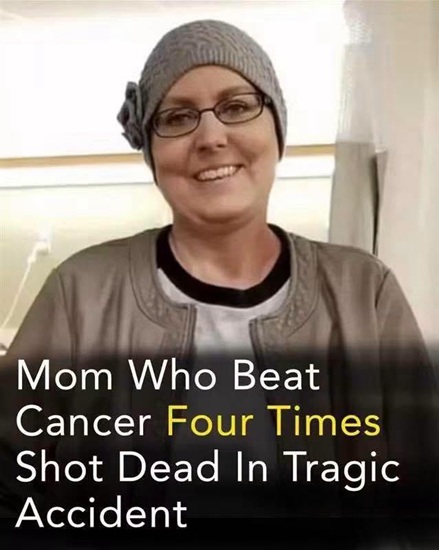
She Survived Cancer Again and Again — Then a Bullet Reached Her Inside Her Own Home
Jennifer James had already spent years fighting for her life.
She had faced breast cancer multiple times.
According to her family and friends, she had survived four previous battles and was undergoing treatment again when, on an April night in 2025, something completely unrelated to her illness ended her life.
She was not outside.
She was not involved in an argument.
She was inside her own home in Berthoud, Colorado.
Then a bullet came through.
And within minutes, a family that had watched Jennifer survive one challenge after another was facing a loss no one had expected.
The Call Came Just Before Midnight
On April 28, 2025, at around 11:20 p.m., the Larimer County Sheriff’s Office received a 911 call reporting that an adult woman had been shot inside a home in the 500 block of First Street in Berthoud.
Deputies responded.
A nearby Colorado State Patrol trooper also arrived.
First responders began providing aid.
But Jennifer could not be saved.
The Larimer County Coroner later identified the victim as Jennifer Lynn James, 49, of Berthoud.
The coroner determined that she died from a gunshot wound to the chest.
Her manner of death was ruled homicide.
Several other people were inside the home at the time.
Authorities reported no other injuries.
At first, investigators did not publicly explain how a woman inside her own house had been shot.
That answer began to emerge several days later.
Investigators Identified a Suspect
On May 1, authorities arrested 20-year-old Ebenezer Worku of Denver.
The Larimer County Sheriff’s Office said investigators had gathered evidence and information that led them to identify Worku as a suspect.
He was booked into the Larimer County Jail on a charge of first-degree murder — extreme indifference, a Class 1 felony.
A judge set a $1.25 million cash-only bond.
The sheriff’s office also emphasized something important.
The charge was an accusation.
Worku was presumed innocent unless and until proven guilty in court.
That distinction matters, especially because many of the more dramatic details about the shooting came from an arrest affidavit rather than from a completed trial.
The Affidavit Described an Allegedly Accidental Discharge
According to media reports citing the affidavit, investigators said Worku described being inside a vehicle near Jennifer’s home while handling a firearm.
He allegedly told investigators that he was trying to clear the gun and believed it was unloaded.
The weapon discharged.
Then another round was fired.
According to those reports, Worku said he did not initially realize someone had been struck.
The bullet entered Jennifer’s home.
She was hit while she was inside.
The idea that an ordinary act of handling a firearm outside could send a projectile into a nearby home is part of what made the case so disturbing.
But the legal question was not simply whether Worku meant to target Jennifer.
Prosecutors charged him under an extreme indifference theory.
That charge focuses on allegedly creating a grave risk of death through conduct showing extreme disregard for human life.
The final legal determination, however, belongs to the court.
Jennifer Had Been Fighting Cancer for Two Decades
To Jennifer’s family, the randomness of the shooting was especially difficult to process because of everything she had already survived.
Her daughter Ashley said Jennifer had been battling breast cancer since she was 29.
Over roughly 20 years, she endured repeated diagnoses and treatments.
Family members described her as a four-time breast cancer survivor.
Friends later said she was facing cancer again and undergoing chemotherapy when she was killed.
That history gave the tragedy another layer.
Jennifer had spent years enduring treatment.
She had continued raising her children.
She had kept fighting.
Then her life ended not because of the disease she had battled for so long, but because of a bullet fired outside her home.
She Was a Single Mother of Four
Jennifer was also the mother of four children.
A GoFundMe created to support the family described her as deeply loved and remembered her for her warmth and kindness.
The fundraiser said her children were left without a parent and would face major expenses in the aftermath of her death.
Friends described Jennifer as someone whose personality brought light to the people around her.
One phrase used in the fundraiser called her “the epitome of sunshine.”
That description captured how those closest to her wanted her remembered.
Not as a crime statistic.
Not simply as a cancer patient.
But as a mother and person whose everyday presence mattered.
Two of Her Children Were Reportedly Home
Family accounts and media coverage indicated that two of Jennifer’s children were inside the home when the shooting occurred.
That detail makes the incident even harder to imagine.
The home should have been the safest place available.
Instead, one bullet entered the space and permanently changed the family.
Authorities said no one else inside was physically injured.
But the emotional consequences are much harder to measure.
The loss was immediate.
And for Jennifer’s children, it followed years of watching their mother fight serious illness.
Her Daughter Ashley Spoke About the Loss
Jennifer’s oldest daughter, Ashley James, later spoke publicly about her mother.
She described Jennifer as exceptionally selfless.
According to Ashley, her mother devoted much of her life to her children.
She had endured treatment for years without allowing illness to define the family.
Ashley also said her mother rarely complained despite everything she went through.
That resilience became one of the qualities her daughter most admired.
And now, Ashley said, it was something she hoped to carry forward herself.
The family’s grief was not only about how Jennifer died.
It was about losing the person who had held the family together.
Why the Cancer History Matters
Cancer survivorship is often discussed in statistics.
Years survived.
Treatments completed.
Remission.
Recurrence.
But family members experience it differently.
There are appointments.
Scans.
Waiting.
Hope.
Fear.
Then relief.
And sometimes the cycle begins again.
Jennifer’s family had reportedly been living with that cycle for decades.
She had survived cancer four times.
Then cancer returned again.
At the time of her death, friends said she was once more undergoing treatment.
That is why Ashley described the shooting as feeling almost cruelly unreal.
Jennifer had fought for her life for years.
Then violence ended that fight in seconds.
The Shooting Was Not Reported as a Targeted Attack
Nothing in the sheriff’s public announcement suggested that Jennifer and Worku had a known relationship.
Authorities did not describe the shooting as a targeted dispute.
The available reporting instead indicated that the bullet reached Jennifer’s home from outside.
That is one reason the case attracted attention.
There was no known confrontation inside the house.
No dispute involving Jennifer.
No warning that the danger was approaching.
She appears to have simply been home.
And that ordinary detail makes the event especially difficult to process.
Investigators Used Evidence From the Area
Reports citing the arrest affidavit said surveillance footage from nearby homes helped investigators identify the suspect vehicle and reconstruct what happened.
Investigators then focused on Worku.
After his arrest, he allegedly made statements about firing the weapon.
Those statements became part of the criminal investigation.
But court cases require more than headlines.
Evidence must be reviewed.
Statements can be challenged.
Legal standards must be met.
The sheriff’s office was careful to say the investigation remained active after the arrest.
That means responsible reporting should separate allegations from established facts.
The established fact is that Jennifer died from a gunshot wound while inside her home.
The allegation concerns how and why the gun was fired.
One Claim in the Affidavit Requires Special Caution
Some reports quoted Worku as making statements about his own mental health.
Those statements should not be treated as a confirmed psychiatric diagnosis.
A person describing themselves with a specific mental-health condition is not the same as an evaluation by a qualified clinician.
It also does not explain criminal behavior by itself.
Most people living with schizophrenia or other serious mental-health conditions are not violent.
So repeating a self-described diagnosis as if it directly caused a homicide would be misleading.
The criminal investigation concerns conduct.
The medical questions, if relevant, require proper evidence.
Those are separate issues.
Emotional Reactions After the Shooting Were Also Reported
According to media accounts of the affidavit, Worku appeared distressed after learning that someone had died.
He allegedly asked to be taken to jail.
Those statements may become relevant in court.
But they do not resolve questions of intent, recklessness or legal responsibility.
Only the criminal process can do that.
The emotional response after an incident does not erase what occurred beforehand.
Nor does it automatically prove the legal meaning of the conduct.
That is why the case remained in the hands of investigators, prosecutors and the courts.
Jennifer’s Family Faced Immediate Practical Costs Too
Grief often arrives together with practical problems.
Funeral expenses.
Household bills.
Food.
Transportation.
Support for children.
The GoFundMe created after Jennifer’s death was intended to help her family manage those costs.
The campaign quickly drew hundreds of donations.
The response reflected the number of people who felt connected to Jennifer or moved by her family’s loss.
Support cannot undo the shooting.
But for families suddenly facing a major loss, practical help can reduce some of the burden that arrives alongside grief.
Her Life Had Already Been Defined by Resilience
Jennifer’s cancer history could have dominated the way people remembered her.
Instead, her daughter and friends focused on character.
Selflessness.
Kindness.
Persistence.
The ability to keep going.
That is important because illness can sometimes reduce a person to a diagnosis in the public imagination.
Jennifer was more than a cancer survivor.
She was raising four children.
She was maintaining family life through years of treatment.
And according to those who knew her, she did so without making her struggles the center of everything.
Her children remembered what she gave them.
That is what made the loss so large.
A Home Became the Scene of a Homicide
The Larimer County Coroner officially ruled Jennifer’s death a homicide.
The cause was a gunshot wound to the chest.
That finding is medical and factual.
It does not itself determine the criminal guilt of any particular person.
The criminal case is separate.
But it confirms one painful point.
Jennifer’s death was not natural.
It was not a complication of cancer.
It was not the disease she had fought for decades.
Her life ended because she was struck by a bullet inside her home.
That distinction is part of what Ashley struggled to accept.
The Community Response Centered on Jennifer
Public attention naturally focused on the suspect after the arrest.
But the people closest to Jennifer tried to shift attention back to her.
A celebration of life was planned.
Friends shared memories.
The fundraiser emphasized the needs of her children.
And Ashley spoke about the example her mother had set.
That choice matters.
Crime coverage can quickly become centered on the person accused.
Names.
Charges.
Affidavits.
Court dates.
But every homicide begins with someone whose life existed long before the case file.
Jennifer’s family wanted that life remembered.
Her Children Lost the Person Who Had Fought for Them
Ashley’s description of her mother was simple.
Jennifer had devoted herself to her children.
That devotion continued through cancer treatment.
Through recurrence.
Through fear.
Through years of uncertainty.
Her children had watched her survive again and again.
That history may have made her seem almost impossible to lose.
Then April 28 changed everything.
The disease had not taken her.
A bullet had.
For a family accustomed to preparing for medical battles, there had been no preparation for this one.
The Case Also Shows Why Careful Language Matters
The phrase “stray bullet” can sound almost passive.
But bullets do not move on their own.
A firearm was discharged.
A projectile traveled into a home.
A woman died.
The question of whether the shooting was intentional, reckless or otherwise criminal is for the court to decide.
But the physical event itself was not abstract.
Someone fired the weapon.
Someone inside another building was struck.
That is why the criminal charge was so serious.
And why the family described the death as senseless.
The Official Record Is Clear on the Central Facts
Jennifer Lynn James was 49.
She lived in Berthoud.
She was inside her home when a bullet struck her.
First responders tried to save her.
She died at the scene.
The coroner ruled the death a homicide caused by a gunshot wound to the chest.
Ebenezer Worku was arrested days later and charged with first-degree murder under an extreme-indifference theory.
His bond was set at $1.25 million cash only.
Those are the facts established in official public records.
The rest of the criminal case requires the legal process to run its course.
Jennifer’s Personal Story Is the Part That Gives the Case Meaning
Legal language can make a tragedy sound clinical.
Homicide.
Extreme indifference.
Class 1 felony.
Cash bond.
Those terms matter.
But they do not explain who was lost.
Jennifer was a mother of four.
She had lived with breast cancer since her late 20s.
She had survived multiple recurrences.
At the time of her death, friends said she was undergoing chemotherapy again.
She was still fighting.
Her family expected that fight to continue.
Instead, something entirely different ended her life.
That Is Why Her Daughter’s Words Carry So Much Weight
Ashley did not describe her mother primarily as a victim.
She described her as resilient.
Selfless.
Devoted.
Those qualities had been proven over years.
Not in one dramatic moment.
In hospital visits.
Treatment cycles.
Parenting.
Daily life.
Jennifer’s family had already seen what she could survive.
Cancer had tested her repeatedly.
And repeatedly, she kept going.
That history made the final loss feel even more impossible.
One Night Changed Everything
Before 11:20 p.m. on April 28, Jennifer’s family still had her.
Minutes later, they did not.
The bullet traveled only once.
The consequences spread much further.
Four children lost their mother.
Friends lost someone they described as extraordinarily kind.
A family that had spent years confronting cancer had to confront sudden violence instead.
And a community learned that something catastrophic can happen without warning, even inside a home.
The Lasting Story Is Not the Accused Man’s
The court will decide what legal responsibility belongs to Worku.
Investigators will present evidence.
Defense attorneys will respond.
Judges and, if necessary, jurors will apply the law.
That process matters.
But Jennifer’s life should not become a footnote to it.
She had already spent 49 years building a story of her own.
A mother raising four children.
A woman surviving breast cancer again and again.
Someone remembered by friends for kindness rather than bitterness.
Someone who, according to her family, continued fighting even when cancer returned.
Then, suddenly, that story stopped.
Not because she gave up.
Not because her illness finally won.
But because a bullet reached her inside the place where she should have been safest.
And for the people who loved Jennifer James, that remains the hardest part to understand.
