WC: Two Letters With a Surprisingly Long History
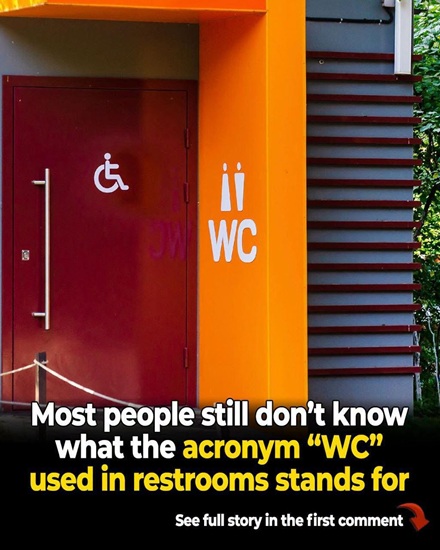
You have probably seen the letters WC on a door in a hotel, train station or airport.
They look simple.
But behind those two letters is a story stretching back centuries.
WC stands for water closet, an older English term for a room containing a toilet.
The story of the modern flush toilet began long before indoor plumbing became common.
In 1596, English courtier Sir John Harington described an early flushable toilet. He was also a godson of Queen Elizabeth I.
His design used water from a cistern to wash waste away.
It was clever, but the world around it was not ready.
Reliable plumbing and sewer systems were still missing.
So the idea remained unusual for generations.
Then came a major improvement.
In 1775, Scottish inventor Alexander Cumming received the first patent for a flush toilet.
His design incorporated a curved trap that retained water in the pipe.
That small pool of water created a barrier against unpleasant sewer gases.
Versions of the same basic principle remain important in modern plumbing.
But plumbing was only part of the story.
As indoor toilets became more common during the 19th century, people needed a polite name for the new fixture.
“Water closet” became one such term.
Eventually, the initials WC became a convenient abbreviation.
The letters appeared on signs and plans, especially where a short and easily understood label was useful.
And something unexpected happened.
They traveled.
Today, WC remains widely recognizable in many parts of Europe and elsewhere, especially in places used by international visitors.
Someone who does not understand the local word for toilet may still recognize those two letters.
In the United States, however, terms such as restroom and bathroom became more common.
That is why some American travelers encounter WC mainly when traveling abroad.
The history also connects to something far more serious than vocabulary.
Safe toilets, sewage systems and sanitation have played an enormous role in protecting public health.
Yet access remains unequal.
WHO and UNICEF reported that in 2024, 3.4 billion people still lacked safely managed sanitation services, including 354 million people who practiced open defecation.
So the next time you see WC on a door, it is worth remembering what those letters represent.
Not merely a restroom sign.
They are a small surviving piece of plumbing history.
From a 16th-century experiment to an 18th-century patent and finally to an internationally recognized label, two ordinary letters ended up carrying centuries of change.
That is a surprisingly long story for something most people walk past without a second thought.
