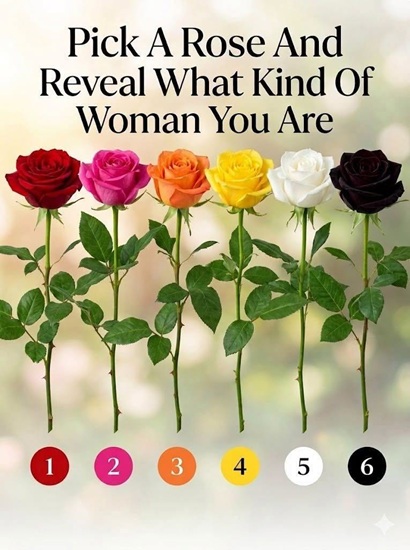
A simple image showing six roses in different colors can quickly become an entertaining personality-style exercise. Viewers are invited to choose between a red, pink, orange, yellow, white, or black rose and then read a description connected with that color. These kinds of visual tests are popular because they are quick, colorful, and easy to share with friends. However, choosing one flower cannot scientifically determine someone’s personality, emotional character, relationships, or future behavior.
Color preference can change according to mood, memories, culture, fashion, lighting, personal experiences, and even the arrangement of the flowers on the screen. The descriptions are therefore best understood as symbolic interpretations rather than psychological conclusions. People have attached meanings to flowers for centuries, but those meanings have never been completely fixed. A rose that symbolizes romance in one period or culture may carry a different association somewhere else.
Even within the same country, two people can look at the same flower and connect it with completely different memories. One person may associate a red rose with a wedding anniversary, while another remembers a garden belonging to a grandparent. Someone may choose yellow because it reminds them of summer, while another may simply like how brightly it appears against the background. These personal associations are often more meaningful than any prepared personality description.

The Red Rose — Passion, Strength and Intensity
Red roses are among the most recognizable flowers in popular culture and are frequently associated with romantic love, passion, courage, and strong emotion. Because red is visually intense, it naturally attracts attention, especially when placed beside lighter colors. In playful personality descriptions, someone choosing the red rose is often portrayed as determined, loyal, expressive, and willing to fight for the people or principles they value. Those descriptions reflect established cultural associations surrounding the color rather than information actually measured from the individual making the choice.
A viewer may choose red because it appears bold, because it is their favorite color, or because red roses remind them of an important personal memory. None of those reasons proves a particular personality trait. The visual power of red also helps explain why it receives such dramatic interpretations. Across many forms of design, red is used to attract attention because the human eye notices it quickly. It appears in warning signs, celebrations, clothing, advertising, and romantic imagery, giving the color a wide range of meanings.
That same visual intensity can make the red rose appear stronger or more noticeable than the other flowers in the image. Someone selecting it may simply be responding to contrast and brightness rather than revealing a hidden emotional characteristic. The symbolic interpretation can still be enjoyable as long as it remains clearly separated from scientific personality assessment. If the red rose catches your attention first, a more meaningful question might be why it feels appealing today.
Perhaps you associate red with confidence or celebration. Maybe someone once gave you a bouquet of red roses during an important moment in your life. You may also simply prefer strong colors over pale ones. Personal style can communicate mood without defining personality permanently. A person who chooses red today might choose white, yellow, or pink tomorrow without anything fundamental about their identity changing.
The Pink Rose — Gentleness, Affection and Warmth
Pink roses are commonly associated with affection, tenderness, gratitude, sweetness, and romance. Personality-style images often connect the pink rose with empathy, kindness, emotional sensitivity, and quiet strength. These qualities are appealing and broad enough that many people can recognize something familiar in the description. Someone choosing pink may indeed consider themselves caring, but the flower itself cannot demonstrate that they are more nurturing than someone who prefers another color. The interpretation begins with cultural symbolism and then turns that symbolism into a story about the viewer. That process can feel personal even though it does not measure psychological traits.
Pink also exists in many shades, and those shades can create different impressions. A pale pink rose may appear delicate and calming, while a brighter pink can seem energetic and expressive. Lighting, saturation, digital editing, and background colors can change how attractive the flower looks in an image. If the exact same rose were photographed differently, a person might make another choice. This helps illustrate why color preference is strongly influenced by presentation. The viewer remains the same person even when the visual conditions change.
Someone drawn to pink may also have a personal connection with the color that has nothing to do with the provided description. It might remind them of childhood, a favorite outfit, a wedding, a family member, or a garden they once visited. Those individual associations can be emotionally meaningful without becoming evidence of a fixed personality type. Enjoying pink does not automatically mean someone is gentle, romantic, or emotionally open. It simply means that, at that moment, something about the color or flower appealed to them.
The Orange Rose — Energy, Creativity and Adventure
Orange roses tend to stand out because they are less commonly seen than classic red, pink, or white varieties. In symbolic personality descriptions, orange is often linked with energy, enthusiasm, creativity, curiosity, and a desire for new experiences. This interpretation partly comes from the visual position of orange between red and yellow, combining some of the intensity associated with red and some of the brightness often connected with yellow. The resulting story suggests an energetic personality who enjoys movement, ideas, and adventure. It can be an enjoyable interpretation, but the choice itself cannot confirm those characteristics. Someone may simply like orange because it is unusual among roses.
The rarity or novelty of a color can strongly influence visual preference. People often notice objects that differ from what they expect, and an orange rose can feel distinctive in a collection dominated by more traditional colors. That uniqueness may attract someone who enjoys unusual designs, but it can just as easily attract someone who has never seen an orange rose before. Visual curiosity should not automatically be transformed into a personality label. The image presents a limited set of options, and people make their choice from what is available rather than from every possible flower or color.
Orange may also carry personal associations with autumn, sunsets, warmth, fruit, sports teams, clothing, or decorations. Someone who associates the color with a happy memory might choose it immediately without consciously understanding why. Memory and emotion can influence preference in subtle ways. This makes the choice interesting, but it also makes a fixed interpretation impossible. Instead of assuming the orange rose reveals a personality, it can be more useful to ask what the color brings to mind.
The Yellow Rose — Friendship, Brightness and Optimism
Yellow roses are frequently associated today with friendship, happiness, warmth, optimism, and cheerful social connections. In many modern personality games, someone choosing yellow is described as positive, friendly, sociable, or capable of bringing energy into a room. The brightness of the color makes that interpretation easy to understand. Yellow is strongly associated with sunlight, summer, and other visually bright experiences, so a cheerful personality narrative naturally develops around it. However, historical flower symbolism has not always given yellow roses exactly the same meaning. In some contexts, yellow roses have been connected with jealousy, change, or separation.
This history is useful because it demonstrates that flower symbolism changes over time. Meanings are created by people and cultures rather than permanently contained inside the flower. A person seeing a yellow rose today may immediately think of friendship, while someone from a different background may understand it differently. Neither reaction proves anything about personality. It shows how symbols depend on cultural knowledge and personal experience. The same color can create different stories depending on who is looking at it.
The yellow rose might attract someone simply because it is the brightest flower in the picture. Screen brightness and contrast can make yellow especially noticeable. If the image background were changed, the same person might be drawn to another rose. That possibility reminds us that visual tests depend heavily on design. A preference created partly by image composition cannot reasonably be treated as a permanent psychological truth.
If yellow is your favorite, you might instead reflect on what it represents to you personally. Perhaps it reminds you of a close friend, a sunny afternoon, a particular garden, or a meaningful bouquet. Maybe you simply enjoy bright colors. Those associations can reveal something about your memories and current mood without claiming to reveal your entire character. Reflection can be meaningful even when it remains modest and realistic.
The White Rose — Calm, Simplicity and Reflection
White roses are commonly associated in many contexts with purity, peace, simplicity, honesty, new beginnings, and quiet elegance. Personality descriptions sometimes portray people who choose white as calm, thoughtful, sincere, or wise. Those associations come partly from the uncluttered appearance of the color and the cultural symbolism surrounding white. Yet white does not carry the same meaning everywhere. In some cultures and traditions, white is strongly connected with mourning and remembrance rather than beginnings or celebration. This difference is another example of why symbolic meanings should never be treated as universal psychological facts.
A white rose may appeal because it looks clean and elegant beside stronger colors. Someone who prefers understated fashion might naturally notice it. Another viewer may associate white roses with weddings, memorials, religious ceremonies, or important family events. These experiences can influence emotional reaction far more strongly than a general personality description. A color that feels peaceful to one person may bring another person memories of loss. Both responses can be authentic.
People who choose white should therefore not be told that their selection proves they are calmer or more honest than everyone else. No color can measure those characteristics. Personality develops through genetics, environment, relationships, learning, experiences, and countless other influences. A flower preference does not capture that complexity. What it can do is provide a small opportunity to think about the emotions and memories connected with a particular symbol.
The Black Rose — Mystery, Independence and Transformation
The black rose is often the most visually unusual option in these personality images. In fictional symbolism and popular design, black roses are frequently associated with mystery, independence, individuality, transformation, endings, or dramatic change. Someone selecting the black rose may therefore receive a description suggesting that they think differently, value independence, or prefer not to follow expectations. These interpretations fit the flower’s unusual visual appearance, but they remain stories inspired by symbolism rather than evidence about the viewer. Choosing black does not demonstrate that someone has a secretive personality or that a major transformation is approaching.
Roses described as black are generally not naturally pure black. Very dark red, burgundy, or purple varieties can appear almost black under certain lighting conditions, while images may also be digitally altered to produce a stronger black effect. The unusual appearance itself can make the flower attractive. People are naturally curious about rare or unexpected things, so someone might select the black rose simply because it looks different from the other five options. That reaction requires no deeper psychological explanation.
Black also has many meanings depending on context. It can represent elegance, formality, grief, mystery, rebellion, sophistication, or simplicity. Fashion provides an obvious example: many people wear black clothing because it is versatile and aesthetically appealing, not because they are expressing sadness or secrecy. The same principle applies to the black rose. Personal preference should not automatically be interpreted through the most dramatic meaning available.
Why These Personality Descriptions Often Feel Accurate
One reason symbolic personality games can feel surprisingly accurate is a psychological phenomenon often called the Barnum effect. People tend to see broad, generally applicable descriptions as personally meaningful, especially when they believe those descriptions were selected specifically for them. A statement such as “You care deeply about others, but you sometimes protect your emotions” can feel remarkably accurate because many people experience both connection and caution at different times. The description seems individual even though it could apply to a very large number of people.
Positive and flexible language makes the effect even stronger. Personality games often combine characteristics that allow readers to recognize themselves regardless of their actual behavior. Someone may be described as independent but loving, confident but sensitive, adventurous but thoughtful, or calm until something important is threatened. These combinations include enough possibilities that most readers can find a personal connection. The rose selection creates a small ritual that makes the description feel discovered rather than randomly assigned.
People also naturally remember statements that fit their experiences more easily than statements that do not. If a description contains six claims and four seem accurate, the reader may focus on those four and largely ignore the others. This does not mean anyone is being foolish. Human beings naturally look for patterns and connections. Understanding that tendency simply helps keep entertainment content in perspective.
How the Image Itself Can Affect Your Choice
A rose does not appear in isolation. Its position, size, lighting, saturation, background, surrounding colors, and even the order in which the viewer looks at the flowers can influence selection. A centrally positioned flower may receive more attention than one placed near the edge. A bright red rose against a pale background may appear more striking than the same rose against another strong color. These are ordinary features of visual design.
Imagine rearranging the six flowers while keeping every rose identical. Some people would likely choose differently. Now imagine increasing the size of one flower or adding stronger lighting to another. Preferences could shift again. The viewer’s underlying personality would not have changed during those few seconds. Only the image presentation would have changed.
This is why visual preference tests should be approached lightly. They can tell us which option someone found appealing within one particular image, but they cannot separate personal taste from design effects. The distinction matters whenever a personality claim is attached to the result. Entertainment becomes misleading only when the limitations are hidden.
Culture Changes the Meaning of Flowers
Flower symbolism has developed through many different traditions, and those traditions have changed considerably over time. Historical societies sometimes used flowers to communicate emotions or messages when direct expression was discouraged. Later writers, artists, advertisers, florists, and popular media continued adapting those associations. As a result, modern rose meanings are a mixture of tradition, commerce, personal experience, and cultural storytelling.
Red may symbolize romantic love in one situation but courage or ceremony in another. White can represent weddings in some traditions and mourning in others. Yellow may communicate friendship today even though older symbolism sometimes gave it less cheerful meanings. Black roses can symbolize transformation in fiction while simply representing unusual beauty in a modern design. These differences demonstrate that symbolism is flexible rather than absolute.
Even within one family, people may interpret the same flower differently. A grandmother who grew yellow roses could make that color deeply sentimental for one person. A wedding bouquet could make white roses meaningful for another. Someone who received red roses during an important relationship may connect them strongly with that period of life. Personal history continuously reshapes symbolic meaning.
Memory May Matter More Than Personality
Sometimes a flower feels important because it activates a memory before the person consciously understands the connection. Smell, color, shape, and visual patterns can all become linked with experiences. A particular rose might remind someone of childhood, a loved one, a celebration, a funeral, or a place they once visited. Those emotional associations can influence choice immediately.
If a rose selection leads someone to remember a person or event, that memory may be more meaningful than the prepared personality description. Perhaps the pink rose recalls flowers growing outside a childhood home. Maybe yellow brings back memories of a close friendship. White could remind someone of a wedding or memorial. The value lies in the reflection, not in pretending that the rose somehow detected information about the viewer.
People can also develop completely new associations with colors. A color once disliked may become meaningful because of a positive experience, while a previous favorite may lose its attraction over time. Preference is therefore dynamic. Changing your favorite rose does not mean your personality has suddenly changed.
Every Person Contains More Than One Symbolic Quality
The biggest limitation of these tests is that real human beings do not fit into six neat categories. A single person can be passionate like the symbolic red rose, gentle like pink, energetic like orange, cheerful like yellow, reflective like white, and independent like black. Which quality appears most strongly can depend on circumstances. Someone can behave confidently at work and cautiously in an unfamiliar social setting. They can love adventure while also enjoying quiet evenings at home.
Human personality is multidimensional. People learn, adapt, change, and respond differently to different relationships and environments. Reducing all of that to one color creates an attractive story but not an accurate psychological portrait. The story becomes harmless when readers understand this limitation. It becomes problematic only if the result is treated as a serious judgment about someone.
No flower should therefore be described as representing a better type of person. Choosing red is not superior to choosing pink. Black does not make someone more interesting, and white does not make someone more honest. Each flower simply offers a different visual and cultural association. There is no correct answer.
A Better Way to Enjoy the Rose Test
Instead of asking, “What kind of woman does this rose prove I am?” consider asking, “Why did this flower catch my attention?” That small change turns the activity from a claim about personality into an invitation to reflect. Maybe the answer involves color. Maybe it involves memory. Perhaps the shape of one rose simply looks more beautiful to you.
You can also ask whether your choice would remain the same if the flowers were rearranged. Would you still choose red if it were smaller? Would yellow remain your favorite against a different background? Would the black rose attract you if it appeared as a naturally dark burgundy instead of digitally black? Questions like these reveal how much visual context influences preference.
Try repeating the exercise several weeks later. There is a good chance that you may select the same rose, especially if you have a strong favorite color. But you might also choose something completely different. Neither outcome proves anything dramatic. Taste can be stable in some situations and flexible in others.
Roses Can Be Symbols Without Becoming Labels
Symbolism is valuable precisely because it allows people to create stories and associations. Writers use roses in poetry. Artists include them in paintings. People give them as gifts during celebrations, romantic occasions, memorials, and ordinary days. Florists combine colors to communicate moods or create visually attractive arrangements. None of this requires the symbolism to function as a scientific personality system.
A red rose can represent love without proving that everyone who likes red is passionate. A white rose can symbolize peace without establishing that someone choosing it has a peaceful personality. A black rose can represent transformation in a story without predicting that the viewer’s life is about to change. Symbolism works best when there is room for imagination.
That distinction also helps prevent unfair judgments. Another person’s flower selection should never be used to judge their emotional health, relationships, intelligence, honesty, or personal worth. Those conclusions require real knowledge of the person, not a color preference. A playful image cannot substitute for understanding someone’s experiences and behavior.
The Beauty Comes From the Differences
A garden would be far less interesting if every rose had exactly the same color, shape, and fragrance. Part of its beauty comes from variation. The same is true of personal taste. Some people love vivid colors, while others prefer muted ones. Some enjoy traditional roses, while others are fascinated by unusual varieties.
Differences in preference do not need to be ranked. Someone choosing a red rose is not more passionate than someone choosing white. A person selecting yellow is not automatically more optimistic than someone choosing black. Those interpretations exist only within the symbolic game. Outside the game, every person’s character remains far more complicated.
The six roses can therefore be enjoyed as six different visual stories. Red suggests intensity, pink suggests tenderness, orange suggests enthusiasm, yellow suggests brightness, white suggests simplicity, and black suggests unconventional mystery. These associations explain why the descriptions feel appropriate. They do not transform the flowers into psychological instruments.
Choose the Rose That Speaks to You Today
Take another look at the six colors and notice which one attracts you first. There is no need to overthink the decision. Perhaps you immediately know your answer, or perhaps two colors compete for your attention. Either response is perfectly normal.
Once you make your choice, enjoy the symbolic description. If parts of it seem accurate, think about why they resonate. If the description feels completely wrong, there is no reason to force yourself to accept it. The image cannot know your history, relationships, experiences, goals, or values.
What matters most is the meaning you personally attach to the flower. A red rose may remind you of love. A pink one may recall childhood. Orange could suggest an autumn garden. Yellow might bring back memories of friendship. White could represent an important ceremony, while a very dark rose might simply appeal because it looks unusual.
Those connections can make the exercise genuinely interesting without requiring any unsupported claims about personality. The flower becomes a starting point for reflection rather than a verdict about identity.
And tomorrow, you might choose another rose.
That would not contradict anything true about you.
It would simply show that personal taste, like a garden, can change with time, season, experience, and perspective.
Enjoy the flowers, enjoy the symbolism, and let the result remain what it is meant to be: a lighthearted invitation to notice what catches your eye and what memories or ideas that choice brings with it. Human personality is far richer than six colors arranged on a screen, and no single rose could ever contain the full story of who someone is.
