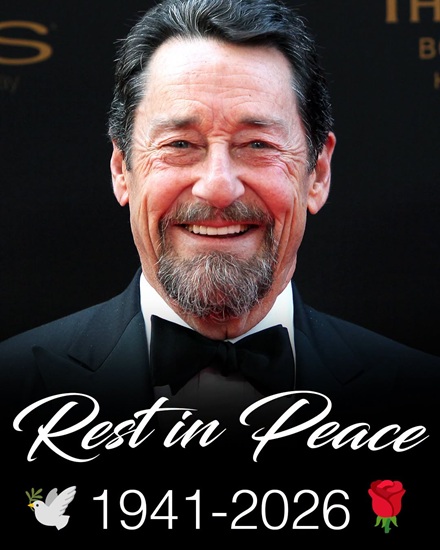
For several generations of movie and television fans, Peter Cullen was one of those performers whose voice could be recognized even when his face was not. His extraordinary career placed him behind some of the most familiar characters in animation, television and film, with Optimus Prime eventually becoming the role most closely associated with his name. Cullen died on August 26, 2026, at the age of 85 at his home in Los Angeles. His agent confirmed the news, while his family said he died surrounded by loved ones. No cause of death had been publicly disclosed in the initial announcements.
The news immediately resonated with people who had grown up hearing Cullen’s distinctive voice. Some knew him primarily from the original Transformers animated series. Others discovered him decades later through the live-action Transformers movies. Many younger viewers also knew his work through Disney’s Winnie the Pooh productions, in which he gave Eeyore his famously gloomy but lovable voice. Cullen’s career crossed generations in a way few voice performers ever manage to achieve.
His family asked admirers to remember him through the values that became closely associated with both Cullen and Optimus Prime. In their statement, they encouraged people to serve their communities and lead others with compassion, integrity and loyalty. They also referenced the phrase that had become deeply connected with Cullen’s approach to heroism: being strong enough to be gentle. That idea came from a deeply personal place rather than from a marketing slogan created for the Transformers franchise.
Peter Claver Cullen was born on July 28, 1941, in Montreal, Quebec, Canada. Long before audiences knew the voice of Optimus Prime, Cullen was developing an interest in performance and discovering the unusual possibilities of his voice. His professional career began decades before the famous Autobots and Decepticons appeared on television. Over time, he worked across Canadian and American entertainment and built a résumé stretching through animation, comedy, live-action television, feature films and video games.
Cullen’s career began taking shape in the late 1960s and continued developing through the 1970s. Before Transformers, he had already accumulated extensive experience performing different voices and characters. His ability to change tone, personality and vocal texture made him particularly valuable in an industry where one performer might be responsible for several completely different characters. By the time Optimus Prime arrived, Cullen was not an inexperienced newcomer discovering voice acting for the first time. He was an established performer prepared for a role that would unexpectedly define much of the rest of his career.

The opportunity came in 1984 when Cullen auditioned for the new animated Transformers series. The character description identified Optimus Prime as a hero and the leader of the Autobots. Cullen understood that the character needed strength and authority, but he did not want him to sound like a loud stereotype of heroism. Before the audition, he spoke to his older brother Larry, who had served as a U.S. Marine in Vietnam. That conversation gave Cullen the central idea behind the voice that millions would eventually recognize.
Larry’s advice was essentially that a genuine hero did not need to shout continuously or demonstrate strength through aggression. He encouraged Peter to think about a leader who possessed enough confidence to remain controlled and gentle. Cullen later explained that Larry himself embodied those characteristics in his eyes. He remembered his brother returning from military service quieter and changed by what he had experienced. When Cullen entered the recording booth, he drew heavily from Larry’s manner and sense of authority.
The result was unlike many heroic cartoon voices of the era. Optimus Prime sounded powerful without constantly sounding angry. Cullen gave the Autobot leader patience, gravity and restraint. When Optimus spoke to his fellow Autobots, he sounded less like a performer trying to demonstrate toughness and more like a leader who already possessed it. That combination became one of the reasons the character developed such an unusually strong emotional connection with viewers.
The voice was deep and commanding, but the philosophy underneath it mattered equally. Optimus could fight when necessary, yet he was defined by loyalty, responsibility and protection rather than by violence itself. Those characteristics aligned closely with the lesson Cullen said he had learned from Larry. Decades later, the phrase about being strong enough to be gentle became inseparable from the way fans understood Cullen’s interpretation of Optimus Prime.
The original animated Transformers series quickly developed a devoted audience after its 1984 debut. Children encountered a world in which vehicles and machines transformed into robots belonging to rival groups, with Optimus Prime leading the Autobots against Megatron and the Decepticons. Toys were a major part of the franchise, but the animated characters developed personalities and emotional relationships that gave audiences reasons to care about them beyond the products. Cullen’s performance became central to that emotional connection.
For many young viewers, Optimus Prime was not simply the biggest robot on screen. He represented a particular kind of authority figure. He listened before acting, protected weaker characters and accepted responsibility for difficult decisions. Cullen’s voice gave those qualities credibility. Even when the stories themselves were built around enormous transforming robots, the emotional center of Optimus often felt surprisingly human.
That connection became dramatically clear after The Transformers: The Movie was released in 1986. Optimus Prime died during the animated film, a development that became one of the most famous and controversial moments in the franchise’s history. Young fans who had expected another adventure were suddenly confronted with the death of the character they viewed as the Autobots’ moral center. The reaction demonstrated how deeply Cullen’s version of Optimus had affected the audience.
The character did not remain absent permanently. Optimus ultimately returned in later Transformers storytelling, and Cullen’s connection with the role continued. Over the following decades, different versions of the franchise appeared in animation, toys, comics and games. Other actors sometimes voiced Optimus in different productions, but Cullen remained the performer most closely associated with the original interpretation.
Cullen himself eventually came to regard Optimus as his favorite role. He explained that this preference developed partly because he saw the effect the character had on viewers. In an interview discussing his career, Cullen described Optimus as the character he held closest because of how strongly people had responded to him. He also placed Eeyore very high among his favorite performances, particularly because of the affection children showed toward the character.
The return of Transformers to mainstream Hollywood in the 2000s created an entirely new chapter. Michael Bay directed the first live-action Transformers film, released in 2007. For audiences who had grown up with the animated series, one question quickly became especially important: who would provide the voice of Optimus Prime? The decision to bring Cullen back connected the new blockbuster version directly with the character many fans remembered from childhood.
Cullen later compared returning to Optimus with rediscovering a comfortable old pair of shoes. Years had passed, filmmaking technology had changed dramatically and the animated trucks of the 1980s had become elaborate computer-generated robots. Yet the fundamental character remained familiar. Once Cullen began speaking as Optimus again, the role still felt natural to him.
The 2007 film became a major commercial success, introducing Optimus Prime to children whose parents had watched Cullen perform the character more than two decades earlier. This created an unusual generational continuity. Parents who remembered hearing Cullen in the 1980s could take their own children to theaters and hear essentially the same voice coming from a much more visually sophisticated version of Optimus.
Cullen continued voicing Optimus through multiple live-action installments. His work stretched through Transformers: Revenge of the Fallen, Dark of the Moon, Age of Extinction and The Last Knight, among other appearances. He later returned again for Bumblebee and Transformers: Rise of the Beasts. His 2023 performance in Rise of the Beasts became his final feature-film appearance as the character.
That meant Cullen’s association with Optimus Prime lasted nearly four decades. Few actors maintain such a direct relationship with the same fictional character across so many changes in technology, storytelling and audience. The children who first heard him in the 1980s became adults, while new viewers discovered the character through theaters, streaming services and video games. Cullen’s voice provided continuity through all of it.
The role also followed him into video games and additional animated productions. Cullen did not merely reprise Optimus for occasional nostalgia appearances. He continued contributing to the character across different formats, making his performance part of the larger identity of the Transformers franchise. His interpretation became a reference point against which later versions of Optimus were often compared.
Yet Optimus Prime represents only one side of Cullen’s vocal range. One of the most striking demonstrations of his versatility is the enormous difference between Optimus and Eeyore. Optimus is commanding, confident and heroic. Eeyore is slow, melancholy and famously pessimistic. The fact that one performer could become deeply associated with both characters demonstrates how much personality Cullen could create through subtle changes in voice.
Cullen voiced Eeyore in The New Adventures of Winnie the Pooh, which ran from 1988 to 1991, and continued playing the character in numerous related Disney productions. Eeyore’s resigned sadness required a completely different kind of performance from Optimus Prime’s leadership. Cullen made the character gloomy without making him unpleasant, allowing children to find humor and tenderness in a donkey who seemed perpetually convinced things would go wrong.
Cullen said he particularly enjoyed performing Eeyore because the character was charming. He remembered the reaction of children when he would use Eeyore’s voice in person. A short greeting could immediately light up a child’s face. Cullen described that response as one of the great joys of performing the character.
This ability to create emotional recognition without appearing physically on screen is one of the unique qualities of voice acting. Audiences may know every detail of a character’s personality while knowing relatively little about the performer responsible for it. Cullen spent much of his career working in exactly that space. His voice became famous even among people who might not immediately recognize his photograph.
His other credits demonstrate just how extensive that work became. Cullen voiced KARR in Knight Rider, the dangerous artificial-intelligence counterpart to KITT. He also performed numerous voices across animated television and contributed to several major entertainment franchises. IMDb lists more than 200 acting credits associated with his career, illustrating the scale of work completed over several decades.
His involvement with Predator provided another fascinating example. The 1987 science-fiction action film introduced one of cinema’s most recognizable extraterrestrial hunters. Cullen contributed vocal effects for the Predator, helping create the distinctive sounds associated with the creature. The performance was very different from traditional dialogue, relying instead on vocal texture and unusual sounds to make the monster seem threatening and nonhuman.
The famous clicking sounds associated with the Predator became part of the creature’s identity. Viewers hearing them understood that the alien hunter was nearby even when it was not clearly visible. Cullen’s contribution therefore became part of the suspense of the film without requiring ordinary spoken lines. It was another demonstration of how a voice performer can influence a movie in ways audiences may never consciously recognize.
Cullen also provided vocal work connected with the 1976 remake of King Kong. His ability to generate creature sounds as well as recognizable characters gave him opportunities unavailable to actors limited to one style of performance. A performer capable of speaking as a heroic robot, a gloomy donkey and a terrifying monster had enormous flexibility.
Another unusual credit came through the animated Donkey Kong segments of Saturday Supercade. Cullen provided the English-language voice of Mario in that production, years before the character developed the voice modern audiences associate with Nintendo games. It represents a small but fascinating piece of animation and video-game history within Cullen’s much larger career.
Cullen’s résumé also included the world of Chip ‘n Dale Rescue Rangers, further demonstrating how deeply his work was woven into children’s entertainment. Viewers could encounter his performances across different networks and franchises without realizing the same actor was behind several of the voices they knew. For a professional voice actor, that kind of anonymity can actually be a sign of success. The character becomes more memorable than the person performing it.
The sheer number of roles eventually became difficult even for Cullen himself to count precisely. His career involved dozens upon dozens of individual characters, background voices and creature performances. That range meant that many viewers had probably heard him in projects they never associated with Optimus Prime. His famous deep voice was only one tool within a much larger vocal repertoire.
Yet Optimus always remained different. The role was connected with his brother, with his understanding of leadership and eventually with the enormous emotional response of fans. Cullen did not simply return to Optimus because the character was commercially successful. He spoke about the role as something that had acquired personal significance because of what it meant to people.
Fan conventions made that connection visible. Cullen appeared before audiences who had grown up with the character and could now explain directly what Optimus had meant during difficult periods of their lives. Some described the character as a moral example. Others simply remembered sitting in front of the television as children and hearing Cullen’s voice tell the Autobots what had to be done.
For an actor, discovering that a performance created decades earlier had become emotionally meaningful to strangers can fundamentally change the way the role is perceived. Cullen acknowledged that effect repeatedly. The audience’s affection helped transform Optimus from another professional assignment into the role he considered most important.
The story of Larry remained central whenever Cullen explained why the voice worked. Larry was not merely a convenient vocal reference. He represented Cullen’s idea of genuine strength. Having returned from service in Vietnam, Larry displayed a form of leadership that Cullen remembered as quiet and controlled rather than theatrical. That became the model for Optimus.
This origin story also helps explain why the famous phrase about gentleness became so important following Cullen’s death. His family specifically included the idea in their message asking fans to honor him. The phrase links three people and generations together: Larry, who gave the advice; Peter, who transformed it into a performance; and the fans who adopted the resulting character as a symbol of leadership.
It is difficult to imagine a more fitting example of how artistic influence can move through unexpected channels. A Marine returning from war offered his brother a few words of advice before an audition for a cartoon truck. Peter Cullen carried that advice into a recording studio. The resulting voice became one of the best-known characters in animation history.
Then, decades later, the same advice appeared in the family’s public farewell.
That continuity is part of what makes Cullen’s story unusually powerful.
Optimus Prime could easily have been performed as nothing more than a loud action hero. Cullen gave him restraint instead. He understood that authority can sound more convincing when it does not constantly demand attention. A calm instruction could carry more weight than shouting. The performance communicated the idea that leadership and compassion were compatible qualities.
Those ideas resonated especially strongly with children. Young audiences may not consciously analyze vocal performance, but they understand whether a character feels trustworthy. Cullen made Optimus sound like someone other characters could safely follow. That emotional reliability became part of the character’s appeal.
Eeyore displayed another form of emotional intelligence. The character was sad, slow and frequently disappointed, but Cullen never treated him as a joke that deserved ridicule. His performance gave Eeyore dignity even when the character expected the worst. Children could laugh at his gloomy observations while still caring about him.
The contrast between Optimus and Eeyore reveals something important about Cullen’s talent. One character leads armies. The other often seems barely motivated to move. Yet both performances depend on warmth. Optimus expresses it through responsibility and protection. Eeyore expresses it through vulnerability.
Cullen’s career therefore cannot be summarized only through the depth of his voice. A deep voice alone would not have sustained these characters for decades. Timing, emotional control and understanding of personality mattered just as much.
He also worked during an era when animation recording was often highly collaborative. Voice actors frequently performed together rather than recording every line separately. These sessions allowed performers to respond directly to one another and develop chemistry. Cullen spoke warmly about the friendships created through voice acting and the joy of returning to work with people he had known professionally for decades.
Those relationships became part of the pleasure of the profession. Cullen described voice acting as work he genuinely enjoyed, emphasizing the laughter and camaraderie that occurred during recording sessions. For someone whose career lasted as long as his, maintaining that enthusiasm was significant. The industry changed enormously around him, but the basic pleasure of creating characters remained.
Recognition of Cullen’s achievements eventually extended beyond fan communities. In 2023, he received a lifetime achievement honor at the Children’s & Family Emmy Awards. The award acknowledged decades of work that had shaped children’s entertainment across multiple generations. It arrived nearly 40 years after he first voiced Optimus Prime.
That recognition was especially appropriate because children had always been such an important part of his audience. Optimus inspired them. Eeyore made them smile. Other animated characters entertained them without their necessarily knowing Peter Cullen’s name.
Voice actors often occupy an unusual position in celebrity culture. Their performances can become globally famous while they retain far more personal anonymity than live-action stars. Cullen could be responsible for one of the most recognizable voices in popular culture and still be less immediately recognizable in public than the actors appearing physically in the Transformers films.
For many years, that invisibility was part of the craft. The performance needed to make audiences believe in the character rather than draw attention toward the performer. Cullen accomplished that so effectively that people frequently describe Optimus Prime not as being voiced by Peter Cullen but almost as if Peter Cullen’s voice simply is Optimus Prime.
The distinction says something about the depth of the association.
When a different actor voices a familiar animated character, audiences often notice immediately. The voice carries personality, memory and emotional expectations. With Optimus Prime, Cullen set a standard against which other interpretations would inevitably be compared.
His return in 2007 therefore mattered beyond nostalgia. It helped audiences accept the new visual interpretation of the character. Everything else about Optimus had changed dramatically. The vehicle design was different. The robot was enormously more complex. The filmmaking technology was new.
Then Cullen spoke.
The continuity became immediate.
Parents could recognize the character from childhood while children met him for the first time.
Few performers receive the chance to introduce the same role successfully to multiple generations separated by decades.
Cullen did.
His death therefore affects several different audiences at once. Some are mourning the performer behind a childhood cartoon. Some primarily remember the blockbuster films. Others know Eeyore more intimately than Optimus. Horror fans may recognize his contribution to Predator without having followed his animation career.
All of those audiences are remembering the same extraordinarily versatile performer.
His family’s statement deliberately looked forward as well as backward. Rather than asking people only to celebrate Cullen’s filmography, they encouraged admirers to act according to the values associated with his life and most famous character. Service, compassion, integrity and loyalty were placed at the center of that message.
That request avoids turning the memorial solely into nostalgia. Watching an old episode or film can preserve a performance, but behavior can preserve an idea. Cullen’s family appeared to hope that admirers would carry forward something beyond his voice.
The statement also feels appropriate because Optimus Prime himself was always defined by what he believed rather than simply what he could do. His physical power mattered, but his principles gave that power meaning. Cullen’s interpretation emphasized precisely those qualities.
A hero did not need to be the loudest person in the room.
A leader did not need to humiliate others to demonstrate authority.
Strength did not require abandoning gentleness.
Those ideas began with Larry Cullen and eventually reached millions through Peter’s performance.
The fact that Cullen was Canadian-born while his brother served in the U.S. Marines also reflects the family’s broader North American story. Peter built a career moving between Canadian beginnings and American entertainment, ultimately becoming closely associated with some of the largest Hollywood franchises in the world.
His birth in Montreal remained part of his identity, even as Los Angeles became the center of much of his professional life. He eventually died there at his home, according to his agent. His family was with him, and no cause of death had been disclosed when the news became public.
It is important not to fill that absence with speculation. No credible public source has established a medical cause at this stage. Statements claiming a particular illness or condition without further confirmation would therefore go beyond the available evidence.
What is documented is the extraordinary length of his career.
From early television and radio work through animation, feature films and modern video games, Cullen remained professionally active across changing generations of entertainment technology.
He worked before computer-generated characters dominated theaters.
He worked during the golden years of Saturday-morning animation.
He worked as blockbuster franchises transformed voice acting into an important component of giant live-action productions.
And he continued long enough to see characters from the 1980s become global multimedia properties.
That longevity meant Cullen could observe the changing status of voice actors themselves. Once largely anonymous performers behind cartoons, voice artists gradually became important figures at fan conventions and entertainment events. Fans wanted to meet the people responsible for voices that had accompanied their childhoods.
Cullen embraced those audiences.
His convention appearances often centered on Optimus, but the conversations went far beyond repeating famous lines. Fans told him personal stories about what the character had meant to them.
Those interactions reinforced Cullen’s affection for the role.
He understood that a voice recorded for children’s television could eventually become part of someone’s memory of a parent, sibling or particular stage of life.
Popular culture works that way.
A cartoon watched after school becomes connected with childhood.
A movie attended with a parent becomes connected with family.
A familiar voice becomes part of those memories without the performer ever meeting the people carrying them.
That is why the death of a voice actor can affect audiences in an unexpectedly intimate way.
Peter Cullen was not physically present in childhood living rooms.
But his voice was.
It came from televisions.
Movie theaters.
Video games.
Toys.
Advertisements.
Streaming services.
And convention stages.
For fans, the sound became familiar long before the man himself did.
That familiarity is especially strong with Optimus Prime because the character speaks with such deliberate authority.
Cullen’s delivery made even simple lines feel significant.
The performance was never rushed.
Optimus sounded as though he considered the consequences of what he was saying.
That pacing became part of his leadership.
Eeyore worked in almost the opposite direction but with similar precision.
The pauses were slower.
The energy was lower.
Yet every gloomy observation carried recognizable personality.
A child could identify Eeyore after hearing only a short sentence.
That is remarkable vocal characterization.
Predator demonstrated yet another extreme.
There, Cullen could create memorable presence without ordinary language at all.
The creature’s sound became part of cinematic horror.
Three performances.
A heroic robot.
A melancholy donkey.
An alien hunter.
One performer.
That range helps explain why Cullen accumulated hundreds of credits rather than being simply the man who happened to voice one famous character.
Optimus may define the public memory, but the career behind him was enormous.
Cullen himself understood that distinction while still accepting the unique significance of Optimus. He did not dismiss the other work. Eeyore clearly held a special place in his affections. But Optimus became something larger because of the response it generated in fans.
There is a beautiful circular quality to that relationship.
Larry influenced Peter.
Peter influenced Optimus.
Optimus influenced viewers.
Those viewers then influenced Peter by showing him how meaningful the character had become.
The performance changed the audience, and the audience changed the performer’s understanding of the performance.
That is a rare artistic relationship.
Cullen could not have known any of this when he originally left home to audition for a “hero truck.”
The description itself sounded almost absurd.
His brother even reacted humorously when he heard it.
Yet Larry took the idea of heroism seriously enough to give Peter advice.
And Peter took that advice seriously enough to reshape his audition around it.
The decision changed his life.
There were hundreds of other roles.
But Optimus became the one people asked about decades later.
The one children recognized.
The one adults returned to.
The one Hollywood wanted back when Transformers became a blockbuster franchise.
And the one Cullen eventually called his favorite.
When Cullen received his lifetime achievement recognition, it acknowledged more than longevity.
It recognized the cultural influence of voice performance itself.
Actors working behind microphones can create characters as permanent as any live-action figure.
Cullen provided one of the clearest examples.
His voice allowed animation artists to give Optimus a visual body.
Writers gave the character dialogue.
But Cullen gave him emotional authority.
That contribution survived changing animation styles and new versions of the franchise.
It survived Optimus’s death and return.
It survived the transition from television animation to computer-generated film.
It survived decades between major versions.
And it remained recognizable until Cullen’s final years.
That is a remarkable form of artistic continuity.
For children encountering Transformers today, Optimus Prime may simply seem like a character who has always existed.
For older fans, there is often a much more specific memory.
They remember hearing Peter Cullen.
That distinction is part of his legacy.
There will continue to be new Transformers productions.
There will almost certainly be new interpretations of Optimus Prime.
Other talented actors can take the role in different directions.
But the original 1984 performance remains historically fixed.
Cullen created the template.
The calmness.
The authority.
The compassion.
The unmistakable depth.
And the idea that the strongest leader in the room did not need to prove his strength by constantly displaying aggression.
That final element may be the most enduring.
It was Larry’s lesson.
Peter’s performance.
And now his family’s request to the fans.
Be strong.
But remain gentle.
The phrase is simple enough for a child to understand.
Its meaning becomes more complicated with age.
Strength without compassion can become intimidation.
Authority without integrity can become control.
Leadership without loyalty means little.
Optimus represented Cullen’s attempt to combine those qualities.
That may explain why adults continued responding to a character originally introduced through children’s animation.
The lessons did not stop being relevant when the audience grew older.
Neither did the voice.
People who watched Optimus at eight could hear Cullen again at 30 or 40 and immediately recognize something familiar.
This type of nostalgia is not simply about remembering an old television show.
It is about recognizing part of oneself from another stage of life.
Cullen understood that.
His comments about the fan response suggest that he appreciated the role more deeply as he learned what it had meant to people.
That connection may be one reason returning to Optimus felt comfortable rather than burdensome.
Some actors spend their careers trying to escape the character that made them famous.
Cullen embraced his.
He could still celebrate Eeyore.
He could laugh about his enormous range of credits.
He could discuss creature voices and television characters.
But Optimus remained special.
That acceptance gave fans something unusual.
They did not have to feel embarrassed about loving a childhood character.
The man who created the voice valued him too.
Now, following Cullen’s death, the role carries a different emotional weight.
Future screenings of the original series may feel different.
The first transformation into Optimus may sound more poignant.
The 2007 movie introduction may bring back memories of the excitement surrounding Cullen’s return.
Eeyore’s familiar sadness may carry another layer of emotion.
The Predator’s clicks may remind film fans of the unexpected performer behind them.
That is what happens when an artist’s body of work survives the artist.
The performances remain unchanged.
The context around them changes.
Peter Cullen’s voice has not disappeared from the recordings.
It is preserved across decades of television, movies and games.
New children will hear it.
Some will not initially know the actor died before they discovered the character.
Later they may learn his name.
They may learn about Larry.
They may learn why Optimus sounded the way he did.
And they may understand that the voice was built around an idea of heroism that came from one brother’s respect for another.
That story gives the performance a human origin beneath all the science-fiction spectacle.
A giant robot from another planet was ultimately shaped by a family relationship.
Perhaps that is part of why Optimus never felt completely mechanical.
Cullen gave him humanity.
His death also reminds audiences of the importance of voice performers generally.
Characters can appear effortless once animation is finished.
But every breath, pause, shift in emotion and line reading comes from someone making deliberate choices behind a microphone.
Cullen spent decades mastering those choices.
The audience often heard only the finished result.
That is the nature of the craft.
Success means people stop hearing an actor and start hearing a character.
Cullen reached that point with multiple roles.
People heard Optimus.
People heard Eeyore.
People heard the Predator.
Only afterward did many learn that one man had contributed to all of them.
His passing therefore closes an extraordinary chapter in voice acting history.
But it does not silence the work itself.
Optimus can still tell the Autobots what leadership requires.
Eeyore can still offer his weary observations.
The Predator can still make movie audiences uneasy.
Those sounds remain.
So do the memories attached to them.
The family statement asked admirers to translate those memories into action.
Serve communities.
Lead with compassion.
Value integrity.
Remain loyal.
And remember gentleness.
That request may ultimately be a more meaningful tribute than simply describing Cullen as legendary.
It connects the performer with the philosophy behind his most famous character.
It also avoids turning remembrance only toward grief.
A career can end.
The influence of that career does not have to.
Peter Cullen’s recorded work remains available to millions.
His example can remain in different ways.
For many people, he will always be the voice heard when Optimus Prime speaks.
For others, he will always be Eeyore.
Some will associate him with Predator, Knight Rider or one of the many other productions scattered across his vast résumé.
Every one of those memories is valid.
The performer was larger than any single credit.
Even if one credit became extraordinary.
Cullen died at home in Los Angeles on August 26, 2026, surrounded by family, according to the statements announcing his death. He was 85. His cause of death had not been publicly disclosed. He is survived by family members including his children, while generations of viewers remain connected to the performances he left behind.
There is no need to embellish that legacy.
The facts are already remarkable.
A Canadian actor auditioned for a cartoon robot in 1984.
He borrowed the emotional character of the performance from an older brother he admired.
The role became iconic.
He returned to it decades later.
Parents and children heard the same voice together.
And almost 40 years after that original audition, Cullen was still associated with Optimus Prime more strongly than virtually anyone else.
At the same time, he made children smile as Eeyore.
Helped give Predator one of cinema’s most recognizable creature sounds.
Worked across television, movies, animation and games.
Accumulated hundreds of credits.
And received lifetime recognition for the career he built.
That is more than enough for one professional life.
For the audience, though, the emotional reaction may be much simpler.
A familiar voice from childhood belonged to a real person.
That person is now gone.
The characters remain.
And every time Optimus Prime speaks in one of Peter Cullen’s performances, the man who created that voice is present again in the only way recorded art allows.
Not physically.
But recognizably.
Immediately.
Unmistakably.
Peter Cullen gave Optimus Prime strength without cruelty and authority without losing compassion.
He gave Eeyore sadness without taking away tenderness.
He gave creatures personality even when they had no conventional dialogue.
And he gave generations of viewers voices they never forgot.
That is the legacy his family has asked people to honor.
Not merely by remembering a famous line.
But by remembering what stood behind it.
Strength can be gentle.
Leadership can be compassionate.
And sometimes one human voice can remain part of millions of childhoods long after the recording session has ended.
Peter Cullen, July 28, 1941 – August 26, 2026.
For generations of fans, Optimus Prime may never sound quite the same without him.
But the voice Peter Cullen gave the character will continue to be heard for years to come.
