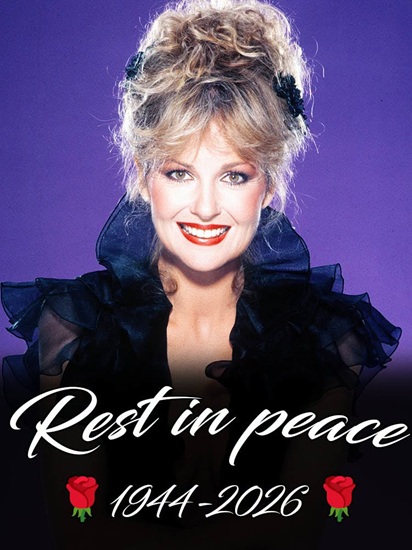
Hollywood is remembering Shelley Fabares, the actress and singer whose career stretched across more than six decades and made her a familiar presence to several generations of television viewers. Fabares, widely known for playing Mary Stone on The Donna Reed Show and Christine Armstrong on Coach, died on Saturday, August 22, 2026, in Los Angeles. She was 82. Her family confirmed her death and said she was surrounded by people who loved her. No cause of death was announced.
In announcing her death, Fabares’ family remembered her not simply as a successful performer but as someone whose warmth had a lasting impact on the people around her. They described her as a source of love, strength, laughter, and comfort to relatives and friends. Their tribute emphasized the kindness, loyalty, humor, courage, generosity, and grace that characterized her personal life. For those closest to her, the woman behind the famous television characters remained more important than her celebrity. Her family also asked for privacy while mourning her loss.
Fabares was born in Santa Monica, California, on January 19, 1944, and entered the entertainment industry while still a child. Her television career began when she was only 10 years old with an appearance on The Loretta Young Show. Other early work followed, including appearances in film and television productions that allowed her to gain considerable experience before reaching adulthood. She worked in an industry filled with established stars, and those early years prepared her for the role that would soon transform her into one of television’s recognizable young performers.
Her major breakthrough arrived in 1958 when she was cast as Mary Stone, the teenage daughter of Donna Reed’s character, on The Donna Reed Show. Fabares remained a regular on the series through 1963, growing up in front of millions of viewers. The popular family sitcom turned her into a television star during an important period in American broadcasting. Fabares later spoke with considerable affection about those formative years and credited Donna Reed with having a profound personal influence on her. The experience helped establish a career that would continue through dramatically different eras of television.
While becoming famous as an actress, Fabares unexpectedly developed a successful recording career as well. Her best-known song, “Johnny Angel,” became one of the major pop hits of 1962 and reached No. 1 on the Billboard Hot 100. She subsequently had another Top 40 single, “Johnny Loves Me,” and recorded additional music during the period. The success made Fabares part of a relatively small group of performers who achieved significant recognition in both television and popular music. Decades later, “Johnny Angel” remained one of the recordings most closely associated with her early career.
Her growing popularity also opened opportunities in motion pictures. During the 1960s, Fabares appeared opposite Elvis Presley in three films: Girl Happy in 1965, Spinout in 1966, and Clambake in 1967. The movies connected her with one of the biggest entertainment figures of the era and further expanded her public profile beyond television. Her film career included other projects as well, while television remained a constant throughout much of her professional life. Those Elvis films eventually became another frequently remembered chapter of her long career.
Fabares continued working steadily after her years as a teenage star, successfully making the difficult transition into adult roles. In 1971, she appeared in the acclaimed television movie Brian’s Song, playing Joy Piccolo, the wife of Chicago Bears running back Brian Piccolo, portrayed by James Caan. The production became one of the most remembered television movies of its era. Fabares’ participation demonstrated that her career had developed far beyond the youthful characters that first brought her national attention. She continued appearing across television at a time when many former child and teenage stars struggled to make the same transition.
Another memorable television chapter came with One Day at a Time. Fabares played Francine Webster on the CBS sitcom during the late 1970s, once again placing her in a successful television comedy. By this point, audiences who had originally watched her as Mary Stone had seen her evolve through multiple stages of her career. Her ability to move between different characters and generations of programming helped give her unusual longevity. Instead of being associated exclusively with one famous childhood role, she repeatedly found opportunities to reconnect with television audiences.
One of the most important roles of her career arrived in 1989 when Fabares joined the ABC sitcom Coach. She portrayed Christine Armstrong, a television news anchor who became the romantic partner and eventual wife of Hayden Fox, the college football coach played by Craig T. Nelson. Fabares remained a central part of the comedy throughout its nine-season run. Her performance brought her renewed recognition and introduced her to viewers who may not have been familiar with her earlier work on The Donna Reed Show. Coach ultimately became one of the defining achievements of her later career.
Her work as Christine Armstrong earned Fabares two Primetime Emmy Award nominations. The character also provided an opportunity to portray an accomplished professional woman navigating both her career and her relationship. Fabares once discussed Christine as a successful woman who loved her work while also trying to balance that professional life with the man she loved. That combination gave the character greater dimension than simply being the romantic counterpart of the show’s central character. The success of Coach demonstrated Fabares’ ability to remain relevant decades after her first major television breakthrough.
Following Fabares’ death, Craig T. Nelson was among those who publicly remembered his longtime co-star. Nelson described her as an extraordinary woman and reflected on the importance she had in his life during their years working together. He remembered her warmth, positivity, smile, and the advice she offered. Their professional partnership had lasted throughout the show’s lengthy run, giving the two performers years of shared experiences on the set. His tribute illustrated how Fabares’ impact extended beyond audiences to the colleagues who spent years working alongside her.
Away from the screen, Fabares’ personal life included two marriages. She married record producer Lou Adler in 1964, and that marriage later ended. She subsequently married actor Mike Farrell, best known to television audiences for portraying Captain B.J. Hunnicutt on M*A*S*H. Fabares and Farrell married on December 31, 1984, beginning a marriage that lasted for more than four decades. Fabares became stepmother to Farrell’s two children from his previous marriage to actress Judy Farrell.
Farrell was part of the family announcement confirming Fabares’ death and later shared a tribute to his wife. The family emphasized that her most meaningful legacy to them was deeply personal: the affection she gave, the friendships she maintained, and the family relationships she treasured. Their statement reflected the contrast between the public figure known to millions and the private person known by relatives and close friends. While audiences could remember her performances, her family focused on the qualities they experienced away from cameras and television studios.
Fabares also faced serious health challenges during her life. In early 1999, an emergency-room visit for an esophageal bleed revealed progressive liver failure. She subsequently spent approximately 22 months waiting for a donor organ before undergoing a liver transplant in October 2000. The experience had a profound impact on her life. Years afterward, she spoke about how deeply the transplant had changed her and expressed gratitude for the support Farrell provided throughout the difficult period.
Her personal experiences also contributed to her advocacy work. Fabares became involved in raising awareness about Alzheimer’s disease after her mother was affected by the illness. Her commitment to the cause represented an important part of her life outside entertainment. Rather than limiting her public role to acting and music, she used her visibility to support greater awareness of a disease that had touched her own family. This advocacy became another aspect of the legacy highlighted in accounts of her life following her death.
Looking across Fabares’ career reveals an unusual degree of longevity. She began acting professionally as a child, became a nationally recognized teenage television performer, achieved a No. 1 pop record, appeared in movies with Elvis Presley, transitioned successfully into adult television roles, and decades later received Emmy recognition for Coach. Each period introduced her to a different generation. For some viewers she would always be Mary Stone; for others she was the voice behind “Johnny Angel,” while another generation knew her primarily as Christine Armstrong.
That ability to remain familiar without being confined to a single chapter distinguished Fabares’ career. The Donna Reed Show placed her at the center of television’s family-sitcom era, her recordings connected her with early-1960s pop culture, her Elvis Presley films linked her to one of music and cinema’s most famous stars, and Coach brought major recognition more than 30 years after her first television breakthrough. Few performers maintain such a visible connection with audiences across that many decades. Her body of work consequently became part of several distinct periods in American popular entertainment.
Her death at 82 closes a remarkable career, but the performances that made Shelley Fabares famous remain part of television, film, and music history. From the teenager audiences watched grow up on The Donna Reed Show to the accomplished Christine Armstrong on Coach, she continually found new ways to connect with viewers. Her family and colleagues have also emphasized another side of her legacy: a woman remembered for generosity, humor, loyalty, courage, friendship, and devotion to those closest to her. Those personal memories now stand alongside the work that millions of viewers knew on screen.
Shelley Fabares is survived by her husband, Mike Farrell, and her stepchildren. As tributes continue from colleagues and viewers, her career offers a reminder of just how many different eras of entertainment she touched. She was a child actress, sitcom star, recording artist, movie performer, Emmy nominee, advocate, wife, stepmother, and friend. For audiences, her television appearances and music remain available as a record of an extraordinary professional life. For her family, the enduring memories are more personal—the love, laughter, kindness, and warmth of the woman they knew beyond the screen.
