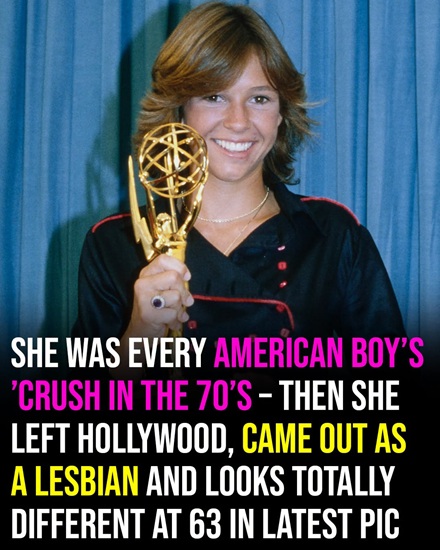
Becoming famous before reaching adulthood can create an unusual kind of childhood. Success may bring opportunities, financial security and recognition, but it can also mean growing up while strangers constantly discuss your appearance, performances and personal life. Kristy McNichol experienced that level of attention at a remarkably young age. During the 1970s and 1980s, she became one of American television’s most recognizable young performers, eventually earning major awards and moving successfully between television and film.
Behind that public success, however, McNichol was also navigating pressures and personal challenges that audiences could not fully see. Born Christina Ann McNichol in Los Angeles on September 11, 1962, Kristy entered entertainment while still a child. She appeared in commercials and eventually began receiving television opportunities, sometimes working alongside her older brother, Jimmy McNichol, who was also pursuing entertainment.
Her first regular television-series role came with Apple’s Way in 1974, where she portrayed Patricia Apple. The series itself was relatively short-lived, but it gave the young actress valuable experience and placed her in a position to pursue the role that would soon transform her career. That transformation arrived in 1976 with the television drama Family. McNichol was cast as Letitia “Buddy” Lawrence, the youngest daughter in the Lawrence household.

The series explored family relationships and serious personal issues in a way that gave its actors opportunities to deliver emotionally demanding performances. McNichol quickly emerged as one of the show’s most recognizable performers. Her portrayal of Buddy connected particularly strongly with younger viewers, while critics recognized that the teenager possessed acting ability extending well beyond the novelty of being a successful child performer.
Her work on Family brought McNichol some of television’s highest professional recognition. She received multiple Emmy nominations and won two Primetime Emmy Awards for her supporting performance, first in 1977 and again in 1979. Those victories established her as far more than a temporary teenage celebrity. At an age when most people were still attending school and considering what they might eventually do professionally, McNichol was already an award-winning actress working within a highly competitive entertainment industry.
Her success quickly expanded beyond Family. McNichol appeared in television movies including Like Mom, Like Me and Summer of My German Soldier, continuing to demonstrate that she could handle dramatic material. She and Jimmy also explored music together, recording an album in 1978. The combination of acting, television appearances, interviews and music contributed to McNichol’s enormous visibility during this period. She had become not simply an actress but a recognizable young celebrity whose professional and personal development was taking place in public.

When Family ended in 1980, McNichol moved more extensively into feature films. One of the best-remembered projects from this stage of her career was Little Darlings, in which she starred opposite Tatum O’Neal. McNichol played Angel, while Matt Dillon and Armand Assante were also among the cast. The film became closely associated with the era and remains one of McNichol’s most recognizable screen performances. Her work reinforced the impression that she could successfully make the transition from television star to film actress.
She followed that period with other significant roles. In 1981, McNichol appeared with Dennis Quaid in The Night the Lights Went Out in Georgia. That same year, she played Polly in Neil Simon’s Only When I Laugh, starring alongside Marsha Mason. Her performance in the latter brought her a Golden Globe nomination. By this point, McNichol had accumulated the type of résumé that many actors spend an entire career trying to build, yet she was still only in her late teens and early twenties.
The extraordinary pace of her career also came with pressures that were not always obvious to audiences. McNichol later experienced significant difficulties with her mental health, and biographical accounts have documented that she was diagnosed with bipolar disorder. During a period when public understanding of mental-health conditions was considerably more limited than it is today, managing those difficulties while maintaining a demanding acting schedule presented serious challenges. Her professional life consequently became less predictable, and she eventually needed to prioritize her health over maintaining the pace that had defined her teenage years.
It is important to discuss that period without reducing McNichol’s entire life or career to a diagnosis. Bipolar disorder is a medical condition, and it does not provide a complete explanation for someone’s personality, abilities or life choices. McNichol had already demonstrated substantial professional talent long before her health difficulties became widely discussed. What her experience illustrates more clearly is that public success does not make someone immune to health challenges and that the pressures of a highly visible career can exist alongside private difficulties that audiences may know little about.

McNichol continued working through the 1980s. Her film credits from this period included Dream Lover, You Can’t Hurry Love and Two Moon Junction, among other projects. Although not every film achieved the same level of attention as her earlier work, she remained an established performer. Her career then received another significant television chapter when she joined the sitcom Empty Nest in 1988.
In Empty Nest, McNichol portrayed Barbara Weston, one of the daughters of widowed pediatrician Harry Weston, played by Richard Mulligan. The sitcom was connected to the world of The Golden Girls and became a successful series in its own right. McNichol’s role introduced her to another generation of television audiences and demonstrated her ability to work effectively in comedy after becoming famous primarily through dramatic performances. She remained associated with the series for several years, although health considerations again affected her participation.
Eventually, McNichol stepped away from the relentless cycle of acting and publicity. In June 2001, she publicly confirmed that she had retired from acting after approximately 24 years in the entertainment business. Her statement explained that she believed it was time to concentrate on what she described as playing her most important role: herself. She acknowledged that some fans were disappointed that she was no longer acting, but emphasized that stepping away had become necessary for her personal happiness and well-being.
That decision represented an unusual choice in an industry where former stars are often encouraged to pursue repeated comebacks. McNichol had already experienced major success, awards and celebrity before reaching adulthood. Rather than spending the rest of her life attempting to recreate that level of public attention, she chose a substantially quieter existence. Accounts of her post-Hollywood years have described interests including yoga, tennis, travel, dogs, charitable activities and teaching.
For years after leaving acting, McNichol maintained considerable privacy regarding another important part of her personal life. In January 2012, she publicly revealed that she is a lesbian. Her representative explained at the time that McNichol had been living with her longtime partner, Martie Allen, for many years. The announcement ended longstanding public speculation, but McNichol’s motivation for speaking was more significant than simply satisfying curiosity about her private relationships.
Her representative explained that McNichol hoped being open could help young people experiencing bullying or feeling different because of their sexual orientation. The announcement came as she approached 50 and after she had spent many years outside the entertainment spotlight. Rather than using the disclosure to launch a new acting project or publicity campaign, she presented it as a personal decision connected with supporting others. She also made clear that she had no intention of returning to acting.
The timing provides important context. McNichol became famous during the 1970s, when the social and professional environment surrounding openly LGBTQ+ entertainers was considerably different from today. It would be speculative to claim exactly how every private consideration affected her decisions when she was young, because only McNichol can fully describe those experiences. What is documented is that she did not publicly identify herself as a lesbian until 2012 and that she said openness could potentially help young people who were struggling.
McNichol’s relationship with Martie Allen has remained largely private. Public reporting in 2012 identified Allen as her longtime partner and said they had been together for approximately two decades by that point. Beyond such confirmed information, the couple has generally avoided turning their relationship into a public spectacle. That privacy is consistent with the broader life McNichol created after Hollywood: she stepped away from acting and largely stopped participating in the celebrity publicity system that had surrounded her since childhood.
Some online biographies have attempted to construct detailed timelines of McNichol’s earlier romantic relationships, including claims involving various actors and entertainers. Such claims should be treated cautiously when they rely primarily on celebrity-dating databases rather than direct statements or reliable contemporaneous reporting. McNichol’s documented career and her own 2012 disclosure provide enough material to discuss her life without presenting every internet rumor about her private relationships as established fact.
Her decision to step away also offers a different perspective on what constitutes a successful entertainment career. McNichol did not need to continue appearing on television for another thirty years to validate what she had already accomplished. Two Emmy victories, a Golden Globe nomination, memorable film performances and major roles in successful television series had already secured her place in popular-culture history. Choosing privacy afterward does not erase those achievements.
Her story also demonstrates why the public image of a celebrity can reveal surprisingly little about the person living behind it. During her teenage years, audiences saw a confident and talented performer collecting awards and appearing in popular productions. They could not necessarily see the pressures, questions about identity or health difficulties she was managing privately. Fame provided visibility, but visibility was not the same thing as understanding.
McNichol’s experiences with mental health are particularly relevant to that distinction. Accounts describing her bipolar disorder became part of her public biography, but they should not be treated as sensational details or evidence that something was fundamentally wrong with her character. Mental-health conditions affect people from every background, including successful performers. Seeking treatment, changing professional circumstances or stepping away from demanding work can be responsible responses when someone’s well-being requires attention.
Her eventual retirement allowed McNichol to build an adult life substantially different from the adolescence the public had watched unfold. Instead of television sets, premieres and promotional interviews, she could decide how much of herself she wanted to share. That control over privacy was something she had possessed in much smaller amounts during her years as a teenage celebrity.
Even decades after her biggest roles, however, McNichol continues to generate affection and curiosity among people who grew up watching her. That became particularly visible again in August 2026, when singer Carnie Wilson shared a photograph after unexpectedly meeting McNichol at a Los Angeles restaurant. Wilson, who had been a longtime admirer of the former actress, later explained that the photograph attracted enormous attention online. McNichol subsequently contacted her and jokingly acknowledged that their encounter had gone viral.
The reaction demonstrated how strongly McNichol remains connected with the memories of viewers who watched Family, Little Darlings or Empty Nest. She does not maintain the kind of constant public presence expected from contemporary celebrities, so even an ordinary recent photograph can produce widespread nostalgia. Yet that renewed attention has not changed the basic pattern of her life. She remains retired and largely private.
Today, McNichol’s legacy can be understood through several distinct chapters. There was the child performer appearing in commercials, the teenage actress whose portrayal of Buddy Lawrence earned two Emmys, the young film star of Little Darlings and Only When I Laugh, and the adult television performer who returned successfully with Empty Nest. Then came another chapter in which she deliberately moved away from acting and built a life outside the spotlight.
Her public disclosure in 2012 added an important personal dimension without requiring her to surrender the privacy she had worked to establish. McNichol could acknowledge her sexuality, speak about wanting to help young people who felt different and still choose not to transform her private relationship into ongoing entertainment news. Those decisions are not contradictory. Being open about one aspect of a person’s identity does not create an obligation to make every aspect of life public.
More than fifty years after McNichol first began appearing professionally, her career remains memorable because of what she accomplished during a relatively concentrated period. She demonstrated dramatic ability at an unusually young age, became an award-winning television performer and successfully moved between comedy and drama. Her decision to leave Hollywood eventually became just as defining as her decision to enter it.
There is also a broader lesson in the contrast between McNichol’s public success and private experiences. Audiences encounter performers through characters, interviews, photographs and carefully selected moments. Those fragments can create a sense of familiarity without revealing everything happening in someone’s life. A person who appears successful may still be confronting challenges that are invisible to everyone watching.
Kristy McNichol ultimately chose a path that prioritized privacy and personal well-being over maintaining celebrity for its own sake. Her decision to speak openly about being a lesbian in 2012 was made after years outside the spotlight and with the stated hope of helping young people who might feel isolated or face bullying. Her subsequent life has remained mostly outside public view, which appears consistent with the independence she sought when she retired.
For viewers who remember Buddy Lawrence, Angel from Little Darlings or Barbara Weston, the performances remain available as reminders of an unusually accomplished young actress. But McNichol’s life after fame is equally significant. After spending much of her childhood and young adulthood being watched by millions of strangers, she eventually gained the ability to decide how she wanted to live when the cameras were no longer necessary.
Her story does not need rumors or exaggerated claims to be compelling. The verified record already contains remarkable success, significant challenges, major personal decisions and an eventual transition toward a quieter life. Kristy McNichol became famous while she was still growing up, won television’s highest honors at a remarkably young age and later discovered that stepping away could be more valuable to her than remaining constantly visible.
Decades later, occasional glimpses of McNichol still generate enormous nostalgia, but she has largely remained committed to the private life she chose. That may be the clearest continuation of the decision she announced when she retired: after years of portraying other people for audiences, she wanted the opportunity to concentrate on being herself. Her career remains part of television history, while the life she built afterward belongs primarily to her.
