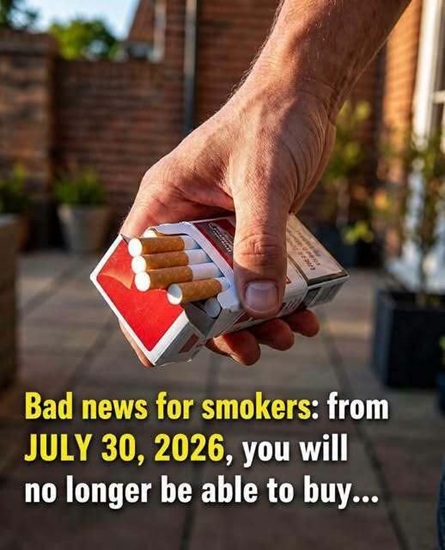
For smokers in France, the price of cigarettes has risen substantially over the past several years, but the explanation is more complicated than claims that the government and tobacco companies secretly work together to force prices higher. Cigarette prices are shaped by a combination of manufacturer pricing decisions, taxation and a formal state approval system. France has also deliberately used higher tobacco prices as part of a wider public-health strategy intended to reduce smoking.
The government announced a policy path toward a €12 reference level in 2025 and approximately €13 by 2027. That makes increasingly expensive cigarettes a stated policy objective rather than a hidden arrangement. The current system is unusual compared with products whose prices can vary significantly from one shop to another. Under French law, manufacturers and approved suppliers determine the retail price they want for a tobacco product, but that price must go through an official homologation procedure before being applied.
The French Customs administration publishes regularly updated lists of approved retail prices for individual tobacco products. The law also establishes a single retail price for each product across the relevant territory, meaning ordinary retailers generally cannot independently discount a particular pack in the way a supermarket might discount another consumer product.
That detail matters because it corrects a common misunderstanding about tobacco pricing in France. The government does not simply select an arbitrary price for every cigarette brand and order manufacturers to use it. Manufacturers and approved suppliers determine proposed retail prices, while the state supervises the system, applies tobacco taxation and formally approves the prices. Once a product has an approved price, the structure produces much more uniform pricing than consumers normally see with products such as food, clothing or household goods.
Official French Customs lists also demonstrate why saying that “a pack now costs exactly €13” would be inaccurate. Different brands and pack formats can have different approved prices, and the lists are updated when new prices take effect. The Customs documentation in force during 2026 contains individual commercial references rather than one universal price applying to every tobacco product. Consequently, €12, €12.50 or €13 figures frequently mentioned in public discussion are better understood as policy benchmarks or common price levels rather than the guaranteed price of every pack sold in France.
A major reason the shelf price is high is taxation. Tobacco products are subject to excise duties, which are special indirect taxes applied to products including tobacco, in addition to the broader tax structure applicable to sales. Excise taxation is not unique to France; tobacco taxes are widely used across Europe and elsewhere. The World Health Organization recommends that total tobacco taxes account for at least 75% of the retail price, arguing that higher taxation and prices are among the most effective tools available for reducing tobacco consumption.
France’s policy fits within that broader public-health approach. The national tobacco-control strategy has included price increases alongside restrictions on advertising, health warnings, smoke-free measures and other interventions. Public-health documents note that the price of a leading cigarette pack reached roughly €10 by 2020, after a sequence of increases. More recent policy documents established another gradual increase, including the €12 milestone for 2025 and a stated objective of approximately €13 by 2027.
The rationale is not simply to raise government revenue. Higher prices are intended to make tobacco less affordable, particularly for younger people who might otherwise begin smoking and for existing smokers considering whether to reduce consumption or quit. Research reviewed by the World Health Organization has consistently found that increases in tobacco prices are associated with lower cigarette consumption. A European analysis summarized by the WHO, for example, estimated that a simulated 10% tax-induced price increase would reduce total cigarette consumption by roughly 3.1% across the countries studied.
France has historical experience supporting that reasoning. A WHO review noted that after a substantial French tobacco-price increase in 2003, smoking prevalence among people aged 15 to 25 declined compared with the level reported several years earlier. That does not mean price was necessarily responsible for every part of the decline, because smoking behavior is affected by many factors. It does, however, support the broader evidence that price can influence consumption, especially when combined with other tobacco-control policies.
This is also why describing the strategy as a secret attempt to “bankrupt smokers” would misrepresent the policy. French officials have publicly described higher tobacco prices as a health measure and have discussed the planned increases in government statements. The broader national tobacco-control program aims eventually to produce what French authorities call a tobacco-free generation, defined in policy terms as very low smoking prevalence among younger generations. The stated goal is therefore behavioral and public-health oriented, even though the policy also generates tax revenue.
At the same time, higher tobacco taxes have real financial consequences for people who continue smoking. Consider a hypothetical smoker buying one €13 pack every day. That would amount to approximately €4,745 over a 365-day year. Someone purchasing half a pack per day would effectively spend roughly half that amount. Those examples are simple arithmetic rather than predictions, and actual spending depends on the brand, pack size, consumption level and current approved price.
The financial effect can be particularly significant for lower-income smokers because the same pack price represents a larger share of a smaller household budget. This creates one of the important debates surrounding tobacco taxation. Public-health authorities emphasize that lower-income populations also suffer disproportionately from tobacco-related illness and may therefore gain substantially if higher prices encourage quitting. Critics, meanwhile, can reasonably point out that smokers who remain dependent on nicotine may experience substantial financial pressure without immediately stopping.
That is why tobacco taxation is generally most effective when it operates alongside access to smoking-cessation assistance rather than as an isolated punishment. Nicotine dependence is not simply a consumer preference that every person can switch off immediately after a price increase. Some smokers quit relatively quickly, while others make several attempts. Public-health policies therefore combine pricing with prevention, information and support intended to help people who decide they want to stop.
Another issue is cross-border purchasing. France shares borders with countries where tobacco can sometimes be cheaper, creating an incentive for some consumers to purchase cigarettes elsewhere. French rules allow individuals to bring tobacco from another EU country for personal use within applicable rules, and the authorities use indicative quantities when determining whether products are genuinely intended for personal consumption rather than resale. Current official guidance lists 800 cigarettes, or four cartons, as an indicative quantity for cigarettes brought from another EU country for personal use.
Cross-border differences illustrate an inherent limitation of national tobacco taxation. If one country raises prices substantially while a neighboring country maintains much lower levels, some smokers may try to buy legally abroad, while illegal markets can also become more attractive. Researchers studying tobacco taxation therefore examine not only consumption and government revenue but also avoidance, evasion and illicit trade. The existence of these effects does not establish that higher taxation is ineffective, but it means policymakers have to consider them when designing tobacco-control strategies.
Retail tobacconists are another part of the system that can be overlooked when discussions focus only on government and large manufacturers. France maintains a regulated network of tobacco retailers, and the state has specific rules governing their remuneration and operation. Beginning in 2026, some remuneration and licensing arrangements were standardized between continental France and Corsica. The French government also provides certain support programs to tobacconists, including assistance related to modernization and security equipment.
This makes the economics of a cigarette pack considerably more complicated than the idea that the shop keeps most of what a customer pays. The retail price must cover the tax burden, the tobacco company’s portion, distribution and retailer remuneration. Because excise taxation is intentionally large, the tax component occupies a substantial part of the final price. That structure is precisely what public-health organizations advocate when recommending that taxes represent a high percentage of the retail value.
The price strategy should also be separated from another major French tobacco policy: standardized packaging. France introduced plain or standardized cigarette packs before the latest round of price increases. Public-health research describes plain packaging, restrictions on advertising, health warnings and price policy as distinct tools working toward the broader goal of reducing the attractiveness and prevalence of smoking. A high retail price is therefore only one piece of a much larger regulatory framework.
The government’s 2023–2027 tobacco-control program has also focused heavily on younger generations. Authorities have described the long-term ambition of reaching a generation with adult smoking prevalence below 5% among people born from 2014 onward. Whether that ambitious target will ultimately be achieved cannot yet be known, but it explains why officials frequently discuss tobacco pricing in terms of preventing initiation rather than simply collecting more money from existing smokers.
For consumers, however, policy objectives do not make the expense disappear. Someone who has smoked for many years can experience every increase as another strain on household finances. A rise of even €1 per pack amounts to an additional €365 per year for someone purchasing one pack every day. Over several years, repeated increases can therefore produce a substantial change in personal spending even before considering inflation or changes in consumption.
Manufacturers also remain important players in the process. Because companies participate in determining the prices submitted for approval, not every increase at the checkout should automatically be described as a tax increase. Manufacturer pricing decisions and changes in fiscal rules can both affect the final retail price. Looking at the official approved-price lists is therefore more reliable than assuming every change comes directly from a new government tax.
This also means claims about a secret “government-corporate conspiracy” are unsupported by the documented structure. The process is regulated and unusually strict, but its key elements are publicly described in French law and Customs guidance. Tobacco companies operate commercially, the government levies taxes and regulates retail sales, and public-health authorities openly advocate higher prices as a way of reducing smoking. Disagreement with that policy is entirely possible without presenting publicly documented regulation as a hidden scheme.
There is likewise no need to describe smoking as becoming literally a “rich person’s luxury” to explain the underlying trend. The more precise point is that cigarettes have intentionally become less affordable in France, and policymakers have said they want that trend to continue. Affordability matters in tobacco control because a nominal price can rise without becoming significantly less affordable if incomes rise just as quickly. Increasing the real economic burden is part of the logic behind repeated tax and price adjustments.
For smokers, the result is straightforward even if the underlying policy is complicated: maintaining the same level of cigarette consumption costs considerably more than it did several years ago. For policymakers, that increased expense is not an accidental side effect; it is part of the mechanism through which tobacco taxation is supposed to influence behavior. For manufacturers and retailers, meanwhile, the regulated pricing environment determines how products are commercialized within a market where taxes represent a major component of the final price.
The French approach is neither unique nor universally uncontested. WHO Europe actively recommends high tobacco taxes, and many countries use price increases as part of smoking-control policy. Debate remains over how quickly prices should rise, how governments should address cross-border and illicit sales, and how much support should accompany higher taxes for people with nicotine dependence. Those are legitimate policy questions, but they are different from claiming that prices are rising without explanation.
The central takeaway is that expensive cigarettes in France result from a transparent combination of regulated retail pricing and intentionally heavy tobacco taxation. Approved prices differ by product, so there is no single universal pack price, but the government’s announced trajectory has been toward approximately €13 by 2027. Manufacturers determine proposed prices within the legal system, the state homologates them, and tobacco taxes make up a large share of what consumers ultimately pay.
For anyone following future changes, the most reliable source is the regularly updated price nomenclature published by French Customs rather than viral posts claiming that every cigarette pack has suddenly reached one specific price. Those official lists show exactly which products have changed, the approved retail amount and when the new prices take effect. That provides a far more accurate picture of France’s tobacco market than sensational claims about secret price manipulation.
Ultimately, France’s cigarette-price policy is deliberately designed to make smoking increasingly expensive, but it is being pursued openly as part of national tobacco-control policy. Supporters point to evidence that higher prices reduce consumption and discourage young people from starting. Critics may emphasize affordability pressures, cross-border purchases and the burden on people who remain dependent on nicotine. Presenting both aspects accurately provides a clearer understanding of why the price of a cigarette pack continues to attract so much attention—and why further increases have been built into France’s public-health strategy.
