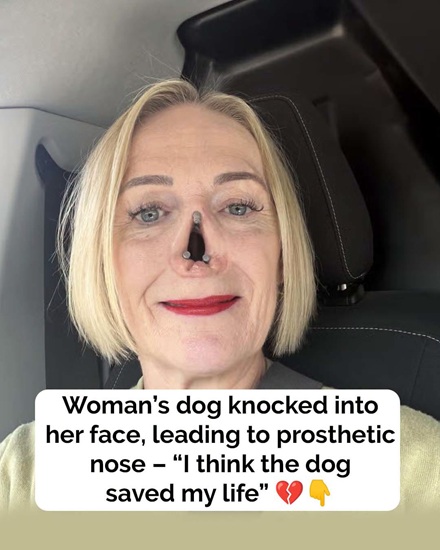
What seemed like a routine moment with a beloved family pet became the beginning of an unexpected medical journey for Jayne Hardman, a woman from the United Kingdom. While playing with her large Neapolitan Mastiff, CeCe, the energetic dog accidentally struck her on the nose. At first, the incident appeared to be nothing more than a minor accident, but the symptoms that followed prompted Hardman to seek medical advice. Looking back years later, she believes that the unexpected encounter encouraged her to investigate a serious health condition that may otherwise have remained undiagnosed for much longer.
The incident occurred in 2012 while Hardman and CeCe were playing together. The nearly 130-pound dog accidentally bumped her face during an energetic moment, leaving her with discomfort that initially seemed temporary. Instead of healing within a few days, however, Hardman began experiencing persistent swelling around her nose along with frequent nosebleeds. As time passed and the symptoms failed to improve, she realized the problem might not simply be the result of a minor injury and decided it was important to consult a doctor.
Speaking publicly about her experience, Hardman has explained that the playful knock itself did not cause her illness. Rather, it brought attention to symptoms that encouraged her to seek medical care. Because the swelling and bleeding continued, doctors carried out additional examinations over time to determine what was causing the unusual changes. She has since said that, in her view, CeCe unknowingly helped reveal an underlying condition that required urgent medical attention.

After further testing, physicians diagnosed Hardman with vasculitis, a rare autoimmune disease that affected blood vessels in her upper airways, eyes, and sinuses. Autoimmune diseases occur when the body’s immune system mistakenly attacks healthy tissue instead of protecting it from harmful infections. Depending on the type and severity, vasculitis can involve blood vessels throughout the body and may affect multiple organs if not diagnosed and treated appropriately. Because its symptoms often resemble those of other illnesses, reaching a diagnosis can sometimes take considerable time.
Medical organizations, including the Cleveland Clinic, explain that vasculitis causes inflammation of blood vessels, which may reduce normal blood flow and potentially damage surrounding tissue and organs. The disease can affect different parts of the body, including the lungs, kidneys, heart, skin, digestive system, brain, and other organs. The severity varies from one person to another, making early recognition and ongoing medical care especially important. Hardman’s experience demonstrates how persistent symptoms should always be evaluated by healthcare professionals rather than ignored.
Reflecting on her diagnosis, Hardman has often said she feels fortunate that the unusual symptoms prompted her to seek medical attention. During a television interview, she explained that untreated forms of vasculitis can become extremely serious. Although the dog did not cause the disease, she believes the playful accident encouraged her to notice that something was wrong before the illness progressed even further. For that reason, she affectionately describes CeCe as the pet that helped save her life by drawing attention to an underlying medical condition.
Despite receiving treatment after her diagnosis, the disease continued damaging tissue around her nose. Hardman later explained that the condition became necrotizing, gradually destroying affected tissue over several years. As a result, the bridge of her nose slowly collapsed until it became almost completely flat against her face. Beyond the medical challenges, these visible physical changes also had a significant emotional impact, affecting her confidence and making everyday social interactions increasingly difficult.

Hardman has spoken openly about how people often stared or asked intrusive questions whenever she appeared in public. She recalled living with the collapsed nose for many months before reconstructive treatment became possible, describing how difficult it was to leave home knowing strangers would frequently focus on her appearance. Her experience highlights the emotional challenges faced by many individuals living with visible facial differences, as well as the importance of empathy and understanding when interacting with others.
By 2017, surgeons concluded that the damaged tissue could no longer be preserved, making surgical removal of her nose necessary. Approximately six weeks after the operation, Hardman received a carefully designed prosthetic nose. She has explained that it is secured using magnets connected to implants placed in her skull, allowing the prosthesis to remain firmly attached while providing a natural appearance. Receiving the prosthetic represented an important milestone in both her physical recovery and emotional well-being.
Rather than keeping her experience private, Hardman has chosen to raise awareness by openly discussing life with facial prosthetics. She often answers questions from the public and uses humor to make conversations about her condition more approachable. She has shared that she owns several prosthetic noses in slightly different shades, allowing them to better match seasonal changes in her skin tone. Her lighthearted approach has helped many people better understand what life with facial prosthetics can be like while reducing some of the stigma surrounding visible medical differences.
Today, Hardman says she has regained much of the confidence she once lost during the progression of her illness. She remains in remission and continues receiving regular medical treatment, including chemotherapy every six months, to help keep the disease under control. Through videos and social media updates, she also explains that she continues to smell, taste, breathe, and perform most daily activities normally despite wearing a prosthetic nose. By answering questions honestly and sharing her personal experience, she hopes to educate others about vasculitis while encouraging compassion toward people living with facial differences.
Her story is ultimately one of resilience, medical awareness, and adaptation. What began as a seemingly harmless moment with a beloved pet eventually led to the discovery of a rare illness that required years of treatment and major surgery. Although the journey was filled with physical and emotional challenges, Hardman has chosen to focus on education, optimism, and helping others better understand her condition. Her experience serves as a reminder that persistent symptoms should never be ignored and that timely medical evaluation can play a crucial role in identifying serious health conditions.
