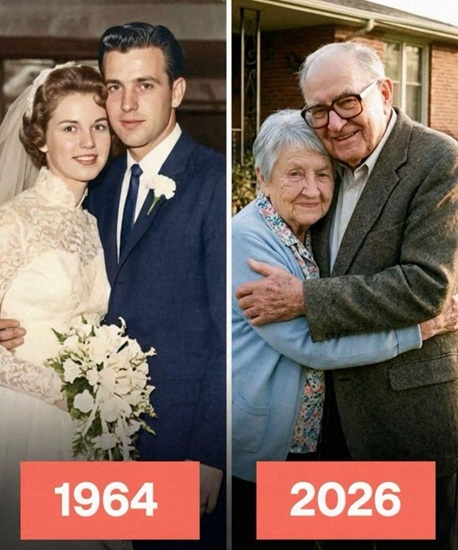
For more than six decades, Rosa believed she knew every chapter of her husband’s life. Their marriage had been built on trust, shared memories, and the quiet routines that naturally develop after spending nearly a lifetime together. They met as teenagers, married while they were still young adults, built a family, celebrated birthdays and anniversaries, and supported one another through every stage of life. Like many couples who remain together for decades, they believed there were few surprises left to uncover.
Yet after Harold’s passing, Rosa would discover that the greatest act of love in his life had remained completely hidden until the very end. Harold passed away peacefully in early 2026 after a long life surrounded by family. His funeral brought together relatives, longtime friends, former coworkers, neighbors, and people whose lives had crossed paths with his over many years. Throughout the service, speakers remembered him as a dependable husband, a devoted father, and a man who quietly helped others whenever he could.
Rosa listened with gratitude, believing she was saying goodbye to the man whose entire story she already knew. She had no reason to think that another chapter, carefully protected for decades, was still waiting to be revealed. As mourners slowly began leaving the memorial service, something unexpected happened. A young girl, approximately twelve or thirteen years old, approached Rosa with a calm but serious expression…
Rosa had never seen the girl before, nor did she recognize any adult accompanying her. Without offering much explanation, the girl handed Rosa a plain white envelope and quietly said that Harold had instructed her to deliver it only after the funeral had ended. Before Rosa could ask who she was or why Harold had trusted her with such an important task, the girl politely walked away and disappeared into the crowd.
-Still overwhelmed by grief, Rosa placed the envelope inside her purse without opening it immediately. The remainder of the day passed in a blur of conversations, condolences, family meals, and emotional exhaustion. It was only later that evening, after relatives had returned home and the house had become completely quiet, that she finally sat alone at the kitchen table and looked at the envelope resting before her. The silence surrounding her felt heavier than it ever had, making the simple act of breaking the seal feel strangely intimidating.
Inside, Rosa found a handwritten letter in Harold’s familiar handwriting along with a small brass key that showed signs of age. The letter immediately caught her attention. Harold explained that he had carried an important secret for most of his life, one that he had never found the courage to reveal while he was alive. He wrote that he hoped Rosa would understand his reasons after learning the complete story. He then provided a specific address on the outskirts of the city and instructed her to visit garage number 122, where he said she would find everything necessary to understand his final request.
The following morning, driven by equal parts curiosity, sadness, and uncertainty, Rosa traveled to the address mentioned in Harold’s letter. The location consisted of an aging row of storage garages that appeared largely untouched by time. Most of the metal doors showed signs of rust, faded paint, and years of exposure to changing weather. After locating unit 122, Rosa inserted the brass key into the weathered lock. The mechanism resisted slightly before finally turning, allowing the heavy garage door to slowly roll upward…
-Inside, she found a carefully preserved wooden chest sitting near the center of the otherwise empty garage. Although dust had settled throughout the room, the chest itself appeared intentionally protected. When Rosa opened it, she discovered dozens of carefully organized items including children’s drawings, report cards, handwritten letters, family photographs, medical records, school certificates, and financial documents dating back many decades. Nearly every letter had been signed by a woman named Virginia, a name Rosa had never heard Harold mention during their entire marriage.
As she continued examining the documents, additional records revealed something even more surprising. Receipts, bank transfers, tuition payments, rent assistance, and medical expenses showed that Harold had quietly provided financial support to Virginia and, later, to another young girl for many years. The assistance appeared consistent, carefully documented, and extended over several decades. Rosa struggled to understand what she was seeing. The evidence suggested Harold had maintained a long-term responsibility that she had never known existed.
The discovery immediately filled Rosa with painful questions. Had Harold hidden another family from her? Had he lived a second life alongside the one they shared together? After more than sixty years of marriage, the possibility felt almost impossible to accept. Every memory they had built together suddenly seemed uncertain as she searched for an explanation that could make sense of the documents spread across the chest before her. The emotional weight of the discovery was overwhelming, leaving her unsure whether she was uncovering an act of betrayal or something entirely different.
As Rosa remained seated inside the quiet garage trying to process everything she had just learned, she noticed the same young girl from the funeral standing quietly outside the open door. This time the girl introduced herself as Gini. She explained that Harold had helped her family for as long as she could remember and described him as one of the kindest people she had ever known. Gini then revealed that her mother, Virginia, was currently hospitalized and facing a serious medical condition that required urgent treatment.
The conversation raised even more questions than it answered. Although Rosa still struggled to understand Harold’s connection to Virginia and Gini, she sensed there was much more to the story than the documents alone could explain. Rather than responding with anger or assumptions, she chose to listen carefully. Something about Harold’s letter, combined with the sincerity of the young girl’s words, convinced her that the truth had not yet fully emerged. She decided to accompany Gini to the hospital, believing that only by hearing the complete story could she truly understand the secret Harold had carried for so many years.
When Rosa arrived at the hospital with Gini, she still believed she was about to uncover evidence of a hidden life that would forever change the memory of her marriage. Instead, she found a woman whose face reflected years of hardship rather than comfort. Virginia greeted Rosa with visible emotion, apologizing before saying a single word about Harold. She explained that she had never intended to interfere with their marriage and that Harold had always insisted his first responsibility was to his wife and family. His support, she said, had never come from romance but from a promise he had made decades earlier.
As Virginia slowly recovered from surgery, she shared a collection of photographs and personal letters Harold had carefully preserved through the years. Among them was one faded photograph that immediately captured Rosa’s attention. Standing beside a much younger Harold was a teenage girl holding an infant. Rosa stared silently for several moments before realizing she recognized the girl’s face. Although more than sixty years had passed, there was no mistake. It was Iris, Rosa’s younger sister, who had disappeared from home as a teenager and had never been seen again.
The discovery brought back memories Rosa had tried to bury over the years. Her parents had searched tirelessly for Iris after she disappeared, filing reports, contacting relatives, and hoping every phone call might finally bring good news. As the years passed without answers, the family slowly accepted they might never know what had happened. Their parents carried that unanswered question for the rest of their lives. Rosa had eventually learned to live with the uncertainty, believing she would never discover the truth.
Virginia gently explained that she was Iris’s daughter. Years earlier, Iris had found herself alone, struggling to care for a baby while facing overwhelming personal challenges. During that difficult period, Harold unexpectedly crossed paths with her. At first, he did not realize the young woman was connected to Rosa’s family. Only after learning more about her past did he discover that Iris was his wife’s long-lost sister. The realization placed him in an impossible position, forcing him to balance compassion with an incredibly difficult decision.
According to Harold’s journals, he chose not to reveal Iris’s situation immediately because she asked him not to. She feared reopening painful wounds and did not want her family to remember her only through hardship and disappointment. Harold respected her wishes while quietly making sure she and her young daughter never lacked basic necessities. Over the decades, he continued offering financial support whenever it was needed, always keeping careful records but never seeking recognition or gratitude.
When Iris eventually passed away, Harold continued helping Virginia, believing that his responsibility had not ended. As Virginia later became a mother herself, he quietly extended the same kindness to Gini. He never tried to replace anyone’s role within the family or become the center of attention. Instead, he remained a steady source of support behind the scenes, ensuring that each generation had opportunities for education, healthcare, and stability during difficult moments.
Rosa spent hours reading Harold’s handwritten journals, which described the emotional burden of carrying the secret. Page after page revealed his internal struggle. He often questioned whether he should tell Rosa the truth, yet he also feared causing unnecessary pain by revealing circumstances that Iris herself had desperately wanted to keep private. Rather than making a decision based on convenience, Harold continually weighed what he believed would bring the least harm to everyone involved.
Gradually, Rosa’s feelings of betrayal gave way to understanding. She realized Harold had never hidden another marriage or another family in the traditional sense. Instead, he had quietly fulfilled a promise rooted in compassion and responsibility. His actions had not diminished his love for Rosa or their children. Rather, they reflected another dimension of his character—one built on loyalty, discretion, and a willingness to help others without expecting anything in return.
As weeks passed, Rosa developed a genuine relationship with both Virginia and Gini. Family gatherings gradually included conversations that had never been possible before, allowing stories, photographs, and memories to be shared across generations that had unknowingly remained separated for decades. The painful mystery surrounding Iris’s disappearance was finally replaced by understanding, even though the years that had been lost could never be recovered.
Harold’s final letter had never asked Rosa for forgiveness. Instead, it simply expressed hope that one day she would understand why he believed kindness sometimes required silence. Looking back, Rosa realized his greatest legacy was not the secret itself but the lives he quietly helped protect. His decisions were undoubtedly complicated, and reasonable people might disagree about the choices he made. Yet the evidence left behind showed a man who consistently tried to reduce suffering rather than create it.
In the months that followed, Rosa found comfort in knowing that Harold’s final gift had been the restoration of a family connection that had seemed permanently lost. Instead of allowing grief to isolate her, she embraced the unexpected relationships that had entered her life. What began as a mysterious envelope delivered after a funeral ultimately became an opportunity to reconnect generations separated by circumstance. Harold’s story reminded everyone involved that acts of compassion often leave their greatest impact not through public recognition, but through the quiet differences they make in the lives of others long after they are gone.
