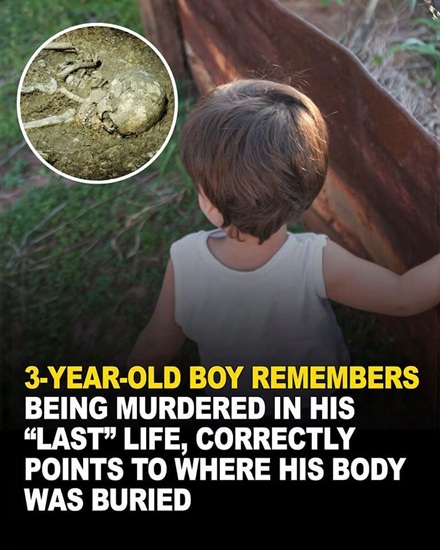
Reports of young children claiming to remember previous lives have been documented across multiple cultures for more than a century. These accounts typically involve children between the ages of two and six who spontaneously describe events, names, places, or experiences that they claim happened in another life. In many cases, these statements fade as the child grows older, often disappearing completely by adolescence. Because of their unusual nature, these reports have attracted attention from psychologists, anthropologists, and skeptical investigators.
The most extensive academic research in this field was conducted by psychiatrist Dr. Ian Stevenson at the University of Virginia. Over a span of several decades, Stevenson collected and analyzed more than 2,500 cases of children who reported past-life memories. His research took him across countries such as India, Sri Lanka, Lebanon, Thailand, and Burma, where cultural beliefs about reincarnation are more widely accepted. This cultural context made it easier for families to report such claims openly and for researchers to investigate them early, before details faded or changed.
Stevenson developed a structured methodology for evaluating these cases. He would interview the child, parents, and sometimes witnesses, then attempt to identify a deceased individual whose life matched the child’s statements. In some cases, he documented strong correspondences between the child’s claims and the life of a deceased person, including names, locations, or circumstances of death. However, he also emphasized that not all cases were equally strong, and many contained inconsistencies or lacked verification.
One of the most debated aspects of this research involves birthmarks or physical anomalies that some families interpret as evidence of past-life injuries. Stevenson documented hundreds of cases where children with past-life claims had birthmarks or defects that seemed to correspond with wounds described in their statements. However, medical science does not recognize any biological mechanism that connects memory with physical marks at birth. Critics argue that such correlations may be coincidental or influenced by selective interpretation rather than causal relationships.
Another important researcher in this field is Dr. Jim Tucker, also from the University of Virginia, who continued Stevenson’s work in more recent decades. Tucker focused particularly on cases in Western countries, including the United States, where belief in reincarnation is less common. Some of these cases involve children who report detailed memories of individuals they could not have known directly. Tucker’s work has been presented as an attempt to bring more scientific rigor to the study of such phenomena, though it remains controversial within mainstream psychology.
Despite the attention these cases receive, the scientific consensus remains cautious. Most psychologists explain these reports through known cognitive and developmental mechanisms. One explanation is that young children have highly flexible imagination and memory systems, which can blend real-world information with fantasy. Another possibility is cryptomnesia, where a person unconsciously remembers information they have been exposed to and later believes it is original or personally experienced. Suggestion from adults, even unintentionally, can also play a role in shaping a child’s statements.
Cultural influence is another significant factor. In societies where reincarnation is widely accepted, children may be more likely to hear stories about past lives from a young age. This can shape expectations and interpretations of unusual thoughts or dreams. In contrast, in cultures where reincarnation is not a common belief, such cases are reported less frequently, although they still exist. This difference raises questions about the role of environment in shaping memory narratives.
Skeptical researchers also point out the methodological limitations of many case studies. These include reliance on retrospective testimony, lack of independent documentation before identification of a supposed past-life match, and the possibility of information leakage between families or communities. In some cases, investigators may become aware of possible matches before fully documenting the child’s original statements, which can introduce bias. Because of these limitations, most scientists do not consider the evidence sufficient to support reincarnation as a verifiable phenomenon.
At the same time, proponents argue that a small subset of cases contains details that are difficult to explain through conventional means. These include accurate naming of deceased individuals, recognition of specific locations the child has never visited, or detailed descriptions of events that appear to match historical records. While these cases are intriguing, critics emphasize that extraordinary claims require extraordinary evidence, and that alternative explanations have not been conclusively ruled out.
Neuroscience also provides important insights into how memory works in early childhood. Research shows that young children do not store memories in the same stable, structured way as adults. Instead, their memories are more fragmented and highly influenced by emotion, imagination, and external input. As the brain develops, many early memories are lost or rewritten. This process, known as childhood amnesia, may help explain why unusual statements can appear and later disappear without long-term psychological continuity.
Another angle explored by researchers is the role of identity formation in early development. Children often experiment with roles, stories, and imagined identities as part of normal cognitive growth. In some cases, this can include highly detailed narratives that feel real to the child but are not grounded in external reality. When these narratives are reinforced by attention from adults, they can become even more elaborate over time.
While the idea of reincarnation remains outside the boundaries of established scientific proof, the persistence of these reports across cultures continues to attract curiosity. Researchers like Stevenson and Tucker do not claim to prove reincarnation definitively but argue that the cases deserve further systematic investigation. Their work sits at the intersection of psychology, anthropology, and the study of consciousness, raising broader questions about how human memory and identity are formed.
Ultimately, the scientific debate remains open but unresolved. On one side, there are documented cases that some interpret as suggestive of something beyond ordinary explanation. On the other, there are well-established psychological models that account for most or all of the reported phenomena without invoking survival of consciousness after death. As a result, the topic continues to exist in a space between scientific inquiry and philosophical speculation, rather than confirmed fact.
