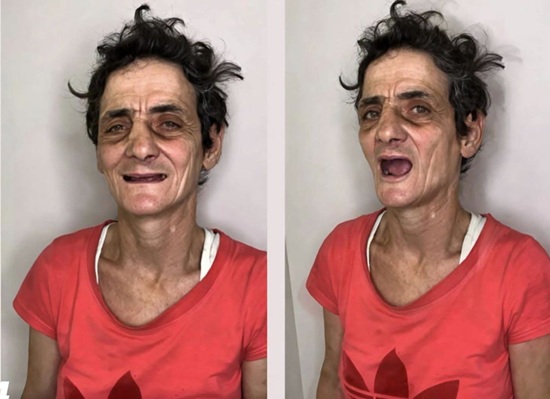
Rita’s life represents a situation that many people in society unfortunately face when personal tragedy and hardship intersect. Over time, she found herself living on the streets after experiencing a deeply painful loss—the death of her only son. This event marked a turning point in her life, leading to emotional distress and long-term instability that eventually resulted in homelessness. Her situation was not simply the result of financial difficulty, but also the emotional weight of grief.
Like many individuals facing similar circumstances, the combination of loss, isolation, and lack of support made daily survival increasingly difficult. Over the years, Rita spent much of her time moving through public spaces, relying on small amounts of money earned through collecting recyclable materials such as bottles and discarded items. Life on the streets often leaves visible marks on a person’s physical condition, and Rita was no exception.
Exposure to harsh weather, limited access to stable care, and long-term stress contributed to a worn appearance and declining health. However, beyond the physical challenges, the emotional and psychological impact of isolation was equally significant.
Social Invisibility and Emotional Struggles
One of the most difficult aspects of homelessness is the feeling of being overlooked by society. For Rita, this sense of invisibility became part of her daily reality. Many individuals in similar situations report feeling as though they are no longer seen as individuals, but rather defined by their circumstances.
This form of social isolation can deepen emotional distress, especially when combined with grief and long-term hardship. In Rita’s case, the absence of consistent support and recognition contributed to a sense of disconnection from the world around her.
At the same time, stories like hers highlight an important social issue: the way appearance and circumstance can influence how people are perceived. Without meaningful interaction or support, individuals experiencing homelessness often struggle not only with survival, but also with maintaining a sense of identity and dignity.
A Chance Encounter That Shifted Perspective
At a certain point in her journey, Rita reportedly crossed paths with Shafag Novruz, a makeup artist known for transformation-based projects focused on personal restoration and visual rehabilitation. According to publicly shared accounts, Novruz has worked with individuals in vulnerable situations, aiming to support confidence and self-image through appearance-focused transformation.
In Rita’s case, this encounter marked the beginning of a different type of support—one that combined practical care with emotional encouragement. Rather than focusing only on external appearance, the process reportedly began with addressing basic personal needs and well-being.
One of the early steps described in accounts of the transformation involved improving dental health, which is often closely linked to both physical comfort and self-confidence. Access to such care can have a meaningful psychological impact, especially for individuals who have experienced long-term hardship.
Restoration Through Care and Attention
Following initial care, Rita’s transformation process reportedly continued with grooming, hairstyling, and clothing selection designed to reflect a renewed sense of identity. These changes were not presented merely as cosmetic improvements, but as part of a broader effort to restore dignity and self-perception.
In many documented transformation projects, individuals are treated with professional attention similar to that given in fashion or media settings. This approach emphasizes respect, structure, and care, which can contribute to emotional uplift alongside physical changes.
Throughout such processes, the focus is often placed on reinforcing the idea that every individual deserves attention and dignity, regardless of their circumstances. For people who have experienced long-term neglect or hardship, this kind of structured care can be emotionally significant.
Emotional Impact of Transformation Experiences
According to descriptions of similar transformation moments, individuals often experience strong emotional reactions when they see themselves after such changes. These reactions can include surprise, emotional release, and reflection on past identity and present circumstances.
In Rita’s case, the moment of looking into the mirror reportedly represented more than a visual change. It symbolized a reconnection with a version of herself that existed before her life was altered by tragedy and hardship.
Such experiences are often described as emotionally complex. While external appearance plays a role, the deeper impact is usually connected to feelings of recognition, dignity, and renewed self-awareness.
The Role of Compassion in Personal Change
Stories like Rita’s are frequently used to highlight the importance of compassion and human connection. While systemic support, housing access, and mental health services are essential in addressing homelessness, individual acts of kindness can also have meaningful emotional impact.
Support that focuses on dignity and respect can sometimes help individuals feel seen again as people rather than defined solely by their circumstances. In many cases, this recognition is an important first step toward rebuilding confidence and motivation.
However, experts also emphasize that long-term recovery from homelessness typically requires ongoing structural support, including housing stability, healthcare access, and community resources.
Broader Social Reflections
Rita’s story reflects broader social realities faced by many individuals experiencing homelessness around the world. While each situation is unique, common themes often include loss, financial instability, emotional trauma, and limited access to support systems.
Public awareness of these challenges can play a role in encouraging more empathetic understanding. It also highlights the importance of addressing not only immediate needs, but also long-term pathways to reintegration and stability.
At the same time, transformation stories often resonate with audiences because they emphasize hope and the possibility of change, even after difficult circumstances.
Dignity, Identity, and Human Connection
Ultimately, Rita’s experience is often interpreted as a reminder of the importance of dignity and human connection. While external transformations can be visually powerful, the deeper message is usually centered on emotional recognition and the value of being seen as a person.
Her journey illustrates how compassion—whether through professional care or simple human kindness—can influence how individuals begin to reconnect with themselves and others.
Although no single act can resolve the broader issue of homelessness, stories like this highlight how moments of care and attention can contribute to restoring hope. In the end, the most lasting transformation is often not just physical, but emotional—the return of confidence, identity, and a sense of belonging.
