Sometimes a single decision, something as simple as ordering a home DNA testing kit, can completely change how a family understands identity, trust, and belonging within their everyday lives. What began as a casual curiosity for ancestry quickly evolved into an emotionally complex journey for me and my husband, Paul, revealing unexpected truths that neither of us had ever anticipated facing.
Our experience is a deeply personal reflection on DNA testing surprises, questions of biological identity, emotional resilience, and the meaning of family when genetics does not match lived reality or emotional connection. Paul was the first to suggest taking a DNA test, describing it as a lighthearted way to explore his heritage and perhaps share meaningful ancestry details with our young son, Austin.
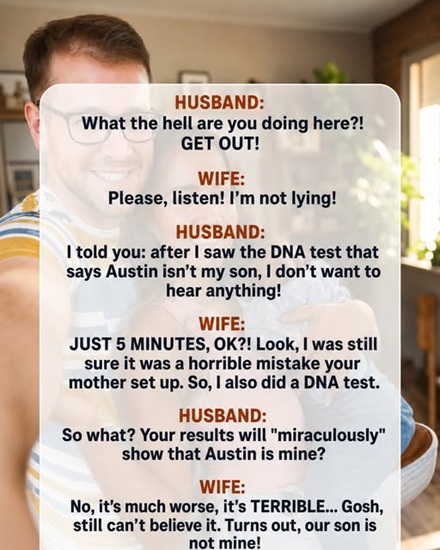
Several weeks later, the results arrived at our home, and what was meant to be an interesting discovery quickly turned into a moment of confusion, silence, and emotional shock for both of us. Paul carefully read the report several times before speaking, his expression changing as he processed the information. He eventually said that the results suggested he was not Austin’s biological father.
Those words created an immediate emotional impact, leaving us both in disbelief. The foundation of trust we had built over years suddenly felt uncertain, fragile, and difficult to fully understand at that moment. I felt overwhelmed as questions began to surface in my mind. I knew my own truth and had no reason to believe anything had happened outside our relationship during the years of our marriage.
Despite this, the results created emotional tension that was difficult to ignore, as scientific data appeared to contradict everything we believed about our family history and our shared life with our son. Unable to accept uncertainty, I decided to take a DNA test myself, hoping to clarify the situation and find answers that might help us understand what the results were actually indicating.
When my own results arrived, the emotional weight became even heavier. The report suggested that I also did not share a biological relationship with Austin, deepening our confusion and emotional distress significantly. At that point, we were left with a situation that seemed impossible to explain logically. If neither of us were biologically connected to Austin, we needed answers beyond what testing alone could provide.
We began investigating from the very beginning, starting with the hospital where I had given birth. We requested records, asked questions, and tried to understand how such a situation could potentially occur. After multiple discussions with hospital administrators and careful review of documentation, an explanation eventually emerged that pointed toward a rare but possible error involving newborn identification procedures shortly after delivery.
We were informed that, on the day of birth, there had been a mix-up involving two newborn babies, which resulted in each child being placed with the wrong set of parents. The realization was emotionally overwhelming. It meant that for years, we had been raising a child who was biologically connected to another family, while another child was being raised as ours elsewhere.
Eventually, we were introduced to another couple, Sarah and James, who had also taken part in the process of clarifying the situation after being contacted by the hospital. Meeting them for the first time was emotionally intense. The resemblance between Paul and their son, Andrew, was immediately noticeable, adding another layer of complexity to an already difficult situation.
At the same time, I noticed familiar traits in Andrew that created an unexpected emotional connection, making it even harder to process the reality of what had happened many years earlier. Both families sat together in silence during the initial meeting, each of us trying to understand how to process years of memories, attachment, and love in light of newly discovered biological information.
Over time, we had long conversations filled with emotion, reflection, and careful consideration about what would be best for both children involved, prioritizing stability, emotional well-being, and long-term family support. Eventually, both families reached a shared understanding that neither child should be abruptly separated from the environment in which they had been raised for their entire lives.
We agreed that Austin would continue living with us, while Andrew would remain with Sarah and James, ensuring that both boys maintained emotional stability and continuity in their daily lives. Although the decision was emotionally difficult, it was made with the intention of protecting the children from sudden disruption, focusing on love, care, and long-term psychological well-being above all else.
We also agreed that the boys should be given the opportunity to know each other, grow up with awareness of their shared history, and develop a bond that reflected their unique situation. Despite the biological confusion, Austin remained our son in every meaningful way that mattered in daily life, including emotional connection, upbringing, shared experiences, and parental commitment.
The situation gradually led us to reflect on the meaning of family beyond genetics. We began to understand that emotional bonds often carry more weight than biological relationships alone. In time, both families began to build a broader connection, forming what could be described as an extended family structure that prioritized the well-being and happiness of both children.
This new dynamic required ongoing communication, trust, and cooperation between all parents involved, ensuring that both Austin and Andrew felt supported, loved, and emotionally secure throughout their upbringing. Through this experience, we learned that identity and family are shaped not only by DNA, but also by care, consistency, shared memories, and emotional presence over time.
We also realized how important it is to approach unexpected life-changing information with patience, understanding, and a willingness to focus on long-term outcomes rather than immediate emotional reactions. Looking back, the emotional journey was one of the most challenging experiences we have ever faced as a family, requiring strength, forgiveness, and acceptance from everyone involved.
Today, when I look at Austin, I do not see uncertainty or biological questions. I see a child I have raised, loved, and supported every day since birth, regardless of genetic results. Our experience ultimately taught us that family is not defined solely by biology, but by commitment, emotional connection, and the shared journey of raising a child with love and responsibility.
Even though the truth was unexpected and emotionally difficult, it ultimately led to a deeper understanding of what it truly means to be a parent and a family in every sense.
