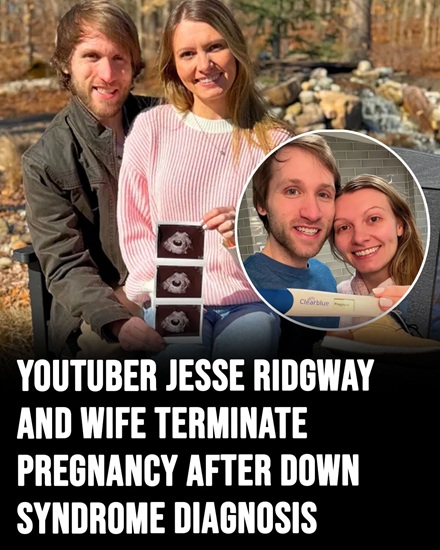
Jesse Ridgway, widely known online as Jesse Ridgway, and his wife Ashley recently shared a deeply personal update regarding their pregnancy, explaining that they made a difficult medical decision following concerning prenatal genetic screening results. The couple revealed the news through social media, describing it as one of the most emotionally challenging experiences they have faced together as partners and as expectant parents.
According to their public statement, early prenatal testing indicated a high probability that the baby could have Down syndrome, also known as Trisomy 21, a genetic condition involving an extra copy of chromosome 21. Trisomy 21 is a naturally occurring chromosomal variation that can influence physical development, cognitive ability, and overall health outcomes, though the severity and presentation can differ significantly from person to person.
Medical professionals typically identify the likelihood of Trisomy 21 during pregnancy through screening tests, which estimate risk but do not always provide absolute certainty without further diagnostic procedures. Jesse and Ashley previously announced their pregnancy publicly earlier in the year, sharing their excitement and anticipation as they prepared to welcome their first child into the world.
As the pregnancy progressed, they later disclosed that follow-up testing suggested a very high probability of Trisomy 21, which prompted them to seek further medical guidance and counseling. In their account, the couple explained that they took time to process the results, consult healthcare professionals, and consider the possible long-term implications for both the child and their family. They emphasized that the decision they ultimately made was not taken lightly, but rather followed extensive reflection, emotional distress, and careful consideration of available medical information.
The announcement described the emotional weight of the situation, noting that both Jesse and Ashley experienced significant grief, uncertainty, and psychological strain throughout the decision-making process. In his statement, Jesse Ridgway expressed that the experience felt overwhelming and deeply painful, particularly for his wife, who underwent the medical procedure earlier in the week. He also shared that, according to their account, the procedure was completed without medical complications, although the emotional impact remained profound for both of them afterward.
The couple described feeling emotionally exhausted, explaining that the combination of medical information, uncertainty, and personal expectations created a very difficult mental and emotional environment. Prenatal Trisomy 21 diagnoses can vary widely in certainty and severity, and families often rely on genetic counseling to better understand potential developmental outcomes and medical needs. The condition Down syndrome is associated with a wide range of possible health considerations, including differences in learning development, muscle tone, and certain medical risks.
However, it is also widely recognized that individuals with Down syndrome can live fulfilling lives, and outcomes often depend on access to healthcare, early intervention, and family support systems. In their statement, the couple reflected on their initial understanding of the condition, acknowledging that their perception evolved significantly after receiving more detailed medical explanations. They shared that at first, they believed the challenges might be manageable, but later learned more about the broader spectrum of potential medical and developmental complexities.
Jesse Ridgway explained that the emotional shift was difficult, as expectations of parenthood collided with new and uncertain medical information about the pregnancy. He described experiencing a mixture of hope, confusion, and emotional conflict as they processed what the screening results could mean for their unborn child. The couple also addressed the broader emotional reality many families face when confronted with unexpected prenatal diagnoses during what is typically a hopeful and joyful period.
They noted that such situations can create intense emotional pressure, requiring families to make decisions under significant time constraints and psychological stress. In their message, they emphasized that their choice was deeply personal and influenced by their individual circumstances, beliefs, and interpretation of medical guidance. They also acknowledged that experiences surrounding prenatal diagnoses can vary widely, and that other families may approach similar situations in different ways.
The discussion of prenatal Trisomy 21 screening often involves statistical probabilities, but medical professionals stress that each case is unique and should be evaluated individually. Genetic counselors typically support expectant parents by explaining potential outcomes, available resources, and the range of developmental possibilities associated with chromosomal conditions. In their public statement, the couple expressed a sense of grief and emotional loss, describing the experience as traumatic and difficult to process in real time.
They also shared that Ashley, in particular, experienced significant emotional strain, reflecting the physical and psychological demands associated with the medical process. Jesse Ridgway described feeling emotionally drained and stated that the experience challenged his expectations of parenthood and preparedness for complex medical circumstances. He reflected on how quickly expectations can change when faced with unexpected medical realities, especially during pregnancy.
The couple’s announcement also sparked broader public discussion online about prenatal testing, disability awareness, and the emotional complexity of reproductive decision-making. Many readers interpreted the message through different perspectives, reflecting a wide range of opinions about medical ethics, disability rights, and parental choice. The condition Down syndrome remains one of the most commonly discussed chromosomal variations in prenatal genetics due to its frequency and variability.
Medical experts continue to emphasize that individuals with Down syndrome have diverse abilities and life experiences, and outcomes should not be generalized. Following their announcement, Jesse and Ashley also addressed the emotional reactions they expected from the public, acknowledging that such topics often generate strong opinions. They noted that discussions around prenatal diagnoses can be sensitive, as they intersect with deeply personal values, medical realities, and social perceptions of disability.
The couple expressed gratitude for support from friends, family, and followers who reached out with messages of empathy and understanding during a difficult time. They also requested privacy as they continued to process the emotional aftermath of the decision and focus on healing as a couple. In his closing remarks, Jesse Ridgway offered a message directed toward individuals and families living with Down syndrome and other developmental differences.
He expressed respect and appreciation for their lives, acknowledging the challenges many families face while also recognizing their strength and resilience. His statement emphasized that every individual has value, and that families navigating developmental conditions often demonstrate significant dedication and care. The couple’s experience highlights the complex emotional landscape that can accompany prenatal genetic screening, where medical information and personal values often intersect in deeply challenging ways.
It also underscores the importance of informed counseling, emotional support, and access to accurate information when making difficult reproductive health decisions. While their story is deeply personal, it reflects broader realities that many expectant parents face when confronted with uncertain or unexpected medical outcomes. Ultimately, Jesse and Ashley described their journey as one marked by grief, reflection, and difficult choices made under emotional strain and medical uncertainty.
Their message closed with acknowledgment of the complexity of life-altering decisions during pregnancy, and the lasting emotional impact such experiences can carry for families involved.
