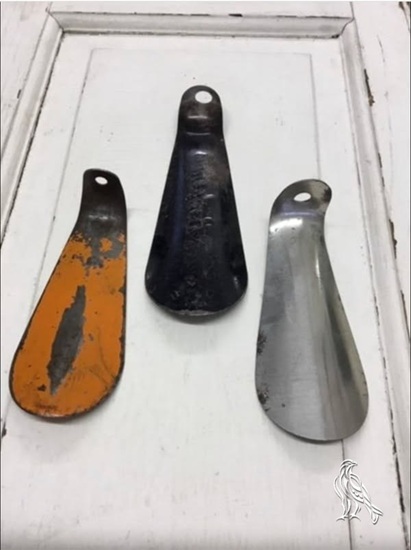
Every few months, the internet becomes fascinated by an unusual object from the past. A photograph appears online, people begin sharing guesses, and before long thousands of users are trying to identify something that once seemed completely ordinary. Recently, one such object sparked widespread curiosity. Its unusual shape left many viewers puzzled, and social media quickly filled with theories about what it might have been used for. Some people believed it was an antique kitchen utensil.
Others suggested it could have been part of an old mechanical device, a decorative household item, or even a forgotten tool from a specialized trade. As more people joined the discussion, the guesses became increasingly creative. Yet despite the wide range of theories, the true answer turned out to be surprisingly simple. The mysterious object was a shoe horn, a practical tool that has quietly helped people put on shoes for hundreds of years. While it may appear unusual to modern eyes, its purpose is straightforward and highly functional.
For generations, shoe horns have been used to help guide the foot into a shoe smoothly without damaging the heel section. Their design is simple, but their usefulness has allowed them to remain relevant for centuries. Although many people today are unfamiliar with them, shoe horns were once considered common household items found in homes across many parts of the world. The history of the shoe horn stretches back several centuries.
Historical records suggest that versions of this tool were already in use by the late Middle Ages and became increasingly common during the fifteenth and sixteenth centuries. Early examples were typically made from materials that were readily available and durable. Animal horn was among the most popular choices, which is where the name “shoe horn” originated. Craftsmen also produced shoe horns from wood, bone, and other natural materials. These substances provided the smooth surface needed to help a foot slide comfortably into a shoe.
At a time when footwear was often handmade and relatively expensive, protecting shoes from unnecessary wear was especially important. A shoe horn helped extend the lifespan of valuable footwear. Unlike many modern shoes, historical footwear was often rigid and less forgiving. Leather could be stiff, openings could be narrow, and putting on shoes sometimes required considerable effort. The shoe horn solved this problem by creating a smooth pathway between the foot and the shoe. This reduced friction and prevented the back of the shoe from becoming crushed or misshapen.
For many people, this simple tool became part of a daily routine. It required little effort to use but helped preserve footwear that represented a significant investment. As manufacturing techniques improved over time, the appearance and construction of shoe horns also evolved. Skilled artisans began producing more refined versions using a wider range of materials. Metalworking advances allowed craftsmen to create shoe horns from brass, steel, and other durable metals. These versions often lasted much longer than those made from organic materials.
Metal shoe horns became especially popular because they were strong, resistant to breakage, and capable of maintaining their shape even after years of regular use. Some examples featured polished finishes that gave them an elegant appearance. Others included decorative engravings that reflected the artistic styles of their era. By the eighteenth and nineteenth centuries, shoe horns were commonly found in households belonging to both wealthy families and members of the growing middle class.
The industrial revolution played an important role in making these tools more widely available. Mass production techniques reduced costs and allowed manufacturers to produce larger quantities. As consumer goods became more accessible, shoe horns transitioned from luxury accessories to practical household items that many families could afford. The twentieth century brought additional changes. New materials such as plastic made production even more efficient and further reduced manufacturing expenses.
Plastic shoe horns quickly became popular because they were lightweight, inexpensive, and easy to produce in large numbers. They also came in a variety of colors and designs. Despite these changes in materials, the basic shape remained remarkably consistent. The curved design that made shoe horns effective centuries ago continues to define them today. This consistency highlights one of the most interesting aspects of the shoe horn. Its design solved a practical problem so effectively that little modification was necessary over hundreds of years.
While many tools and household products have undergone dramatic redesigns, the shoe horn remains fundamentally similar to its historical predecessors. Its primary function has never changed. A shoe horn helps the foot enter a shoe smoothly while protecting the heel counter, the reinforced section located at the back of the shoe. Without a shoe horn, many people unintentionally bend or crush this area while putting on footwear. Over time, repeated damage can affect both comfort and appearance.
Using a shoe horn reduces stress on the shoe structure and helps maintain its original shape. This is particularly beneficial for high-quality footwear designed for long-term use. Dress shoes are among the types of footwear that benefit most from regular shoe horn use. Their structured construction can be more vulnerable to heel deformation. Leather shoes, formal footwear, and many boots often feature firm heel sections that can become damaged if the wearer forces a foot into the shoe repeatedly.
By allowing the foot to glide smoothly into place, a shoe horn minimizes unnecessary strain and helps preserve the integrity of the footwear. Modern shoe horns are available in a wide range of sizes and styles. Compact versions are designed for portability and can easily fit into luggage or travel bags. Travel-sized models are particularly popular among people who frequently stay in hotels or travel for business, as they provide convenience without taking up much space.
Larger shoe horns are designed for home use and often feature extended handles that eliminate the need to bend down significantly while putting on shoes. These long-handled versions are especially useful for older adults and individuals with mobility limitations, back pain, or joint discomfort. For many users, the longer design provides a more comfortable and accessible experience, allowing them to put on footwear while standing upright.
Healthcare professionals and mobility specialists sometimes recommend long shoe horns as helpful tools for maintaining independence during daily activities. Their practical benefits extend beyond convenience. They can also reduce physical strain and make routine tasks easier for people facing mobility challenges. Despite their usefulness, shoe horns are sometimes viewed as old-fashioned objects because they are associated with traditional routines and older generations.
However, their continued presence in homes, hotels, shoe stores, and dressing rooms demonstrates that they remain relevant in modern life. Many footwear specialists continue to encourage the use of shoe horns, particularly for premium shoes that are intended to last for many years. Beyond their practical value, shoe horns have also attracted interest from collectors and historians who appreciate antique household objects.
Vintage shoe horns often display remarkable craftsmanship. Some feature carved handles, decorative engravings, or materials that are rarely used in modern production. Collectors value these pieces because they offer insight into everyday life during earlier periods of history. They reveal how ordinary tools were often made with great care and attention. Certain antique shoe horns were crafted from silver, ivory, or other premium materials, reflecting the tastes and social status of their original owners.
Museums and historical collections occasionally include shoe horns as examples of domestic objects that illustrate changing manufacturing techniques and design traditions. Their survival over centuries demonstrates how even simple tools can provide valuable information about daily routines and material culture. What makes the shoe horn particularly fascinating is not complexity but simplicity. It represents an elegant solution to a common problem that has remained effective for generations.
Unlike many inventions that become obsolete as technology advances, the shoe horn continues to perform its original purpose exceptionally well. Its enduring relevance serves as a reminder that successful design is not always about innovation for its own sake. Sometimes the best solutions are also the simplest. The recent online fascination with this object highlights how quickly everyday items can become mysteries once they disappear from common use.
For younger generations unfamiliar with traditional household tools, a shoe horn may appear unusual or difficult to identify at first glance. Yet once its purpose is understood, the object reveals itself as an example of practical design that has stood the test of time.
Far from being a forgotten gadget or a mysterious device, the shoe horn remains a useful accessory that continues to make daily life a little easier. Its story reflects the lasting value of thoughtful craftsmanship, functional design, and simple inventions that quietly serve generations without attracting much attention. Although trends and technologies continue to evolve, the humble shoe horn remains proof that some tools achieve a level of usefulness that allows them to endure for centuries.
