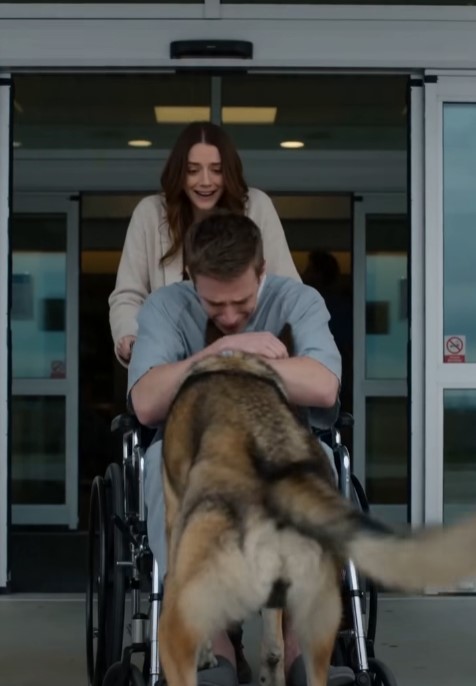
Stories about the loyalty of dogs have fascinated people for generations. Across different cultures and countries, countless accounts describe dogs waiting for their owners, protecting families, and showing remarkable devotion even during difficult circumstances. These stories often capture public attention because they highlight the unique bond that can exist between humans and animals. One story that has circulated widely online tells of a dog who reportedly waited outside a hospital for months after being separated from his owner.
The account has touched many readers because it focuses on themes of loyalty, patience, love, and the emotional connection between a person and a beloved pet. While versions of this story have been shared across social media and various websites, it is important to note that many details have not been independently verified. As a result, the story is best viewed as a touching narrative about devotion rather than a confirmed historical event.
The emotional power of such stories comes from something that is undeniably real. Dogs often form strong attachments to the people who care for them. Research has shown that dogs can recognize familiar voices, scents, routines, and behaviors, creating bonds that may last for many years. For many pet owners, a dog is far more than an animal living in the home. Dogs frequently become trusted companions who share daily experiences, provide comfort during difficult times, and offer unconditional affection without expecting anything in return.
The story begins with an elderly man and his faithful dog. According to the narrative, the two had spent years together, developing a routine that brought comfort and stability to their lives. Their relationship reflected the deep trust that often develops between owners and their pets. Every morning, the dog reportedly waited patiently for his owner to begin the day. Whether they were taking a walk, sitting quietly together, or simply sharing time at home, their companionship represented a bond built over many years.
One day, the owner reportedly traveled to a hospital because of serious health concerns. Before entering the building, he instructed the dog to remain outside and wait. Such details resonate with readers because dogs are known for following familiar commands and routines. According to the story, the dog remained near the entrance after his owner disappeared inside. As hours passed and evening arrived, he continued watching the doors, expecting to see the familiar face return at any moment.
The narrative suggests that the owner died shortly after entering the hospital. Unaware of what had happened, the dog allegedly continued waiting, believing that his owner would eventually come back through the same doors. This image of a patient dog remaining faithful despite uncertainty has become the emotional center of the story. It reflects a quality that many people associate with dogs: unwavering loyalty even when circumstances are difficult or confusing.
As the days reportedly passed, hospital staff members noticed the animal remaining near the entrance. Some accounts describe employees providing food, water, and temporary shelter while observing the dog’s unusual determination to stay in the same location. Stories of this nature often remind readers of other famous examples of canine loyalty. Perhaps the most widely known is the story of Hachikō in Japan, a dog who reportedly waited for his owner at a train station for years after the owner’s death.
Unlike many internet stories, Hachikō’s loyalty is well documented and has become a symbol of devotion around the world. His story continues to inspire books, films, and memorials that celebrate the relationship between humans and animals. The popularity of narratives like these demonstrates how strongly people connect with themes of faithfulness and emotional attachment. Many readers see reflections of their own experiences with pets in such stories.
Dogs possess highly developed senses, particularly their sense of smell. Scientific studies have shown that dogs can detect scents at levels far beyond human capabilities, allowing them to recognize individuals and environments with remarkable accuracy. Because of these abilities, dogs often respond strongly to familiar scents associated with their owners. They can identify people even after long separations and may become excited when encountering familiar smells linked to important memories.
However, while dogs can recognize scents and behavioral cues, there is no scientific evidence demonstrating that a dog can identify a transplanted human organ inside another individual. This distinction is important when evaluating stories that make extraordinary claims. In the viral narrative, a transplant recipient eventually leaves the hospital months later. The story suggests that the dog approaches the individual because the donor heart once belonged to the dog’s owner.
Although this detail contributes to the emotional impact of the story, experts generally agree that such a scenario has not been scientifically demonstrated. The concept should therefore be viewed as part of the narrative rather than a proven biological phenomenon. Even without that specific claim, the story continues to resonate because it highlights qualities that are genuinely associated with dogs. Loyalty, persistence, companionship, and emotional attachment are all characteristics commonly observed by pet owners.
Animal behavior researchers have long studied the relationships between dogs and humans. Their findings consistently show that dogs develop meaningful social bonds with people and often experience stress when separated from those they trust. Many dogs display signs of grief or confusion after the loss of a companion, whether that companion is another animal or a human family member. These reactions can include changes in appetite, behavior, activity levels, and social interaction.
Because of these observations, stories about loyal dogs often feel believable on an emotional level, even when some specific details cannot be independently verified. Readers recognize the genuine behaviors that inspire such narratives. The continued popularity of these accounts reflects society’s appreciation for animals that demonstrate affection and commitment. In a world often filled with conflict and uncertainty, stories about loyalty provide comfort and inspiration.
Pet ownership itself offers numerous documented benefits. Studies suggest that companion animals may help reduce feelings of loneliness, encourage physical activity, and provide emotional support during challenging periods. Many owners describe their pets as important members of the family. Daily interactions with animals can create routines that contribute positively to emotional well-being and social connection.
The story of the waiting dog ultimately succeeds because it speaks to universal human emotions. Whether entirely factual, partially inspired by real events, or largely symbolic, it focuses on themes that people readily understand. At its heart, the narrative is not simply about a dog outside a hospital. It is about devotion, memory, and the lasting impact that meaningful relationships can have on our lives.
The bond between humans and dogs has existed for thousands of years. Throughout history, dogs have served as companions, protectors, helpers, and friends, earning a special place in communities around the world. Modern science continues to explore why these relationships are so powerful. Researchers believe that shared social behaviors, communication patterns, and emotional responsiveness contribute to the strong connection between dogs and people.
Whether through verified historical accounts or popular modern stories, examples of canine loyalty continue to inspire audiences. They remind us of the value of trust, companionship, and steadfast support. While readers should approach unverified stories with appropriate caution, there is nothing uncertain about the broader message they often convey. The connection between people and their pets can be profound and deeply meaningful.
For countless families, dogs provide comfort during difficult moments and joy during happier times. Their presence enriches daily life and creates memories that remain meaningful long after the years have passed. Ultimately, stories like this endure because they celebrate qualities that people admire.
Loyalty, patience, kindness, and love are themes that transcend individual circumstances and resonate across generations. Whether viewed as a viral tale, a symbolic narrative, or a reflection of real canine devotion, the story encourages readers to appreciate the extraordinary relationships that can develop between humans and their faithful companions.
