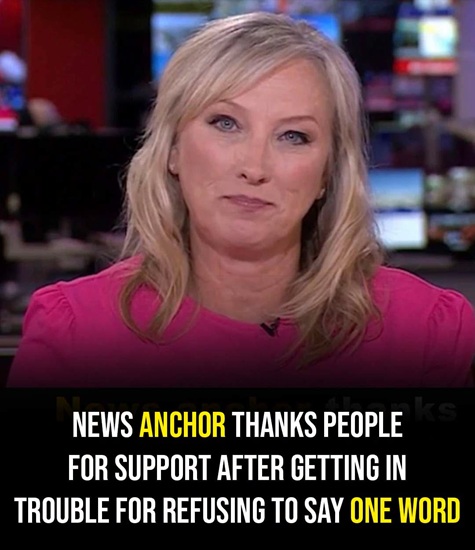
A BBC News broadcast recently drew widespread public attention after veteran presenter Martine Croxall appeared to slightly deviate from the wording shown on the teleprompter during a live segment on air. The moment quickly spread across social media platforms, where viewers debated what had happened and whether the presenter’s choice of words reflected a personal correction or a professional adjustment during live broadcasting.
Martine Croxall, aged 56, is a long-serving BBC News presenter who has worked with the broadcaster for approximately three decades, having joined the organization in the early 1990s as a journalist and news anchor. During the live broadcast, she was reporting on research related to heat-related health risks in the United Kingdom, particularly focusing on vulnerable groups affected by rising temperatures and seasonal heatwaves.
The segment referenced findings from public health research, including contributions from institutions such as the London School of Hygiene and Tropical Medicine, which regularly studies environmental and health-related risks. While reading the script, Croxall initially used a phrase that included the term “pregnant people,” which is commonly used in some contexts as a gender-neutral term intended to include all individuals who can become pregnant.
However, mid-sentence, she appeared to pause and adjust her wording, substituting the phrase with “women,” which immediately drew attention from viewers who were following the live broadcast closely. Her delivery continued smoothly after the correction, and she completed the sentence while maintaining her professional tone, but the brief deviation became the focal point of online discussion shortly afterward.
The segment she was reading focused on groups considered more vulnerable to extreme heat, including older individuals, people with existing health conditions, and those who are pregnant, according to the research being cited. Following the broadcast, clips of the moment circulated widely on social media platforms, where users expressed differing interpretations of the presenter’s choice to adjust the wording during the live report.
Some viewers viewed the correction as a spontaneous editorial decision made in real time, while others interpreted it as a deliberate statement regarding language use in public broadcasting. The discussion quickly expanded beyond the broadcast itself, touching on broader debates around language, inclusivity, and how public institutions choose terminology in official communication and reporting.
In particular, the phrase “pregnant people” has been used in certain medical and academic contexts to promote inclusivity for transgender and non-binary individuals who may become pregnant. However, the use of such terminology remains debated in public discourse, with differing opinions on whether gender-neutral language improves inclusivity or creates confusion in general communication.
Following the broadcast, some public figures and commentators shared their reactions online, contributing further to the visibility of the moment and the broader conversation surrounding language in media reporting. Among those who reacted was author J.K. Rowling, who expressed support for Croxall’s broadcast moment on social media platform X, formerly known as Twitter, where she commented positively on the presenter’s actions.
The reaction added further attention to the clip, which had already begun circulating widely and accumulating significant engagement from users with differing perspectives on the issue. Martine Croxall later addressed the attention indirectly through her own social media activity, where she acknowledged the public response and thanked viewers for their messages and support.
In her post, she expressed appreciation for the attention she had received, noting that the response had been unexpected and describing the experience as unusually eventful compared to her typical broadcasting work. She also indicated awareness that such moments in live broadcasting can sometimes lead to internal review or discussion within media organizations, depending on editorial standards and guidelines.
Croxall suggested she understood there could potentially be follow-up conversations with senior staff regarding the broadcast, although no official disciplinary outcome or confirmation has been publicly reported. The incident became part of a wider discussion about editorial language choices in journalism, particularly in live reporting where presenters must quickly interpret and deliver complex scripted information.
Broadcast professionals often rely on teleprompters for accuracy and timing, but minor deviations can occur when presenters make real-time judgments about phrasing, clarity, or contextual appropriateness. In this case, the brief adjustment of wording led to a much larger public conversation than the segment itself, highlighting how quickly live media moments can gain traction online.
Media analysts noted that similar incidents often become symbolic flashpoints in broader cultural debates, even when the original broadcast content is focused on routine public health information. The BBC, as a public broadcaster, regularly adheres to editorial guidelines intended to ensure accuracy, neutrality, and consistency in reporting, especially during sensitive or socially relevant topics.
The discussion surrounding this broadcast also reflected ongoing differences in public opinion regarding language evolution in journalism and how institutions balance inclusivity with clarity. Some commentators argued that presenters should strictly follow scripted language to maintain consistency, while others suggested that experienced journalists may occasionally exercise discretion in real-time delivery.
As the clip continued to circulate, it remained a topic of online debate, with users interpreting the moment through different social, cultural, and political perspectives depending on their viewpoints. Despite the attention, Martine Croxall continued her professional duties as a BBC presenter, with no confirmed disruption to her regular broadcasting schedule following the incident.
The moment ultimately highlighted how even brief, unscripted adjustments in live news reporting can become widely discussed, especially when they intersect with broader societal conversations.
It also demonstrated the influence of social media in amplifying small on-air moments into national and international talking points within a matter of hours. While opinions remain divided, the incident has become an example of how language choices in journalism can quickly extend beyond the newsroom and into wider public debate.
