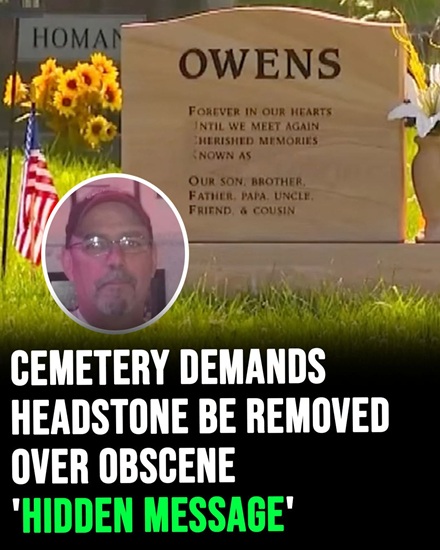
A small cemetery in Polk County, Iowa became the center of national attention after a grave marker sparked debate over the boundaries of humor, grief, and public respect in memorial design. The headstone belonged to Steven Paul Owens and appeared, at first glance, to be a standard tribute. The memorial at Warren-Powers Cemetery included typical identifying details such as his full name, birth information, and date of passing. It also contained a heartfelt inscription from his family, expressing love, remembrance, and his roles within the family as a son, father, brother, uncle, and grandfather.
At first reading, the message seemed like a conventional expression of grief and affection, written in a tone commonly found on family grave markers across the United States. However, observers later noticed something unusual about the structure of the inscription. The controversy emerged when it was discovered that the first letter of each line formed an acrostic message. When read vertically, the initials of the lines spelled out a profane phrase, which led to widespread discussion after it was noticed and shared online.
According to reporting from multiple media outlets, the hidden acrostic was intentionally designed by family members as a private joke reflecting the deceased man’s personality and sense of humor. The family described him as someone known for blunt speech and a strong, straightforward character. Relatives stated in interviews that Owens often used humor and even profanity in a familiar or affectionate way among friends and family. They explained that the inscription was meant to reflect both love and personality rather than to offend visitors to the cemetery.

Family members also said the idea for the hidden message came from within the extended family, and that multiple relatives agreed on the design before it was engraved. They believed it would serve as a personal tribute that captured his character in a unique way. Once the hidden message was discovered, it sparked concern among the local township authorities responsible for maintaining the cemetery. The Warren Township trustees stated that the wording was inappropriate for a public burial ground.
Officials argued that cemeteries should remain respectful spaces for all visitors, including families of other deceased individuals. They expressed concern that allowing hidden profanity could set a precedent for similar inscriptions in the future. The trustees also raised questions about whether families visiting nearby graves might feel uncomfortable or disrespected by the presence of offensive language, even if it was not immediately visible at first glance.
After reviewing the situation, township representatives reportedly considered possible actions, including requiring modification or removal of the headstone. They also sought legal guidance to determine what authority they had over privately purchased grave markers. The case drew broader attention after being covered by national news outlets, where it quickly became a topic of debate on social media. Many users discussed whether cemeteries should regulate artistic expression in memorials or prioritize uniform standards of decorum.

Supporters of the family’s decision argued that the headstone represented a deeply personal tribute and reflected the individuality of the deceased. They believed the hidden message was a form of private humor meant for those who truly knew him. They also emphasized that visitors are not required to interpret or even notice the acrostic, since it is not immediately visible unless the inscription is analyzed carefully. From their perspective, the memorial remains primarily a loving family tribute.
Critics, however, maintained that cemeteries are public spaces that require consistent standards, and that hidden profanity still affects the environment once discovered. They argued that memorials should avoid language that could be considered offensive under any interpretation.
Some officials involved in cemetery management noted that the issue was less about intent and more about long-term policy. They questioned how cemeteries could fairly enforce rules if exceptions were made for creative or concealed messaging. The debate also highlighted broader cultural differences in how people view grief, memory, and expression. In some interpretations, modern memorials increasingly reflect personal identity rather than strictly formal religious or traditional wording.
Despite the controversy, reports indicated that the headstone remained in place at the cemetery after the initial dispute, with no confirmed permanent removal at the time of the widely circulated coverage. Over time, the story continued to circulate online as an example of how personal tributes can intersect with public space regulations. It remains frequently referenced in discussions about freedom of expression in memorial design.
The family maintained that their intention was never to cause widespread offense or public outrage. Instead, they consistently stated that the inscription was designed as a reflection of personality, memory, and the humor the deceased was known for.
In interviews, family members also expressed frustration that a private tribute had become a public controversy. They argued that most visitors would never notice the hidden message unless it was deliberately pointed out. Cemetery officials, however, reiterated that their responsibility extends to all visitors and all gravesites under their care. They emphasized the importance of maintaining a respectful environment for grieving families.
As the discussion evolved, the case became symbolic of a larger question about where the line should be drawn between personal expression and community standards in shared memorial spaces. Ultimately, the story of the Owens headstone illustrates how even small design choices in memorials can lead to national debate, especially when humor, emotion, and public perception intersect in unexpected ways.
The case continues to be referenced in media discussions about cemetery rules, artistic freedom, and the evolving nature of how people choose to remember loved ones in modern society.
