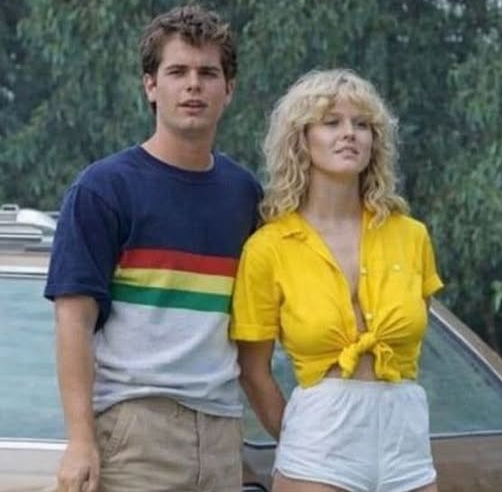
Evil Town is a low-budget American horror film often associated with the late 1980s, remembered more for its cult curiosity than for any mainstream cinematic success or major box office performance. Unlike major horror releases of its era, the film did not achieve widespread theatrical recognition or commercial impact. Instead, it gained limited attention through niche audiences, late-night television broadcasts, and home video circulation.
The story follows a group of travelers who encounter a seemingly quiet rural community that appears ordinary on the surface but gradually reveals unsettling secrets about its residents and their hidden activities. At first, the town is presented as calm and unremarkable, with slow pacing and an atmosphere that reflects typical small-town imagery often used in American horror cinema of that period.
As the narrative develops, the visitors begin to sense that something is deeply wrong beneath the surface of the community. The residents behave in unusual ways, and the environment feels increasingly isolated and controlled. The central concept of the film revolves around a fictional medical and scientific experiment conducted within the town, involving attempts to extend life through unethical and disturbing means.
This element of the story reflects a common theme in 1980s horror cinema, where fear of scientific overreach, medical experimentation, and loss of bodily autonomy were frequently explored in symbolic form. While the film presents these ideas in a horror framework, it does so with limited budget constraints, which results in practical effects and simplified storytelling rather than polished cinematic execution.
The production style of the film is characteristic of independent horror filmmaking from the era, relying heavily on atmosphere, location shooting, and dialogue-driven tension rather than advanced special effects. Because of these limitations, modern viewers often interpret the film differently, sometimes appreciating it as a time capsule of low-budget genre filmmaking rather than a refined horror experience.
The visual style reflects the aesthetic of its time, including natural outdoor locations, simple interior sets, and wardrobe choices consistent with late 1980s American fashion trends. Rather than relying on fast-paced editing or constant action, the film builds its tension through gradual revelation and a sense of unease that develops over time.
This slow-burn structure is typical of many independent horror films from the period, where pacing was often dictated by budget and storytelling style rather than commercial expectations. The residents of the town are portrayed in a way that emphasizes secrecy and emotional detachment, contributing to the growing sense that the environment itself is unsafe.
As the visitors investigate further, the narrative introduces the idea that the town is not merely a setting but a controlled environment where outsiders are not meant to remain for long. This concept of isolation plays a central role in the film’s atmosphere, reinforcing the idea that escape becomes increasingly difficult as the story progresses. Rather than presenting a single identifiable monster, the film focuses on the collective behavior of the community, creating a sense of systemic threat rather than individual danger.
This approach is often used in horror storytelling to emphasize psychological discomfort over physical confrontation, relying on implication rather than explicit depiction. Because of its limited budget and distribution, the film never reached a wide audience during its initial release period and remained largely unknown outside dedicated genre viewers.
Over time, however, it developed a small cult following among fans of obscure horror cinema who discovered it through television airings or early home video releases. This type of distribution was common for many independent horror films of the era, which often found second life through VHS circulation rather than theatrical success.
The film is sometimes discussed in retrospective reviews as an example of experimental or transitional horror filmmaking during a period when the genre was rapidly evolving. Its themes reflect broader cultural anxieties present in late twentieth-century horror, including fear of hidden corruption, medical ethics, and the vulnerability of outsiders in unfamiliar environments.
While interpretations vary, most modern analysis focuses on its atmosphere and concept rather than its technical execution or narrative complexity. The film does not rely heavily on graphic imagery by modern standards, instead using implication and mood to create discomfort within the viewer.
This style of horror often leaves more space for interpretation, allowing audiences to fill gaps with their own imagination, which can increase the psychological effect. However, it is also important to note that the film’s impact is largely limited to niche audiences, and it is not widely considered a major or influential work within mainstream horror history. Instead, it is better understood as a minor cult entry that reflects the creative experimentation and constraints of independent filmmaking during its production period.
In that context, it stands as an example of how low-budget cinema can still explore interesting ideas even when resources are limited. Today, Evil Town is mostly remembered by genre enthusiasts who study obscure horror films, rather than by general audiences.
Its legacy is less about widespread cultural impact and more about its place within the broader landscape of 1980s independent horror production. Ultimately, the film’s significance lies not in commercial success, but in how it represents a specific moment in genre filmmaking where atmosphere and concept often outweighed technical polish.
