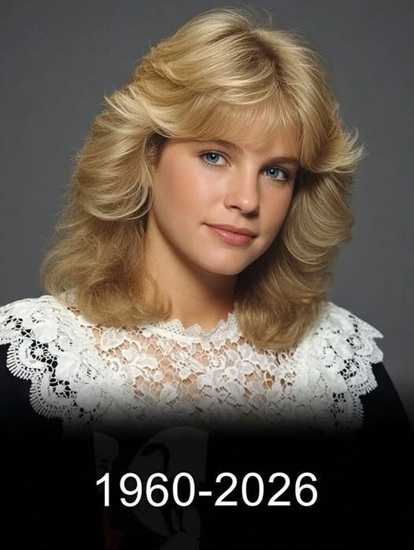
Jennifer Runyon emerged during the 1980s as part of a wave of young Hollywood talent entering the film and television industry at a time when the entertainment landscape was rapidly evolving. Her early screen presence stood out for its natural, understated quality, offering a contrast to the more exaggerated performance styles often associated with that era. She built her career steadily through television appearances and supporting roles in feature films, gradually gaining recognition among audiences and casting directors.
During this period, Hollywood was defined by intense competition, rapid fame cycles, and a growing celebrity culture fueled by expanding media coverage. Many rising actors found themselves navigating not only the demands of performance but also the increasing pressures of public visibility. Within this environment, Runyon developed a reputation for professionalism and consistency, often cast in roles that highlighted her approachable and relatable screen persona.
One of her most recognized early appearances came through television work and family-oriented film projects, which helped establish her as a familiar face to audiences in the 1980s. Her performances often leaned toward characters with warmth and sincerity, which contributed to her appeal in both comedic and dramatic settings. While she did not pursue aggressive stardom in the traditional sense, her steady presence allowed her to remain active in the industry during a highly competitive period.
As her career progressed, Runyon made a personal decision that would later define much of the public narrative around her life: she chose to step away from the momentum of Hollywood. Unlike many departures from the entertainment industry that are marked by controversy or professional decline, her transition was described as intentional and reflective. She gradually shifted her focus away from auditions, production schedules, and industry demands.
At the center of this transition was her desire to prioritize personal stability and family life. She later built a life with her husband, Todd Corman, and devoted significant attention to raising their children, Wyatt and Bayley. This shift represented a change in priorities rather than a rejection of her career, reflecting a broader decision to redefine success outside the boundaries of the entertainment industry.
In interviews over the years, Runyon has been associated with the idea that fame, while exciting, does not always align with long-term personal fulfillment. The entertainment industry often rewards visibility, but it also demands constant adaptation and exposure. For some performers, this balance becomes difficult to maintain, and Runyon’s story is often cited as an example of choosing a quieter but more stable path.
Her departure from acting did not erase her earlier work, which continued to circulate through television reruns and film retrospectives. Over time, audiences revisiting 1980s cinema began to reassess her performances with a sense of appreciation for their simplicity and authenticity. Rather than relying on heightened dramatics, her acting style reflected a grounded approach that resonated differently as cultural tastes evolved.
In retrospect, her career is often discussed within the broader context of Hollywood figures who chose to leave the industry at the height or early peak of their visibility. These decisions are frequently interpreted through multiple perspectives—some view them as missed opportunities, while others see them as acts of self-determination. In Runyon’s case, the latter interpretation has become more prominent in discussions about her life and career.
Her story also reflects a recurring theme in entertainment history: the tension between public success and private fulfillment. Many performers struggle with the demands of constant visibility, where personal identity can become intertwined with public perception. Runyon’s decision to step back is often framed as an effort to preserve that distinction and maintain control over her personal life.
Over the years, she has remained largely outside the center of Hollywood media attention, which has contributed to a sense of privacy around her post-acting life. This absence from public scrutiny has allowed her to maintain a life that is not defined by industry narratives or ongoing celebrity coverage. For many former actors, this transition can be challenging, but it also offers a level of stability that is difficult to achieve in entertainment careers.
When revisiting her body of work, critics and audiences often note the consistency of her screen presence during her active years. Even in supporting roles, she demonstrated a reliability that made her a valuable part of ensemble casts. While she did not pursue the trajectory of a high-profile leading star, her contributions remain part of the broader fabric of 1980s film and television culture.
Her legacy is therefore not defined by sustained fame, but by the clarity of her choice to step away. In an industry that often equates longevity with success, her path represents an alternative narrative—one where success is measured not only by visibility, but by personal contentment and autonomy. This perspective has gained more relevance in modern discussions about work-life balance in creative industries.
Today, Jennifer Runyon is often referenced as an example of someone who left Hollywood on her own terms and built a life outside its structure. Her story continues to resonate with audiences who are interested in the human side of entertainment careers, where decisions are not always driven by ambition alone, but also by personal values and long-term priorities.
Ultimately, her journey highlights a broader truth about fame and artistic work: visibility is temporary, but the life built beyond it defines lasting fulfillment. While her time in Hollywood remains part of her public identity, the choice to step away has become equally central to how her story is understood and remembered.
