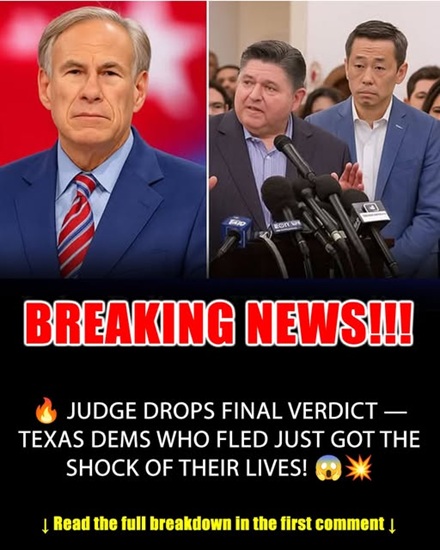
A major political standoff in the Texas Legislature has drawn significant public attention, centered around the absence of several lawmakers who left the state during a dispute over voting legislation. The situation has unfolded in the Texas House of Representatives, where quorum requirements must be met in order for official legislative business to proceed. Without enough members present, votes on key bills cannot move forward. The lawmakers who left the state did so as part of a coordinated effort to prevent a vote on contested legislation.
This type of action is known in U.S. politics as a “quorum break,” a procedural tactic sometimes used when minority party members want to delay or block the passage of legislation. By leaving the state, the absent members made it temporarily impossible for the chamber to reach the required number of lawmakers needed to conduct business. In response, the Texas House leadership and state officials took steps to enforce attendance requirements.
According to reporting on the situation, lawmakers who are absent may face financial penalties established under House rules, which can include daily fines for each day a member is not present when a quorum is required. These measures are intended to encourage attendance and restore legislative functionality. The enforcement of these rules has led to widespread debate.
Supporters of the penalties argue that elected officials have a duty to represent their constituents by participating in legislative sessions. From this perspective, absence during a critical voting period is viewed as a failure to fulfill official responsibilities, and penalties are seen as a procedural consequence rather than a political punishment.
Under this interpretation, financial penalties are considered part of the legislative framework designed to maintain order and ensure the functioning of government operations. Supporters emphasize that the Texas House cannot operate effectively if members routinely leave during critical votes, and therefore rules exist to discourage prolonged absence.
On the other hand, critics of the penalties argue that strict enforcement of fines during a political protest raises concerns about the balance between legislative authority and political dissent. They suggest that while quorum rules are legally established, the use of financial penalties during politically charged disputes may increase tensions between opposing parties.
The lawmakers who left the state have stated that their intention was to block or delay legislation they strongly oppose. Their actions reflect a long-standing political strategy used in various state legislatures across the United States. In past instances, quorum breaks have been used as a last-resort tactic when minority parties believe their participation in the voting process would not be sufficient to influence the outcome.
As the situation continues, the financial penalties associated with absences have become part of the broader discussion. Reports indicate that fines may accumulate on a daily basis for lawmakers who remain absent from the state legislature while a quorum is required. This has added urgency to the political standoff, increasing pressure on both sides to reach a resolution.
However, it is important to note that the enforcement of such penalties is based on legislative rules and procedures, not personal actions outside the legal framework. Lawmakers are subject to the internal governance structure of the Texas House, which establishes expectations for attendance and participation during official sessions.
Public reaction to the situation has been divided, reflecting broader national political polarization. Some members of the public view the quorum break as a legitimate form of protest within the legislative system, while others see it as disruptive to governance and legislative responsibility. Social media discussions have further amplified these differing perspectives.
Political analysts have noted that quorum breaks, while rare, are not unprecedented in Texas or other states. They are generally used in high-stakes legislative disputes where one party seeks to delay a vote by temporarily denying the legislature the required number of members to proceed. Once the absent lawmakers return, legislative activity typically resumes.
At the same time, the situation has drawn attention to the broader question of how legislative bodies balance procedural rules with political disagreement. While rules ensure that government functions can continue, they also create structured consequences when those rules are not followed, including potential financial or procedural penalties.
As the standoff continues, both sides remain firm in their positions. The absent lawmakers have maintained their stance regarding the legislation they oppose, while legislative leadership continues to emphasize the importance of returning to the chamber to restore full operations.
The situation remains ongoing, and its outcome will likely depend on negotiations, political pressure, and the willingness of lawmakers to return and resume participation in legislative proceedings. Until then, the Texas House remains at the center of a high-profile political dispute that reflects broader tensions in state and national governance.
In summary, the situation involves a procedural quorum break, legislative enforcement of attendance rules, and a political disagreement over voting legislation. While interpretations of the events differ widely, the underlying facts center on legislative procedure, enforcement of House rules, and an ongoing dispute over participation in the lawmaking process.
