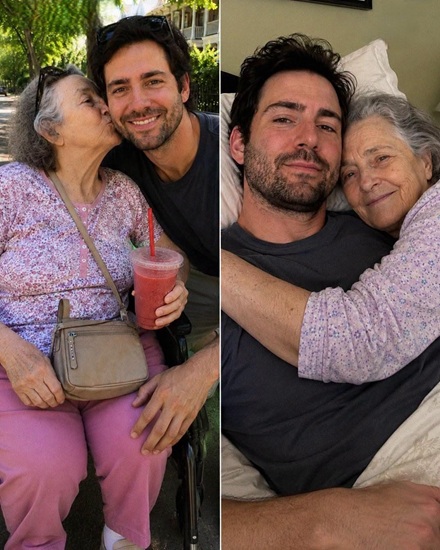
For years, Sam had lived a quiet and predictable life in a modest house across the street from an elderly woman named Susan. He was thirty-one, single, worked primarily from home, and generally kept to himself. Susan was seventy-six and had lived in the neighborhood much longer than he had. Their relationship had never been particularly dramatic, but they gradually became friendly through small everyday encounters. She waved whenever Sam collected his mail, occasionally brought him homemade muffins, and sometimes stopped to talk when they were both outside.
Neither of them could have imagined how important that simple friendship would eventually become. Susan had always seemed independent despite her age. She maintained her own home, prepared her meals, and insisted that she did not require anyone to look after her. Sam occasionally offered assistance with groceries or minor household tasks, but she usually responded with a joke and said she could manage. Her relatives lived elsewhere, and Sam rarely saw anyone visiting the house.
He knew Susan had family, although he did not know much about their relationships. Because she never complained openly about being lonely, he respected her privacy and assumed she preferred living independently. Then one morning, Sam noticed something unusual. Susan’s curtains remained closed long after they would normally have been opened.
At first, he told himself there was probably a harmless explanation. Perhaps she was sleeping late, had gone somewhere with a friend, or simply wanted a quiet morning. By the afternoon, however, nothing had changed. Her newspaper remained outside, and the house appeared completely still. A growing sense of concern eventually persuaded Sam to cross the street and knock on her door.
There was no immediate answer. Sam waited and knocked again, this time calling Susan’s name loudly enough that she could hear him from inside. Several moments passed before he detected the faint sound of movement. Eventually, the door opened only a few inches. Susan stood behind it wearing a robe that appeared much too large for her suddenly fragile frame. Her face looked pale, and simply remaining upright seemed to require considerable effort. She attempted to joke about her appearance, but Sam could immediately see that something was seriously wrong.
He helped her to a chair and asked when she had last seen a doctor. Susan tried to dismiss his concern, saying she had simply been tired and would recover with rest. Sam did not want to frighten her, but he also did not feel comfortable leaving her alone in that condition. After several conversations, medical appointments were arranged in this fictional story. The news was difficult. Susan’s health had deteriorated significantly, and she now required considerably more assistance than she had been willing to admit.
The following days changed Sam’s routine completely. He began checking on Susan several times each day, bringing groceries and making sure she had meals available. He helped organize medication schedules and stayed nearby when she struggled to walk safely. Susan disliked needing assistance and frequently apologized for taking his time. Sam repeatedly told her that she had nothing to apologize for. Yet each time he returned to his own home at night, one thought troubled him: Susan was still spending hours alone while increasingly weak.
Eventually, he asked whether someone from her family could come and stay with her. Susan’s reaction was noticeably uncomfortable. She said her relatives had busy lives and lived far away. When Sam asked whether he should contact them, she avoided giving him numbers and insisted that she did not want to become a burden. He could hear both pride and sadness in her voice. The situation reminded him of something from his own past that he had spent years trying not to think about.
Sam’s mother had raised him and his siblings after their father left when they were young. She worked long hours, rarely complained, and spent much of her life making sure her children had opportunities she had never enjoyed herself. As the children grew older, they moved away, built careers, and created lives of their own. Sam called his mother regularly, but distance made it easy to accept her repeated assurance that everything was fine. When her health later declined, she hid the seriousness of the situation for longer than her children realized.
By the time Sam understood how much help his mother had actually needed, their remaining time together was painfully short. After she died, he carried a persistent sense of guilt. Rationally, he knew his mother had intentionally hidden some of her struggles because she did not want her children to worry. Emotionally, however, he could not stop wondering whether he should have noticed more. He replayed old conversations and imagined the questions he should have asked. That regret returned every time he looked across the street at Susan sitting alone.
One afternoon, Sam finally made an unexpected suggestion. He had a spare bedroom in his house, and because he worked from home, he could remain nearby during the day. He told Susan she could temporarily stay with him instead of trying to manage alone. Susan immediately refused. She did not want neighbors misunderstanding the arrangement, and she did not want Sam sacrificing his life to care for her. Sam listened and then explained why he had made the offer.
He told her about his mother and the regret he still carried. He explained that seeing Susan insist she could manage reminded him of the same words his mother had used. Sam did not present himself as a medical professional or promise to replace professional care. His offer was simply about companionship and practical assistance while appropriate medical support continued. Susan remained silent for a long time. Eventually, she agreed to move into the spare room for a while.
Within days, Sam’s previously quiet house looked completely different. Medicine bottles appeared beside the kitchen sink. Extra blankets were folded near Susan’s room. Grocery lists included foods that were easier for her to eat, and alarms reminded Sam when certain routines needed attention. He learned that caregiving involved countless small responsibilities that people rarely notice from the outside. Some nights were peaceful, while others involved frequent interruptions because Susan was uncomfortable, anxious, or simply unable to sleep.
Sam never considered himself heroic. In fact, he frequently worried that he was doing something incorrectly. He asked questions when professional advice was necessary and tried to respect Susan’s independence whenever possible. If she could safely make a decision for herself, he wanted her to make it. He understood that helping someone did not mean taking control of that person’s life. Susan’s home, finances, personal decisions, and family relationships remained her own.
The arrangement continued quietly until one of Susan’s relatives learned what had happened. Her nephew Greg arrived at Sam’s house accompanied by other family members. They were shocked to discover Susan staying in the home of a thirty-one-year-old neighbor they barely knew. From their perspective, the situation immediately looked suspicious. They questioned why Sam had moved an elderly and seriously ill woman into his house and why the family had not been contacted sooner. Their fear quickly turned into accusation.
Greg suggested that Sam might be interested in Susan’s property or savings. Another relative questioned whether Susan truly understood the arrangement she had agreed to. Rumors began moving through the fictional neighborhood, becoming more dramatic each time they were repeated. One person claimed Susan had already changed her will. Someone else suggested that Sam had convinced her to transfer ownership of her house. None of those claims were established within the story, but rumors rarely wait for evidence before spreading.
Sam was angry, but he understood why the situation looked concerning from the outside. Elder financial exploitation is a serious issue, and families have legitimate reasons to ask questions when an older vulnerable relative suddenly begins living with someone they hardly know. Instead of treating every question as a personal insult, Sam tried to explain that Susan had asked to remain with him and that he had not requested control of her finances or property. He also insisted that Susan herself should be included in any conversation about where she wanted to stay.
Susan’s relatives had another perspective. Some felt guilty because they had allowed years to pass without maintaining consistent contact. Others became defensive when Sam mentioned how rarely anyone had visited. Their anger was therefore mixed with embarrassment, fear, and regret. Sam gradually realized that arguing about who had failed Susan would accomplish very little while she was still lying in the next room. The person most affected by the conflict was the person everyone needed to listen to.
Susan eventually spoke clearly about her wishes within this fictional narrative. She explained that Sam had not forced her to leave her home. She had agreed because she had become frightened of spending nights alone while her health worsened. She also made it clear that no one had been promised her property. What she wanted was companionship and dignity, not another argument happening around her as though she were incapable of understanding her own life.
That conversation changed the tone in the house. Greg was still uncomfortable with the arrangement, but he began asking questions instead of making accusations. Susan’s relatives gradually learned what the previous weeks had actually involved: preparing meals, attending appointments, helping with mobility, organizing practical necessities, and sitting beside Susan during periods when she was frightened. None of those details erased the family’s concern, but they challenged the assumption that Sam’s motives were automatically suspicious.
There was still one part of Sam and Susan’s routine that nobody understood. Every evening at approximately nine o’clock, Sam pulled a wooden chair beside Susan’s bed and remained there for a while. Sometimes they spoke for fifteen minutes. Other nights, the conversation continued much longer. Susan’s relatives noticed the ritual but initially gave them privacy. What they did not know was that Sam had been repeating almost the same painful confession every night.
“I should have been there for my mother,” he would tell Susan.
Sometimes he used slightly different words. He might say that he should have called more often or should have recognized what his mother’s repeated “I’m fine” actually meant. On difficult evenings, he remembered specific birthdays or holidays he had missed. Susan rarely interrupted. She simply listened until Sam had finished saying whatever memory had returned that night.
It might have seemed strange that the caregiver was confessing his pain to the person he was supposed to be comforting. Yet Susan seemed to understand that the conversations helped both of them. She was frightened about her declining health, and Sam was living with grief he had never fully processed. Neither could change the past. What they could do was provide another human being with the companionship they themselves had once needed.
One evening, Susan asked Sam to open a small box she had asked him to bring from her house. Inside were several old envelopes. Sam initially assumed they belonged to Susan’s family. Then he saw his mother’s name. The discovery left him confused. He asked how Susan could possibly have letters connected to a woman he had never known was part of her life.
Susan explained that she and Sam’s mother had known each other years earlier. Their friendship had continued through letters and occasional conversations even after life moved them in different directions. Sam’s mother had spoken frequently about her children and had been proud of what they were building for themselves. Susan had never mentioned the friendship because she believed it was not her story to tell unless circumstances eventually made it necessary.
Sam struggled to understand why his mother had never told him. Susan carefully explained that there had been no great secret or conspiracy. Adults sometimes have friendships their children know little about. Their conversations had included ordinary subjects: children, aging, fear, loneliness, and the difficulty parents sometimes experience when they do not want to become burdens on their grown children.
One letter was particularly important to Sam. In the fictional story, his mother had written about how proud she was that her children had become independent. She acknowledged that Sam worried about her, but she did not want him abandoning his own life simply because she was getting older. Her words did not erase Sam’s regret. They did, however, challenge the belief he had carried for years that his mother must have died believing he did not care enough.
Sam cried while reading the letter. Susan quietly held his hand. The message did not magically eliminate grief, because grief rarely disappears because of one conversation. But it gave him information he had never possessed. His mother had understood that he loved her. She had intentionally hidden some of her struggles because she believed she was protecting her children. Whether that decision had been ideal no longer mattered. It explained why Sam had failed to recognize everything happening at the time.
For the first time, Susan understood exactly why Sam had been so determined not to leave her alone. Helping her had partly become his attempt to repair something that could no longer be repaired with his mother. Susan did not criticize him for that. Instead, she reminded him that she was not his mother and that he did not need to punish himself through caregiving. If he was going to help her, she wanted it to come from friendship rather than guilt.
That conversation changed Sam as much as the letter did. He began understanding that compassion and self-punishment could sometimes look similar from the outside while feeling completely different internally. Caring for Susan could not rewrite his past. It could only become something meaningful in the present. He stopped treating every difficult night as repayment for something he believed he had failed to do years earlier.
Susan’s family also began changing their behavior. Rather than appearing only to argue about where she should live, they started spending time with her. Greg brought tea and sat beside her bed. Another relative helped organize clean clothes and personal belongings. Someone else prepared food Susan remembered from earlier family gatherings. Their involvement was imperfect and initially awkward, but Susan appreciated the effort.
She eventually told them something none of them forgot.
“If you have time to worry about what happens after I’m gone,” she said, “you have time to sit with me while I’m still here.”
The words were not intended as punishment. Susan did not want her relatives spending her remaining time apologizing endlessly for the years they had lost. She wanted their presence. Regret could be discussed later. What mattered immediately was that people who loved one another had finally stopped arguing long enough to share the same room.
That evening, the atmosphere in Sam’s house felt noticeably different. The accusations had quieted. The family had not solved every disagreement, and trust had not been completely restored, but people were finally speaking directly instead of through assumptions and rumors. For the first time in weeks, Susan did not appear to feel as though she was the cause of a conflict she had never wanted.
At approximately nine o’clock, Sam entered her room as usual. The wooden chair was still beside the bed. Susan’s family remained in the kitchen, quietly allowing the two neighbors their familiar conversation. Sam sat down but realized he did not know what to say. For weeks, he had begun almost every evening with some version of the same confession.
Susan looked at him and smiled.
“Well?” she asked.
Sam glanced toward his mother’s letter.
“I don’t know what I’m supposed to apologize for tonight.”
Susan’s smile widened.
“That sounds like progress.”
They sat quietly for a while. Eventually, Sam asked Susan why she had agreed to stay with him when she had initially resisted so strongly. He wondered whether knowing his mother had influenced her decision. Susan acknowledged that it had been part of the reason. She knew something about the grief Sam carried and suspected helping her might give him an opportunity to understand it differently.
But that was not the complete answer.
Susan looked toward the darkened window and admitted something she had been reluctant to say.
“I was afraid.”
Her voice was almost a whisper.
She had spent so much time insisting that she could manage alone because acknowledging fear felt like surrendering independence. The nights had become especially difficult as her health declined. Every unusual sound frightened her. Getting from one room to another sometimes required more energy than she had. She worried that something might happen and nobody would realize until much later.
Sam finally understood that Susan had not accepted his invitation merely because she felt sorry for him.
She needed someone too.
Their arrangement had never been one person rescuing another.
Both had arrived in the same house carrying different forms of loneliness.
Sam reached toward her hand.
“You don’t have to be alone tonight,” he said.
From the kitchen came the faint sound of conversation. Susan’s relatives were still there. Greg was talking quietly with another family member. Someone was washing dishes. The ordinary sounds filled the house in a way that Sam found unexpectedly comforting.
For years, his home had been almost painfully silent.
Now it contained people trying to repair relationships while there was still time.
Sam looked at the letter from his mother again. Then, instead of repeating his usual confession, he said something new.
“My mother knew I loved her.”
Susan squeezed his hand.
“Yes,” she replied.
The statement was simple, but for Sam it represented years of emotional weight beginning to shift. He could acknowledge that he wished he had done certain things differently without turning those wishes into proof that he had been an uncaring son. Regret and love could exist at the same time. Human relationships were rarely as simple as guilt wanted them to appear.
Susan’s relatives eventually learned about the nightly conversations as well. They understood that Sam had not been whispering about money, property, or secret plans. He had been talking about his mother. The elderly neighbor he was caring for had quietly been helping him confront unresolved grief while he helped her confront loneliness and declining independence.
Several family members became emotional when they heard the complete explanation. Their reaction was not because every earlier concern had been foolish. Asking questions about the welfare of a vulnerable elderly relative had been reasonable. The mistake had been moving from concern to certainty without first listening to Susan herself.
Greg later apologized for accusing Sam of motives he could not prove.
Sam did not demand a dramatic apology.
He simply told Greg that Susan deserved the most important one.
Greg went to her room and tried to explain how sorry he was for allowing so much time to pass without visiting more often. Susan stopped him before he could finish a long speech.
She did not want the remaining days of their relationship consumed entirely by guilt.
“Sit down,” she told him.
So he did.
That became the pattern that followed.
People began sitting down.
They asked Susan questions about her childhood.
They listened to stories they had heard before and pretended not to notice when she repeated herself.
They looked through old photographs.
They brought food.
They talked about family members who had died and others who had moved away.
Sometimes they laughed.
Sometimes they cried.
There was no dramatic transformation that made everyone perfect.
Old family tensions still occasionally surfaced.
Someone would become irritated.
Another person would misunderstand a comment.
But they were gradually learning to ask questions before allowing assumptions to control the conversation.
Susan’s situation became a reminder of how easily people can focus on future consequences while overlooking the person living directly in front of them.
Her family had initially arrived worried about her house, her finances, her medical decisions, and the stranger caring for her.
Those concerns were understandable.
But Susan wanted something much simpler.
She wanted people she loved to spend time with her.
Sam also learned that good intentions do not remove the need for appropriate boundaries. Helping an elderly neighbor should never mean secretly taking over financial decisions or isolating someone from relatives. When health or caregiving needs become complex, professional medical, social-service, or legal guidance may be appropriate. Compassion is strongest when it respects the other person’s autonomy rather than replacing it.
Within this fictional story, Susan remained able to express her wishes clearly. That made her voice central to decisions about where she wanted to stay and whom she wanted around her. Sam did not need to speak for her when she could speak for herself. Her family gradually understood this too.
The experience challenged everyone’s original assumptions.
Susan’s relatives had initially seen a young bachelor caring for a vulnerable older woman and imagined possible exploitation.
Sam initially saw Susan’s relatives as people who simply did not care.
Susan saw herself as a burden nobody should have to carry.
Each interpretation contained incomplete information.
The truth was more complicated.
The family had allowed distance and busy lives to weaken their relationship with Susan, but that did not necessarily mean they felt nothing for her.
Sam genuinely wanted to help, but part of his motivation came from unresolved grief.
Susan valued her independence, but she was also deeply afraid of being alone.
Once those realities were openly acknowledged, people no longer needed to defend simplified versions of themselves.
That honesty created room for better decisions.
The final lesson was not that strangers should automatically take vulnerable neighbors into their homes or that families should never question unusual caregiving arrangements.
Every real situation is different and can involve important medical, legal, and safety considerations.
The lesson of this fictional narrative is more modest.
Ask questions before making accusations.
Listen to the person whose life is being discussed.
Separate evidence from rumor.
And remember that emotional pain can influence people’s actions in ways that are not immediately visible.
Sam believed he was giving Susan companionship.
Susan believed she was allowing Sam to understand something about his mother.
Her family believed they were protecting her.
Eventually, all of them realized that care required more than intention.
It required listening.
One night, long after the initial confrontation had passed, Sam returned to the wooden chair beside Susan’s bed.
He no longer treated it as a place where he needed to confess his failures.
Instead, it had become simply a chair beside someone he cared about.
Susan looked toward him.
“No apology tonight?” she asked.
Sam shook his head.
“Not tonight.”
“What are you going to say instead?”
He thought for a moment.
Then he smiled.
“I’m glad you’re here.”
Susan smiled back.
“So am I.”
And somewhere beyond the bedroom door, members of her family were talking together in the kitchen.
Nobody was arguing about houses.
Nobody was discussing inheritance.
Nobody was trying to prove who had been right from the beginning.
For that evening, at least, they were simply present.
Sometimes that is the part people realize too late.
Love can be sincere even when people make mistakes.
Regret can teach something without becoming a lifelong punishment.
And when time becomes uncertain, showing up may matter more than finding the perfect words.
For Sam, the sentence he had whispered every night gradually changed from “I should have been there” to something much gentler.
“My mother knew I loved her.”
For Susan, the words she needed were equally simple.
“You are not alone.”
Neither statement could erase the past.
But both could change what happened next.
That was ultimately what transformed the relationship between a thirty-one-year-old man and his seventy-six-year-old neighbor in this fictional story.
He opened his home because he could not bear the thought of someone facing illness completely alone.
She accepted because independence had finally become less important than admitting she was frightened.
And through the quiet conversations that followed, both discovered that helping another person does not always move in one direction.
Sometimes the caregiver is also being cared for.
Sometimes the person who appears vulnerable possesses exactly the wisdom someone else desperately needs.
And sometimes the most meaningful thing anyone can whisper at the end of a difficult day is not a dramatic secret at all.
It is simply the reassurance that love was understood, that forgiveness is possible, and that nobody in the room has to face the night alone.
