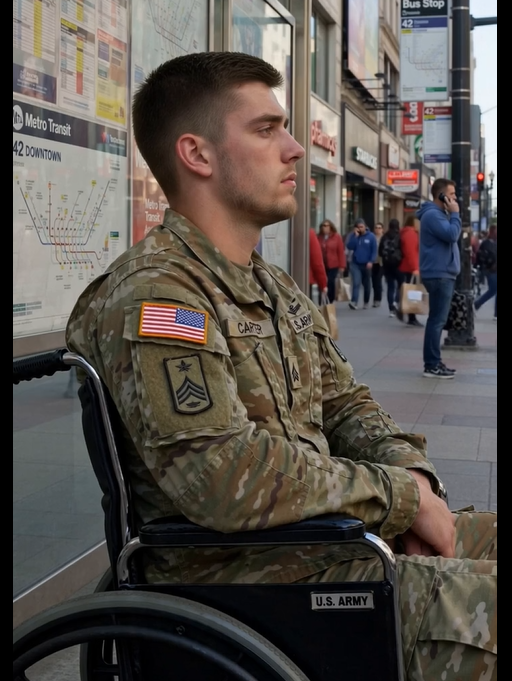
A seemingly ordinary moment at a public bus stop becomes a meaningful reminder of kindness, patience, and consideration for others in a video showing a bus driver helping a man who uses a wheelchair.
The footage begins with the man waiting beside the road, positioned near a public transportation stop as buses and pedestrians move through the surrounding area.
He is wearing a military-style camouflage uniform and sitting in his wheelchair, apparently waiting for an opportunity to board a bus. At first, nothing about the scene appears particularly unusual, as people continue their daily routines around him.
However, the arrival of a public bus soon creates an opportunity for a thoughtful interaction that becomes the central moment of the recording. The man remains seated in his wheelchair as the bus approaches the stop and comes to a halt nearby.
The vehicle is equipped with an accessibility entrance designed to make boarding easier for passengers who cannot use the regular steps. From the beginning, the situation highlights an important aspect of public transportation: buses should be accessible to people with different mobility needs.
For someone using a wheelchair, getting onto a vehicle can require additional assistance and equipment that other passengers may not need.
What might seem like a simple journey for one person can involve several additional steps for another, making accessible transportation an essential part of everyday independence. As the bus stops, the man appears to communicate with the driver while remaining beside the vehicle.
The interaction develops naturally, with the driver paying attention to the passenger rather than simply continuing with the usual boarding process. The footage shows the driver looking toward the man and responding to the situation.
Although the exact words exchanged between them cannot be independently established from the visual recording, their interaction appears calm and respectful. It is a small detail, but it helps establish the atmosphere of the encounter and shows how important communication can be when assisting someone who needs additional support.
The man continues waiting beside the bus as the driver becomes more directly involved. Instead of leaving the passenger to manage the situation alone, the driver takes the time to come outside and approach him.
This moment is particularly important because offering assistance begins with recognizing that another person may need it. People with mobility limitations often encounter situations in which ordinary public spaces and transportation systems present additional challenges.
A thoughtful response from someone working in public service can make those situations easier to manage. In this recording, the driver’s decision to step outside becomes the beginning of a practical effort to help the passenger board.
When the driver reaches the man, the two exchange a handshake. It is a simple gesture, but it gives the encounter a personal and respectful dimension.
The handshake takes place beside the bus, with the man remaining comfortably seated in his wheelchair. Their interaction appears friendly, and the driver stays close enough to continue assisting him.
The footage does not establish whether the two individuals have met previously, so there is no reason to assume that they know each other. Nevertheless, the exchange demonstrates how ordinary gestures of courtesy can help create a welcoming atmosphere between people who may be meeting for the first time.
The man wearing the camouflage uniform remains the focus of the scene as the driver prepares the next step. The side entrance of the bus is visible, including the accessibility markings that indicate the vehicle is designed to accommodate passengers with wheelchairs.
These features are especially important because traditional bus steps can make boarding difficult or impossible for some passengers. An accessible entrance provides an alternative route and helps reduce the physical barriers associated with public transportation. When these facilities are properly used, they allow passengers with different mobility requirements to travel with greater convenience and dignity.
The driver then turns his attention toward the accessibility equipment. The footage shows a special platform being lowered from the entrance of the bus, creating a surface that connects the pavement to the vehicle. This type of equipment is commonly used on accessible buses to help wheelchair users enter without having to lift the wheelchair over the regular steps.
The platform provides a more practical route for boarding, although it still requires care and attention during the process. In the recording, the driver takes the necessary steps to prepare the entrance before the wheelchair is guided toward it.
Once the platform is in position, the wheelchair is brought closer to the entrance. The driver remains beside the passenger, helping guide the process as the wheelchair approaches the lowered ramp. This part of the encounter illustrates why accessible transportation equipment is so valuable.
Without a suitable ramp or lifting system, boarding a conventional bus could present a significant obstacle for someone who cannot use stairs. The presence of the platform changes the situation by providing a more accessible way to enter the vehicle. It also demonstrates that accessibility depends not only on having the right equipment but also on ensuring that it is available and used appropriately.
The man gradually moves toward the bus entrance with the help provided during the process. The driver stays close, monitoring the wheelchair as it reaches the platform. The movement is handled carefully, with attention directed toward the entrance and the space available inside the vehicle.
These details may appear routine to someone who regularly uses accessible transportation, but they represent an important part of making public services usable by everyone. A properly positioned wheelchair, a secure boarding surface, and assistance when needed can all contribute to a more manageable journey.
As the wheelchair reaches the ramp, the driver continues assisting the passenger. The footage shows him walking alongside the chair and helping guide it toward the bus interior. This is the moment when the earlier interaction at the roadside turns into practical assistance. The driver has not simply acknowledged the passenger or offered a friendly greeting; he has also helped make the next stage of the journey possible. His involvement shows how small responsibilities within an ordinary working day can have a meaningful impact on another person’s experience.
The camera captures the wheelchair moving along the accessibility platform and toward the open entrance. The bus interior becomes visible as the passenger approaches the doorway. The driver remains close throughout the process, helping ensure that the wheelchair can pass through the entrance. It is a reminder that accessibility is not limited to installing equipment. The people operating public transportation also play an important role in making sure that passengers can use those facilities when they need them. A well-designed bus becomes much more useful when its accessibility features are supported by attentive and considerate service.
The passenger eventually reaches the entrance and begins moving inside the vehicle. The driver stays beside him, continuing to assist as the wheelchair crosses the platform. This final stage requires particular attention because the entrance connects two different surfaces and spaces. A careful approach helps make the transition more manageable for the passenger. The recording ends with the wheelchair entering the bus, showing the practical result of the driver’s assistance. Although the video does not provide information about the man’s destination or what happened after boarding, it documents the process of helping him access the vehicle.
There is another important aspect of this scene that deserves attention: the role of public transportation in supporting independent mobility. Buses are used every day by people going to work, attending appointments, visiting relatives, studying, and completing ordinary tasks. For many passengers, boarding is a quick and familiar process. For wheelchair users, however, the same journey can involve checking accessibility arrangements, waiting for suitable equipment, and sometimes requesting assistance from staff. These additional steps make reliable accessible services particularly important for ensuring that everyone has a fair opportunity to travel.
The encounter also highlights the value of treating passengers with dignity. Assistance should never mean taking away someone’s independence or making unnecessary assumptions about what they can do. A respectful approach involves communicating with the person, allowing them to participate in the process, and providing support where it is needed. The handshake between the driver and the passenger, followed by the practical assistance shown in the recording, creates an example of an interaction that appears considerate rather than rushed. The passenger remains part of the process, while the driver helps with the equipment and boarding arrangements.
For people who rely on wheelchairs, seemingly small details can make a considerable difference during a journey. The availability of ramps, sufficient space inside vehicles, accessible entrances, and trained transportation staff can help reduce common travel difficulties. These features are not simply additional conveniences; they are important elements of an inclusive public transportation system. When they function properly, passengers with mobility limitations can access services more easily and participate in everyday activities. The footage provides a visual example of one such accessibility feature being used during a real-time boarding interaction, although the broader circumstances of the recording cannot be independently verified.
It is also worth recognizing that the driver is performing an important responsibility associated with accessible public transportation. Operating a bus involves more than following a route and stopping at designated locations. Drivers regularly interact with passengers who have different needs, and some situations require additional time and attention. Helping someone use an accessibility ramp is one example of how transportation staff can contribute to a safer and more welcoming experience. The driver’s actions in the video show the practical side of this responsibility, as he leaves his driving position, approaches the passenger, and assists with the boarding process.
The military-style uniform worn by the passenger is another visible detail that may attract viewers’ attention. However, clothing alone cannot establish someone’s military history, personal circumstances, or the reason they use a wheelchair. It would be inaccurate to claim that the man was injured during military service or that he was returning from a particular deployment without reliable information confirming those details. What the recording does establish visually is that he is wearing camouflage clothing and using a wheelchair while waiting to board the bus. Keeping the description focused on these observable details helps preserve the accuracy of the story and avoids adding assumptions about his personal life.
The scene also offers an opportunity to consider how public spaces can become more inclusive. A transportation system serves people with different physical abilities, ages, and daily requirements. Designing buses with accessible entrances is one part of the solution, but the surrounding infrastructure matters as well. Sidewalks, bus stops, pedestrian crossings, and boarding areas should ideally be designed so that passengers using wheelchairs can reach vehicles without unnecessary obstacles. When these elements work together, traveling becomes more convenient and less dependent on unexpected assistance from strangers.
The interaction shown in the video is a useful reminder that consideration for others does not always require a complicated action. Sometimes it involves recognizing a practical difficulty and taking reasonable steps to help. In this case, the driver approaches the passenger, communicates with him, prepares the accessibility platform, and assists as the wheelchair enters the bus. Each step contributes to the same objective: allowing the passenger to board the vehicle. The sequence is straightforward, but it demonstrates why patience and awareness are valuable qualities in public-facing professions.
Another important point is that accessibility benefits society as a whole. Families, older passengers, people recovering from injuries, and individuals with temporary or permanent mobility limitations can all benefit from transportation systems that are designed with different needs in mind. A ramp that helps one passenger today may also make boarding easier for someone else tomorrow. Accessible vehicles therefore serve a much wider purpose than simply accommodating one individual. They help create a transportation environment in which more people can travel without facing avoidable barriers.
The driver and passenger eventually move beyond their initial interaction at the roadside, with the wheelchair entering the bus through the designated access point. This brings the central moment of the recording to a close. There are no confirmed details about the passenger’s identity, destination, or personal background, and the footage does not show what happens during the remainder of the journey. Nevertheless, the visible sequence provides a clear example of how accessible equipment and practical assistance can work together. It also gives viewers an opportunity to reflect on the everyday actions that make public services more welcoming.
Ultimately, the most meaningful part of this encounter is not the fact that a bus stopped at a station or that a passenger boarded a vehicle. It is the attention given to someone who needed an accessible way to enter the bus. The driver took the time to approach, acknowledge, and assist the passenger rather than treating the situation as an inconvenience. The wheelchair was guided toward the lowered platform, and the boarding process continued with the driver’s support. It is a simple interaction, but one that highlights the importance of respect, patience, and accessibility in everyday life.
The video leaves viewers with a valuable reminder: a community becomes more inclusive when people recognize different needs and respond with consideration. Accessible transportation equipment makes an important difference, but respectful human interaction remains equally valuable. A person using a wheelchair should be able to approach public transportation with the expectation that suitable facilities will be available and that assistance can be provided when necessary. The driver’s actions shown in the footage illustrate how a small amount of time and attention can help make that experience more positive. Sometimes, the most meaningful gestures are the practical ones that allow another person to continue their day with greater ease and dignity.
