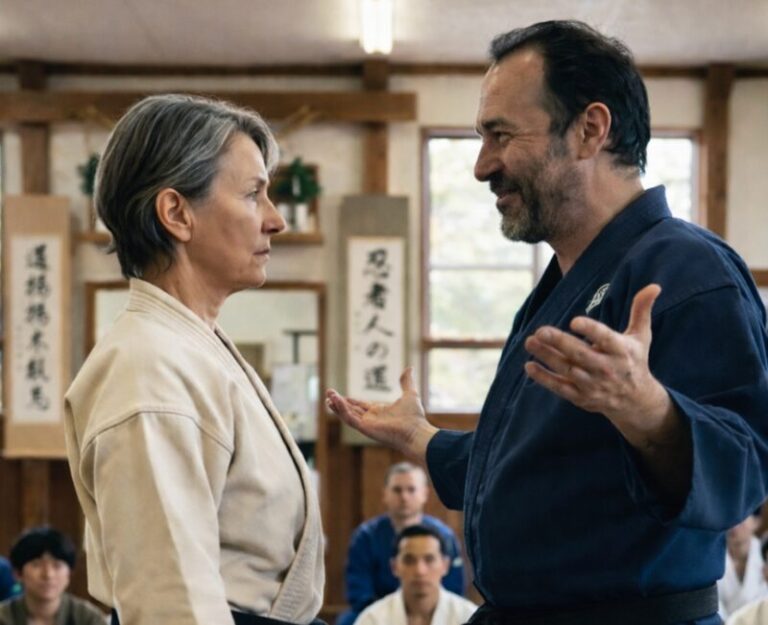
In recent years, martial arts schools around the world have seen a steady increase in older adults joining structured training programs. Disciplines such as judo, karate, and Brazilian jiu-jitsu are no longer viewed as activities exclusively for younger athletes. Instead, they are increasingly recognized as forms of lifelong physical education that support mobility, balance, and mental well-being. Many practitioners begin training later in life after retirement, personal loss, or lifestyle changes.
Medical professionals often recommend low-impact but structured physical activity for older adults, especially to maintain joint health, flexibility, and cardiovascular function. As a result, martial arts have become a practical and engaging option for healthy aging. The Role of Discipline and Mental Focus in Martial Arts Martial arts training is not solely based on physical strength. In fact, disciplines like judo rely heavily on timing, balance, and technical precision rather than brute force.
This makes them accessible to a wide range of age groups, including older practitioners who may no longer have peak physical strength but retain strong cognitive awareness and discipline. Training environments emphasize respect, observation, and controlled movement. Students are encouraged to learn through repetition and careful correction rather than competition alone. This structure allows individuals of different ages and abilities to train together safely under supervision.
Age and Physical Capability in Combat Sports
Scientific studies in sports medicine show that physical performance changes with age, particularly in terms of speed, recovery, and muscle mass. However, experience and technique often compensate for these changes. Many older martial artists rely on efficiency of movement rather than force, allowing them to perform effectively in controlled training environments.
Sports such as Judo are designed around leverage, timing, and balance, meaning that success does not depend solely on physical dominance. This principle makes judo one of the most inclusive martial arts for different age groups.
Respect Culture in Martial Arts Schools
One of the core principles in martial arts training is respect. Students are expected to show respect to instructors, training partners, and the discipline itself. This includes recognizing that experience is not always visible and that assumptions based on appearance can be misleading.
Many traditional martial arts schools emphasize humility and discipline as essential parts of training. Senior students and instructors often remind beginners that skill is developed over time and cannot be judged by age, gender, or physical appearance alone.
Psychological Bias and Underestimation in Sports
In competitive and training environments, psychological bias can sometimes lead individuals to underestimate others based on external factors such as age or appearance. This phenomenon is well documented in sports psychology and can affect decision-making and performance expectations.
When individuals are underestimated, it can create an imbalance in perception between confidence and actual ability. In structured martial arts training, however, these biases are often corrected through experience and controlled practice, where skill is demonstrated objectively rather than assumed.
The Importance of Lifelong Physical Activity
Health experts consistently emphasize the importance of lifelong physical activity, particularly for aging populations. Regular movement helps maintain bone density, muscle strength, and cardiovascular health. It also contributes significantly to mental well-being by reducing stress and improving cognitive function.
Activities such as martial arts, walking, swimming, and yoga are commonly recommended because they combine physical exercise with structured discipline. This combination helps individuals remain active while reducing the risk of injury when properly supervised.
Learning Environments and Student Dynamics
Martial arts academies often bring together students of different ages, backgrounds, and skill levels. This diversity creates a dynamic learning environment where individuals can observe and learn from one another. Instructors play a key role in maintaining discipline, safety, and respect within the training space.
Training sessions typically begin with warm-ups, followed by technical drills, partner exercises, and controlled practice scenarios. This structured approach ensures that students progress gradually while minimizing the risk of injury.
Misconceptions About Strength and Ability
A common misconception in physical training environments is that strength alone determines capability. In reality, efficiency, timing, and technique often play a more important role, especially in martial arts disciplines. Experienced practitioners understand that controlled movement can be more effective than raw force.
This is particularly true in grappling-based sports, where leverage and positioning are critical. As a result, practitioners with years of experience often perform effectively even when physical strength declines with age.
The Educational Value of Martial Arts Training
Beyond physical benefits, martial arts training provides important life lessons such as discipline, patience, and emotional control. Students learn to manage stress, respond to challenges calmly, and respect structured systems of learning.
These skills often extend beyond the training environment and influence daily life. Many practitioners report improved confidence, focus, and resilience as a result of consistent training over time.
Conclusion: Experience, Respect, and Continuous Growth
Martial arts remain one of the few physical disciplines where age is not an absolute barrier to participation. Instead, experience, discipline, and consistency often define success more than physical strength alone.
Training environments that value respect and structured learning allow individuals of all ages to grow and improve safely. This makes martial arts not only a sport but also a lifelong practice that supports both physical and mental development.
Ultimately, the most important lesson in any training environment is that ability cannot always be judged at first glance. Experience is built over time, and respect is earned through understanding rather than assumption.
