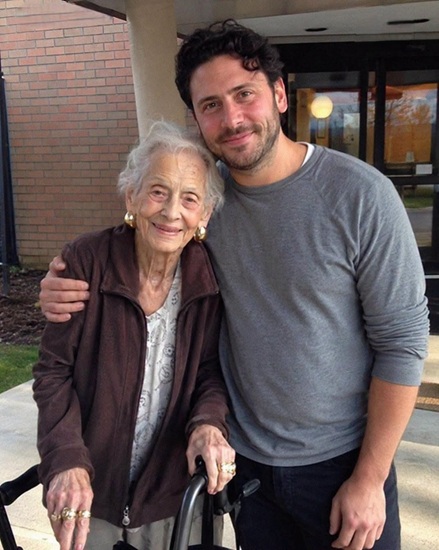
For years, grief had shaped nearly every part of Daniel’s life. After losing his wife and daughter to cancer, he struggled to find a sense of purpose in the routines that had once seemed ordinary. Eventually, he began volunteering at a hospice, hoping that helping people during difficult moments might give his days meaning again. He did not arrive expecting recognition, money, or anything in return. He simply remembered how important kindness had been during his own family’s hardest days and wanted to offer some of that compassion to others.
That was where Daniel met Margaret, an 81-year-old woman receiving end-of-life care. She was observant, independent-minded, and initially reluctant to accept more assistance than she believed necessary. Daniel treated her much as he treated everyone else at the hospice, helping with small practical matters and spending time listening when she wanted company. Their conversations gradually became longer. Margaret spoke about books, old memories, mistakes she wished she could correct, and ordinary experiences that had become surprisingly meaningful as she grew older.
One afternoon, Margaret noticed Daniel standing near a vending machine and counting the money in his hand before deciding whether to buy coffee. She asked why he was being so careful over such a small purchase. Daniel tried to dismiss the question, but Margaret persisted. Eventually, he acknowledged that his finances were tight and that volunteering required sacrifices he did not normally discuss. He immediately clarified that he had not told her this because he wanted assistance. Margaret simply nodded and changed the subject.
Their friendship continued without any discussion about inheritance. Daniel visited regularly, sometimes reading aloud and sometimes simply sitting beside Margaret when conversation required more energy than she had available. As her condition deteriorated, the practical help became more important, but Daniel continued to approach it as part of his volunteer commitment. Margaret occasionally joked that he worried too much. Daniel answered that worrying about other people had become difficult for him to stop.
Then Margaret died. Daniel mourned her as someone who had become an unexpected friend during a period when both of them had been carrying different kinds of loss. He attended to his own grief and returned to volunteering. He knew Margaret had discussed estate planning with professionals, but he considered those arrangements private. Whatever she owned belonged to her, and Daniel believed she had every right to decide what should happen to it.
Some time later, however, Daniel heard that Margaret’s will had been processed. He was surprised to learn that she had apparently left him nothing. The discovery produced an uncomfortable emotion he did not particularly like admitting. He had never formally expected an inheritance, yet some part of him wondered whether their friendship had meant as much to Margaret as it had to him. Almost immediately, he felt embarrassed by that thought. Friendship, he reminded himself, was not a financial transaction.
Daniel attempted to put the matter behind him until he was contacted by a lawyer connected with Margaret’s estate. The lawyer explained that Margaret had left specific instructions concerning him. Those instructions were separate from the assumptions Daniel had formed after hearing about the ordinary provisions of her will. Margaret had apparently anticipated that Daniel might misunderstand the situation. She wanted him to know that she had remembered his kindness and had deliberately planned something specifically for him.
In this fictional account, Margaret had arranged a separate financial gift for Daniel rather than making him a conventional beneficiary of the main estate. The lawyer explained that the arrangement had been created intentionally and that Daniel had not been forgotten. Margaret had remembered the afternoon at the vending machine and the financial difficulties Daniel had tried to hide. More importantly, she remembered that he continued helping her afterward without asking what she owned or what he might someday receive.
The revelation changed Daniel’s understanding of what had happened. His initial disappointment had been based on incomplete information. He had known only that his name was absent from one part of Margaret’s estate arrangements, and from that single fact he had quietly constructed an explanation. The lawyer’s information demonstrated that the reality was different. Margaret’s final arrangements had been more complicated than Daniel realized, and her intentions could not be understood simply by looking at one document in isolation.
Yet the financial element was not what affected Daniel most deeply. Margaret had also left a personal message explaining why she wanted him to receive the gift. She described the companionship he had provided during a frightening period of her life and emphasized that he had treated her as a person rather than merely as a patient. She remembered conversations Daniel probably assumed she had forgotten. For him, reading those words became more meaningful than discovering that money had been set aside.
The fictional story also illustrates why assumptions surrounding wills and inheritance can be misleading. Estate planning can involve wills, beneficiary designations, trusts, jointly owned property, gifts, and other arrangements, depending on individual circumstances and applicable law. Being absent from one document therefore does not necessarily establish everything a person intended. At the same time, nobody should assume that providing care or companionship creates an entitlement to another person’s property.
Margaret’s fictional decision should therefore not be treated as legal or financial guidance. Real inheritance matters depend on jurisdiction, documentation, family circumstances, ownership structures, and many other factors. Anyone dealing with an actual estate should obtain information from appropriately qualified professionals rather than relying on a dramatic online story. What works as an emotional turning point in a fictional narrative may have little resemblance to the legal realities of a particular estate.
For Daniel, however, the experience was not ultimately about discovering a hidden reward. Margaret’s message reminded him why he had begun volunteering in the first place. After losing his wife and daughter, he had believed that grief had taken away his ability to build meaningful connections. Caring for people at the hospice slowly challenged that belief. His friendship with Margaret demonstrated that a relationship could matter even when both people understood that their time together might be limited.
The money could improve aspects of Daniel’s life, but it could not replace the people he had lost or transform grief into something simple. Nor could it bring Margaret back. What it could do was give him greater stability and perhaps allow him to continue the work that had helped him recover a sense of direction. Daniel eventually decided that the most appropriate response was not to treat Margaret’s gift as payment for his care but as an expression of gratitude that she had chosen freely.
The larger emotional point of the story lies in the gap between expectation and complete information. Daniel initially believed that being excluded from the will meant Margaret had forgotten him. That interpretation seemed reasonable only because he did not yet know about her additional instructions. Once the missing information emerged, the same circumstances carried a completely different meaning. His disappointment had not been invented, but it had been produced by an incomplete understanding of Margaret’s plans.
That distinction is particularly relevant when stories like this circulate online. A headline may emphasize the inheritance, the apparent rejection, or the lawyer’s surprising announcement because those elements create immediate curiosity. The fuller narrative is about something quieter: grief, companionship, expectations, gratitude, and the danger of interpreting a complicated situation from one fragment of information. Removing that context can transform a reflective story into something much more sensational than its underlying message.
Daniel entered Margaret’s life without knowing what she possessed and remained beside her without asking what she intended to leave behind. Margaret, in turn, noticed details about Daniel that he thought he had successfully concealed. Their fictional relationship developed through ordinary conversations and repeated acts of companionship rather than through a promise of financial reward. That is why the eventual revelation carries emotional weight: the gift matters because of the relationship that came before it, not because the relationship existed to obtain the gift.
In the end, Margaret’s most important final instruction was not simply about money. It was evidence that she had noticed the person who had spent time listening to her when her world was becoming smaller. Daniel had believed for a brief period that he had been forgotten, only to discover that Margaret had carefully remembered him. For a man who had spent years learning how suddenly people could disappear from his life, that realization became an unexpected reminder that kindness can leave traces long after a final goodbye.
