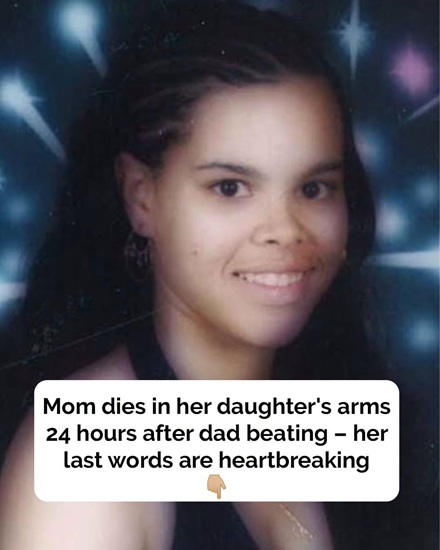
In September 2020, 15-year-old Aleisha Brown and her younger siblings experienced a tragedy inside their Oklahoma home that would permanently change their lives. Their mother, 34-year-old Shawntae Brown, died after being severely assaulted by her husband, Joshua Brown, the children’s father. Years later, Aleisha publicly described what she remembered about her mother’s final hours and the difficult circumstances surrounding the killing. In October 2025, Joshua pleaded guilty to first-degree murder and three counts of child abuse and received four life sentences as part of a plea agreement.
Aleisha’s memories of her parents, however, extend far beyond the events of that night. When she was eight years old, she traveled with her mother and siblings from Oklahoma City to Texas to attend Joshua’s military basic-training graduation. Her parents, who had been high-school sweethearts, surprised their children by announcing that they were getting married. Aleisha later remembered her mother as being extremely happy during that period, making what happened years afterward particularly difficult for her to reconcile with those earlier memories.
During that period, Aleisha recalled her mother privately telling her something that remained with her. Shawntae wanted her daughter to understand that regardless of what might eventually happen between the children’s parents, her love and commitment to her children would remain unchanged. At eight years old, Aleisha could not have known how significant that conversation would later become. Years afterward, she would remember the message while reflecting on her mother’s life and their relationship.

According to Aleisha’s later account, the atmosphere inside the family home changed significantly after Joshua returned from a deployment in Afghanistan in 2016. She described him as becoming increasingly angry, irritable and aggressive and said the abuse directed toward her mother became physical around that period. Aleisha said she and her siblings were not physically abused by their father, but she described the household environment as hostile and unpredictable, leaving the children feeling that they constantly had to be careful.
Aleisha also described increasingly controlling behavior inside the home. According to her account, cameras were installed, allowing conversations and activities inside the house to be monitored. Looking back as a young adult, Aleisha said there were aspects of her childhood that she understood differently than she had at the time. She believes her mother tried to shield the children from some of what was happening, which has complicated Aleisha’s memories of her father and of the family life she once knew.
The situation reached its devastating conclusion at the end of September 2020. Aleisha was 15, and her younger siblings were also at home. Reporting based on the probable-cause affidavit says the children told investigators that their father assaulted their mother repeatedly over an extended period. Aleisha later described trying to distract and protect her younger siblings as the situation escalated, before realizing that her mother was in grave danger.
Court records described an extremely serious assault. According to the probable-cause affidavit cited by PEOPLE, Aleisha’s younger brother told investigators that several objects had been used during the violence. Investigators subsequently documented extensive injuries on Shawntae’s body that were consistent with a severe beating. Because of the disturbing nature of the case, the essential fact is more important than graphic detail: Shawntae suffered fatal injuries after prolonged domestic violence inside her home.

The children were placed in an extraordinarily frightening situation after their mother’s death. According to investigators, they reported that their father instructed them to clean blood from the home and told them not to reveal what had actually occurred. Aleisha later said she was instructed to give authorities a false explanation suggesting that her mother had overdosed and had been injured while returning home. Despite that pressure, the truth eventually emerged when authorities investigated the scene and interviewed the children.
Shortly before 2 a.m. on September 30, 2020, authorities received a 911 call from the home. Deputies arriving at the scene discovered blood on floors and rugs, damage to walls and Shawntae’s body. Investigators determined that she had already been dead for several hours. Evidence inside the residence led authorities to take Joshua into custody, and the children’s accounts became an important part of understanding what had occurred.
For Aleisha, one of the most painful memories involved her mother’s final moments. She later recalled holding Shawntae as she died. Despite the trauma associated with the memory, Aleisha said there was also some comfort in knowing that her mother had not been completely alone. Before Shawntae died, according to Aleisha, she managed to tell her daughter that she loved her—a final expression of the same devotion Aleisha remembered hearing from her mother years earlier.
The immediate aftermath brought another enormous challenge. With their mother dead and their father arrested, Aleisha suddenly feared that she might become responsible for raising her younger siblings herself. The children had been separated from parts of their extended family, and Aleisha initially did not know what would happen next. She later recalled thinking that she might need to find employment and assume responsibility for her brother and sister despite being only 15.
Instead, relatives stepped forward. Shawntae’s cousin Candice and her husband Joe ultimately took the children into their home and later adopted them, according to PEOPLE. That support provided stability during a period in which the siblings had effectively lost both parents at once—their mother through homicide and their father through the criminal case that followed. Aleisha has since spoken about the importance of the family members who helped them rebuild their lives.
The criminal proceedings continued for approximately five years. On October 29, 2025, Joshua Brown appeared for sentencing after reaching an agreement with prosecutors. He pleaded guilty to one count of first-degree murder and three counts of child abuse. The plea agreement spared him the possibility of a death sentence and required him to waive his right to appeal. Prosecutors said the wishes of the three Brown children were carefully considered before the agreement was offered.
The court imposed four life sentences, one for the murder conviction and three connected with the child-abuse counts. Contemporary reporting states that the sentences carried the possibility of parole, an important distinction from describing them as life without parole. Aleisha attended the sentencing as a 20-year-old and delivered a victim-impact statement during the proceeding. Afterward, she said the conclusion of the case gave her some sense that justice had finally been carried out after a long and painful process.
Aleisha has also spoken about the emotional complexity of remembering her father. She has acknowledged that the children had positive memories of him alongside the devastating ones associated with their mother’s death. That complexity does not diminish the seriousness of what happened to Shawntae. Instead, it illustrates one of the difficult realities children can face when domestic violence occurs within a family: the person responsible for terrible harm may also be someone they once loved and trusted as a parent.
Now a young adult, Aleisha has focused on building a future rather than allowing the events of 2020 to become the entirety of her identity. PEOPLE reported in 2025 that she was studying mass communications at Rose State College and remained committed to pursuing opportunities her mother had wanted for her. She has said that she does not define herself simply as a victim, while continuing to recognize the profound effect her mother’s death has had on her and her siblings.
Shawntae’s story is ultimately about a documented case of domestic violence and the children who were forced to live through its consequences. It should be discussed without sensationalizing her death or making unsupported assumptions about circumstances that are not established by court records or firsthand accounts. Five years after losing their mother, Aleisha and her siblings saw the criminal case reach its conclusion, while the memory Aleisha continues to carry is deeply personal: amid an unimaginably traumatic situation, her mother’s final message to her was one of love.
