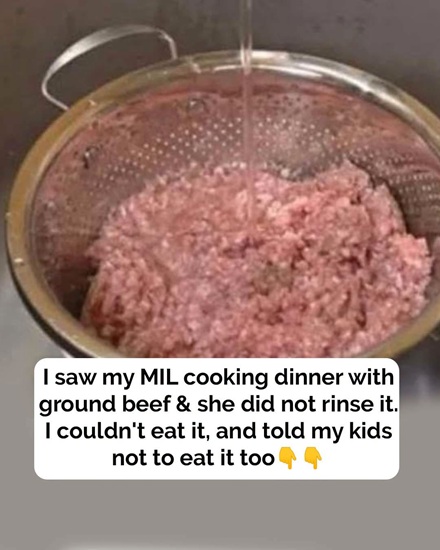
Cooking habits are often passed down through families, which is one reason kitchen practices can inspire surprisingly passionate debates. From washing poultry to draining cooked meat, people frequently have their own preferred methods and may have followed them for years. One question that continues to appear online is whether raw ground beef, also called minced beef, should be rinsed with water before it is cooked. While individual preferences vary, food-safety authorities provide fairly straightforward guidance on this subject.
Some home cooks believe rinsing ground beef before cooking makes it cleaner or removes some of its fat. Others may rinse cooked ground beef because they want to remove rendered grease before adding the meat to another dish. However, washing raw meat should not be confused with making it safer. According to the U.S. Department of Agriculture’s Food Safety and Inspection Service, washing raw beef before cooking is not recommended. Water cannot reliably eliminate harmful microorganisms that may be present in raw meat, while the washing process can create another food-safety problem.
The primary concern is cross-contamination. When raw ground beef is placed beneath running water, small droplets can splash away from the sink and reach nearby surfaces. Those droplets may contain microorganisms from the raw meat and can potentially contaminate countertops, utensils, dishes or other foods. The contamination may be difficult to notice because the droplets are often too small to see. This is why washing raw meat can actually spread contamination around the kitchen rather than make food safer.

Proper cooking is the important safety step. USDA food-safety guidance recommends cooking ground beef to a minimum internal temperature of 160°F (71.1°C). A food thermometer should be used to check the temperature because appearance alone is not a reliable indicator of doneness. Ground beef can sometimes turn brown before reaching a safe internal temperature, while properly cooked meat may occasionally retain some pink coloration. Measuring the temperature provides considerably more reliable information than judging the meat solely by its color.
Ground meat requires particular attention because grinding changes the structure of the meat. Bacteria that might originally have been present on the exterior of a whole cut can become distributed throughout ground beef during processing. Consequently, the entire portion needs to reach the recommended safe temperature. This is different from trying to remove microorganisms by rinsing the exterior with water. Thorough cooking addresses the safety concern far more effectively and avoids spreading raw-meat juices around the sink.
Fat content is a separate issue from food safety. Ground beef is sold with different lean-to-fat ratios, allowing consumers to select an option appropriate for the recipe they are preparing. During cooking, some fat renders out of the meat and can be drained if desired. Choosing leaner ground beef from the beginning is another straightforward way of reducing the amount of fat in a dish. Rinsing raw ground beef is therefore unnecessary as a method of controlling fat and should not be treated as a food-safety technique.
Some people also rinse ground beef after cooking in an attempt to remove additional fat. Although this is different from washing raw meat from a contamination perspective, it can change the final result of a recipe. Water may remove some rendered fat, but it can also affect moisture, seasoning and flavor. Depending on the dish, simply draining cooked meat may be sufficient. The appropriate method ultimately depends on the recipe and dietary preferences, provided normal food-safety practices are followed.

There is also a practical household issue involving rendered animal fat. Large amounts of grease should not be poured directly into a kitchen drain. Fat can cool and solidify inside plumbing, contributing to buildup and blockages over time. Instead, excess grease can be collected in an appropriate container, allowed to cool and discarded according to local waste guidance. Avoiding grease in the drain can help prevent plumbing problems while also making cleanup easier.
Safe preparation begins before the meat reaches the pan. Raw ground beef should be kept refrigerated and separated from foods that will be eaten without additional cooking. Hands should be washed thoroughly with soap and water after handling raw meat. Cutting boards, utensils, plates and preparation surfaces that have contacted raw beef should also be properly cleaned before they are used for other foods. These basic precautions are considerably more useful for controlling cross-contamination than rinsing the meat itself.
Kitchen sinks deserve attention as well because they can become contaminated during food preparation. If raw meat or its packaging touches the sink, the surrounding area should be cleaned appropriately afterward. Using separate utensils for raw and cooked foods can further reduce unnecessary contamination. Cooked ground beef should also be transferred onto a clean plate rather than returned to a surface that previously held the raw product unless that surface has been properly washed.
Storage after cooking is another important part of food safety. Perishable foods should not remain at room temperature indefinitely, and leftovers should be refrigerated promptly in accordance with established food-safety recommendations. When preparing large quantities, dividing food into smaller or shallow containers can help it cool more efficiently. Good food safety therefore involves the entire process—purchasing, refrigeration, preparation, cooking, serving and storage—not a single step performed at the sink.
Ultimately, the debate over washing ground beef becomes much simpler when personal tradition is separated from established food-safety guidance. People may have grown up seeing meat rinsed and understandably continue practices familiar to them. Nevertheless, current USDA guidance does not recommend washing raw beef before cooking. The concern is not that water itself is harmful; rather, splashing can move microorganisms from raw meat to areas of the kitchen where they were not previously present.
For anyone preparing ground beef at home, the safer approach is straightforward: keep raw meat properly refrigerated, avoid washing it, prevent cross-contamination, wash hands and preparation surfaces, and cook the beef to 160°F (71.1°C) as measured with a food thermometer. If excess rendered fat needs to be removed, it can be drained after cooking without sending large quantities of grease down the sink. These practices preserve the flexibility people enjoy in cooking while keeping the most important distinction clear: personal preferences can vary, but food-safety recommendations should be based on evidence rather than assumptions.
