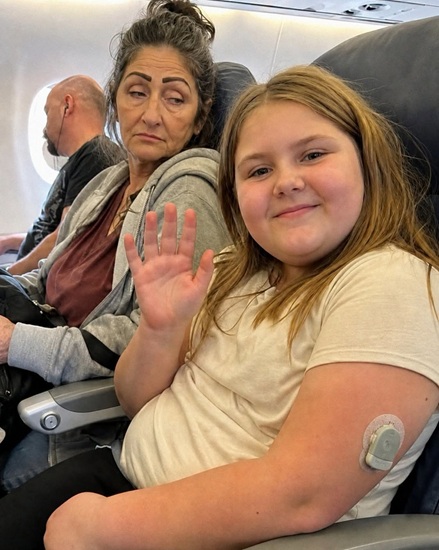
Air travel often brings together complete strangers who share a small space for a few hours before continuing their separate lives. Most flights are uneventful, filled with quiet conversations, books, music, or people simply looking forward to reaching their destination. For Emily Carter and her nine-year-old daughter, Allison, the journey home after visiting family was expected to be just another ordinary flight. Neither of them imagined that a brief interaction with another passenger would become the most unforgettable part of their trip and leave an entire cabin reflecting on the importance of kindness and understanding.
Allison had been living with Type 1 diabetes since she was four years old. Although she was still young, she already understood more about blood sugar, insulin, carbohydrates, and glucose monitoring than many adults ever would. Every day required careful planning. Before every meal, she counted carbohydrates, checked her glucose monitor, and worked closely with her mother to manage her insulin. She rarely complained, even though the condition required constant attention. Like many children managing a chronic illness, she had learned to be responsible much earlier than most of her classmates.
Over the previous year, Allison had also become increasingly aware of comments about her appearance. Some children at school occasionally made insensitive remarks about her weight without understanding that managing Type 1 diabetes, growth, and medical treatment can affect a child’s body in different ways. Although her family constantly reminded her that her health mattered far more than unrealistic beauty standards, those comments had quietly affected her confidence. She began choosing oversized sweatshirts instead of colorful clothes she once loved, hoping she would attract less attention from people who judged appearances too quickly.
When Emily booked the return flight, every seat together had already been reserved. The airline managed to place them directly across the aisle from one another instead, allowing Emily to keep Allison within sight throughout the journey. Allison smiled politely as she greeted the two passengers sharing her row. An elderly gentleman by the window returned the greeting warmly. The woman seated in the middle seat, however, barely acknowledged her before looking Allison up and down with obvious disapproval.
Only a few minutes after everyone settled into their seats, the woman sighed loudly enough for nearby passengers to hear. Leaning slightly toward Allison, she made an unnecessary remark suggesting that some passengers should purchase extra seating if they occupied more space than others. Her words instantly silenced the surrounding conversation. Allison lowered her eyes toward her lap, instinctively pulling her elbows closer to her body as though trying to disappear. Emily immediately stood, calmly but firmly asking the woman not to direct hurtful comments toward a child.
Rather than apologizing, the woman insisted she had simply expressed an opinion. Emily chose not to argue further because she knew that escalating the disagreement would only make Allison feel more uncomfortable. Instead, she returned her attention to her daughter, offering a reassuring smile that reminded Allison she was loved exactly as she was. The flight attendants discreetly observed the situation and quietly checked that everything was under control before continuing their cabin duties.
As the aircraft reached cruising altitude, Emily handed Allison a small carton of apple juice across the aisle. It was something they always carried while traveling because rapid treatment is essential if blood glucose levels fall too low. Before Allison could place it into the seat pocket, the same passenger muttered another sarcastic comment, incorrectly suggesting that sugary drinks were the reason some people struggled with their weight. Emily calmly explained that the juice was emergency treatment for Type 1 diabetes and could become critically important if Allison experienced low blood sugar during the flight.
The woman appeared unconvinced, dismissing the explanation with a shrug. Fortunately, one of the flight attendants overheard the exchange and gently reminded everyone that passengers sometimes travel with medical conditions requiring specific supplies or treatments. The cabin soon returned to its normal rhythm, although Emily could see that Allison remained unusually quiet. She knew her daughter was trying to ignore the remarks, but she also understood how deeply careless words could affect a child’s confidence.
About an hour into the flight, Allison glanced at the continuous glucose monitor attached to her arm. Within seconds, a loud alert sounded from the device, signaling that her glucose level was dropping more quickly than expected. Emily immediately crossed the aisle with the apple juice while a nearby flight attendant quickly approached to assist. Allison calmly drank the juice exactly as she had practiced many times before, following the treatment plan recommended by her healthcare team.
The flight attendant briefly explained to nearby passengers that Type 1 diabetes is an autoimmune condition in which the body can no longer produce insulin. She emphasized that managing blood sugar requires constant attention and that fast-acting carbohydrates, such as juice, are sometimes necessary to prevent dangerously low glucose levels. The explanation helped many passengers better understand why Emily had been so prepared and why the juice was medically important rather than simply another beverage.
The atmosphere in the cabin changed noticeably. The elderly gentleman beside Allison smiled kindly and shared that his grandson also lived with Type 1 diabetes. Another passenger quietly offered crackers in case they were needed later, while someone across the aisle complimented Allison for remaining calm throughout the situation. Instead of focusing on appearances, people now recognized the maturity, courage, and responsibility the young girl demonstrated every day while managing a lifelong medical condition.
As Allison’s glucose level gradually returned to a safer range, the color returned to her face and her smile slowly reappeared. Seeing the concern and encouragement from complete strangers reminded her that compassion often speaks much louder than criticism. Emily thanked the passengers and flight crew for their kindness, appreciating the calm professionalism that helped transform a difficult moment into one filled with understanding and support.
The woman who had made the earlier remarks remained silent for several minutes before quietly apologizing. She admitted that she had made assumptions without knowing anything about Allison or the challenges she faced each day. Emily accepted the apology with grace, explaining that everyone benefits from learning more about conditions that may not always be visible. Allison also responded politely, saying she hoped people would choose kindness before making judgments about others in the future.
When the aircraft finally landed, several passengers wished Allison well as they gathered their belongings. The encouraging words she received meant far more than anyone realized. As she walked through the airport holding her mother’s hand, Allison smiled and said she no longer wanted to hide behind oversized clothes because she understood that her strength was defined by her character rather than by other people’s opinions. Emily hugged her daughter tightly, grateful that despite one painful moment, the journey had ended with an unforgettable reminder that empathy, respect, and understanding will always leave a more lasting impression than thoughtless words.
