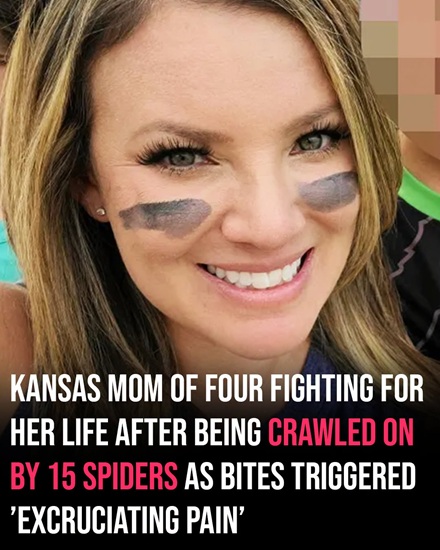
What began as a relaxing family camping trip in Kansas quickly became the start of a medical crisis that would change Britagne Miller’s life. The mother of four was enjoying a peaceful evening with her husband, Jake, and their children around a campfire at Cheney Lake on May 28 when several spiders crawled onto her body and bit her. At the time, the incident did not seem especially alarming. Like many people who spend time outdoors, Britagne assumed the bites would cause little more than temporary discomfort.
Instead, the days that followed would bring unexpected complications, multiple surgeries, and a fight for survival that tested both her physical strength and her family’s resilience. Four days after returning home, one bite on Britagne’s calf began to worsen dramatically. Rather than healing, the area became increasingly swollen, discolored, and intensely painful. She later described the sensation as feeling similar to being stabbed with a heated metal object, with severe pain radiating down her leg and into her foot.
As the symptoms continued to intensify, she realized this was no longer a routine insect bite and sought medical attention. Her decision to seek care proved critical, as doctors quickly recognized that something far more serious was developing beneath the surface. Medical examinations revealed that Britagne had developed blood clots in her leg, requiring immediate treatment. Physicians determined that surgery was necessary to address the complications.

However, her medical history made the situation significantly more complex than a typical surgical procedure. Britagne had previously been diagnosed with blood-clotting disorders, chronic liver disease, and allergies to certain medications. Each of these existing health conditions increased the risks associated with surgery and limited the treatment options available to her medical team.
According to information shared publicly by her husband through the family’s GoFundMe campaign, doctors explained that her advanced liver disease created an especially dangerous situation. Because the liver plays a vital role in producing proteins needed for normal blood clotting, impaired liver function can increase the risk of severe bleeding during surgery. Her physicians carefully balanced the urgent need to treat her worsening condition while managing the significant complications presented by her underlying illnesses. The situation required close monitoring by multiple specialists working together to provide the safest possible care.
As doctors continued evaluating Britagne’s condition, they discovered an even more serious diagnosis. She was found to be experiencing end-stage liver failure, a life-threatening condition in which the liver can no longer perform its essential functions effectively. According to her family’s public statements, physicians explained that her prognosis was extremely poor and discussed the possibility of hospice care after warning that her remaining time could be very limited. For Britagne and her loved ones, hearing those words was devastating, but she was determined not to surrender hope.

Jake later shared that his wife immediately rejected the idea of giving up. Instead, she told her medical team that she wanted every possible effort made to keep her alive for the sake of their family. Her determination became an important source of strength not only for herself but also for those caring for her. Throughout the difficult weeks that followed, her family remained at her bedside, encouraging her through every setback while supporting one another through the uncertainty of each new day.
Unfortunately, Britagne’s health challenges continued to multiply. During her hospitalization she developed serious infections, including sepsis, a potentially life-threatening condition that occurs when the body’s response to infection damages its own tissues and organs. Treating these complications required additional surgeries to remove damaged tissue as well as intensive antibiotic therapy. Each new procedure represented another physical and emotional challenge, prolonging her hospital stay and making recovery even more demanding.
In interviews after her hospitalization, Britagne openly described the emotional toll of the experience. After enduring repeated surgeries, constant medical procedures, and significant pain, she admitted there were moments when she felt physically and emotionally exhausted. She recalled reaching a point where she questioned whether she could continue. However, thoughts of her husband and their four children became the motivation she needed to keep fighting. Wanting to return home to her family gave her renewed determination during the most difficult moments of her recovery.

After spending more than a month in the hospital, Britagne was finally discharged on July 11. Returning home marked an important milestone, but it did not signal the end of her medical journey. Her recovery continues to require extensive care, including home health services, physical therapy, regular medical appointments, and ongoing monitoring by specialists. According to her family, physicians have also determined that she will eventually need a liver transplant. Before that procedure can safely take place, however, doctors want her overall condition to improve and her strength to increase through continued rehabilitation.
One question that has attracted public attention is what type of spider caused the original bites. At this time, doctors have not confirmed the exact species responsible. Experts have explained that Kansas is home to two medically significant venomous spiders—the brown recluse and the black widow—but there has been no official confirmation identifying which, if either, was involved in Britagne’s case. Medical professionals instead focused on treating her symptoms and the complications that developed rather than determining the precise source of the bite.
Throughout the ordeal, Britagne’s husband remained by her side while also caring for their four children. Balancing hospital visits, family responsibilities, and everyday expenses became increasingly difficult. According to the family’s GoFundMe page, Jake eventually lost his job because he could no longer maintain a regular work schedule while supporting his wife during her prolonged hospitalization. The combination of lost income and mounting medical expenses created additional challenges at a time when the family’s primary focus remained Britagne’s recovery.
In the fundraising appeal, Jake described Britagne as an extraordinary wife and mother who has always placed the needs of others before her own. He wrote that she has spent years caring for those around her and that asking for help was one of the most difficult decisions their family had ever made. Friends, relatives, and members of the community responded with messages of encouragement and financial support, offering assistance as the family continues navigating an uncertain future.
Although Britagne still faces a long road ahead, her story has become one of resilience, hope, and determination. Her experience highlights how quickly an ordinary day can change while also demonstrating the importance of seeking medical attention when symptoms worsen unexpectedly. Supported by her family and guided by her medical team, she continues working toward improved health with the hope of one day receiving the liver transplant she needs. Her loved ones remain optimistic that, despite the challenges still ahead, she will eventually return to the role she treasures most—being present for her children and sharing in the milestones that lie ahead for their family.
