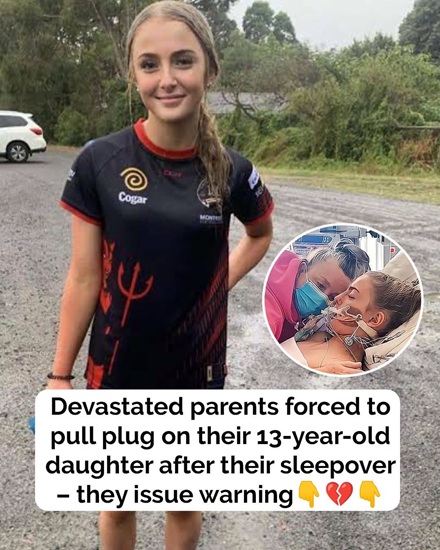
The family of Australian teenager Esra Haynes has spoken publicly about the heartbreaking loss of their daughter in the hope that other families may become more aware of the dangers associated with chroming, a practice that involves inhaling fumes from household products to produce a short-term high. By sharing their experience, Esra’s parents hope to encourage conversations between parents, caregivers, and young people about the serious health risks linked to inhaling toxic chemicals.
Their message is not about assigning blame but about increasing awareness of a danger they say they knew very little about before tragedy struck their own family. Esra, a 13-year-old from Victoria, Australia, was remembered by her family, friends, and community as an energetic, caring, and talented young girl. She was actively involved in sports, serving as a co-captain of her local football and netball club, competing in BMX racing with her brothers, and helping her aerobics team win a national championship in Queensland.
Those who knew her described her as determined, fun-loving, and full of enthusiasm. Her parents have said she enjoyed spending time with friends and family and was looking forward to the future like many teenagers her age. On March 31, Esra attended what appeared to be a normal sleepover with friends. According to her parents, nothing about that evening seemed unusual.

They knew where she was, who she was spending time with, and had no reason to believe anything was wrong. Later that night, however, they received a phone call that every parent hopes they will never receive. They were urgently told to come because their daughter was in a medical emergency. Speaking publicly afterward, her father, Paul Haynes, described the devastating moment as one that changed their lives forever.
According to information shared by the family, Esra had inhaled fumes from an aerosol deodorant can while taking part in a behavior commonly referred to as chroming. Initially, some of the teenagers present believed she was experiencing a panic attack. However, her condition quickly became much more serious. The inhalation of toxic chemicals caused her body to shut down, and she suffered cardiac arrest. Emergency responders worked to revive her before she was transported to hospital, where doctors began providing intensive medical treatment.
When Esra’s mother, Andrea Haynes, arrived at the scene, paramedics informed her that chroming was believed to have caused the medical emergency. She later explained that she had never previously heard of the term. Like many parents, she was unaware that inhaling fumes from common household products could have such severe consequences. Even after Esra reached the hospital, the family continued hoping that she would recover. Although her heart and lungs remained functioning with medical support, doctors eventually determined that she had suffered catastrophic brain damage.
After eight days on life support, specialists informed the family that Esra’s brain injuries were irreversible. Faced with one of the most painful decisions imaginable, Andrea and Paul agreed to withdraw life support after saying their final goodbyes. They later described spending precious final moments beside their daughter, holding and comforting her while surrounded by family and close friends. Speaking publicly about those memories has remained deeply emotional, but they say sharing their experience is part of their effort to prevent similar tragedies from affecting other families.
Australian television presenter Ally Langdon, who interviewed the Haynes family on A Current Affair, became visibly emotional while listening to their story. As both a journalist and a mother, she struggled to hold back tears as Esra’s parents described the events leading to their daughter’s death and the difficult days that followed. The interview resonated with many viewers because it highlighted the devastating impact that a single decision can have on an entire family and community.
Following Esra’s death, her parents explained that the loss affected not only them but also her siblings, classmates, teammates, teachers, and friends. They described the emotional toll as overwhelming, saying their family struggled with sleep, appetite, and the daily reality of adjusting to life without Esra. Her sporting clubs, school community, and local residents also paid tribute to the teenager, remembering her positive attitude, determination, and willingness to encourage those around her.
Since losing their daughter, Andrea and Paul have chosen to speak publicly about chroming in an effort to increase awareness. They have repeatedly said they wish they had known more about the practice before Esra’s death because they believe they would have discussed its dangers with their children. Their goal is to encourage parents to have calm, open conversations about the risks associated with inhaling household chemicals rather than assuming young people are already aware of the potential consequences.
Health authorities have long warned that inhaling toxic fumes from products such as aerosol sprays, paint, solvents, fuels, or similar substances can be extremely dangerous. Depending on the substance involved, chroming may lead to oxygen deprivation, seizures, irregular heart rhythms, cardiac arrest, unconsciousness, organ damage, coma, or sudden death. Medical experts recommend seeking immediate emergency assistance whenever someone becomes unconscious or experiences difficulty breathing after inhaling chemical fumes.
Today, the Haynes family continues honoring Esra’s memory by encouraging greater awareness and education rather than allowing their daughter’s story to be forgotten. They hope that by sharing what happened, other parents will feel comfortable discussing the dangers of inhaling toxic substances with their children before they encounter the topic through friends or social media.
Although nothing can erase the pain of their loss, they believe honest conversations and increased public awareness may help prevent similar tragedies in the future. Their message serves as a reminder that education, open communication, and awareness can play an important role in helping young people make informed decisions about their health and safety.
